
Yes, that statement is essentially correct, though it comes with some important structural nuance.
The Federal Reserve System is designed as a hybrid central bank—it is neither purely public nor purely private, but rather a mix of a government agency at the top and quasi-private corporations at the regional level.
Structure of the Federal Reserve System. Bron: Lumen Learning
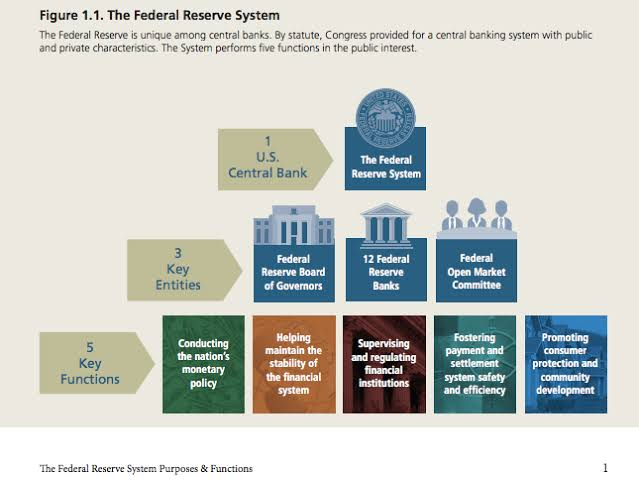
Breakdown of the Dual Structure
1. The Board of Governors (Strictly Public)
- Status: An independent government agency based in Washington, D.C.
- Leadership: Seven members appointed by the U.S. President and confirmed by the Senate.
- Oversight: Accountable directly to Congress and funded through the earnings of the Federal Reserve Banks, not congressional appropriations.
2. The 12 Regional Federal Reserve Banks (Quasi-Private)
- Status: Set up as private corporations chartered by Congress.
- Ownership: Owned as stock by the private commercial banks (member banks) within their respective districts.
- Governance: Each regional bank (e.g., the Federal Reserve Bank of New York, Chicago, or San Francisco) has its own Board of Directors and appoints its own President.
Does «Private Ownership» Mean Commercial Banks Control the Fed?
While commercial banks technically own stock in their local Federal Reserve Bank, this stock is fundamentally different from normal corporate stock:
- No Trading or Control: Member banks cannot sell, trade, or pledge their Fed stock as collateral.
- Fixed Dividend: By law, member banks receive a fixed annual dividend on their stock (typically 6% or tied to the 10-year Treasury yield for larger institutions), rather than a share of the Fed’s actual profits.
- Excess Profits Go to the Treasury: After operational expenses and dividend payments, all remaining profits generated by the Federal Reserve System are remitted directly to the U.S. Department of the Treasury.
- Public Interest Mandate: Regional Reserve Banks operate to fulfill monetary policy mandates set by Congress, not to maximize profit for their stockholder banks.
Summary Comparison
| Component | Entity Type | Ownership / Control |
|---|---|---|
| Board of Governors | Federal Government Agency | Public (Appointed by President/Senate) |
| 12 Regional Reserve Banks | Quasi-Private Corporations | Stock owned by private commercial member banks |
| Federal Open Market Committee (FOMC) | Hybrid Policy Body | Combines public Governors and regional Bank Presidents |