Yes, manufacturing MRI (Magnetic Resonance Imaging) scanners is a highly profitable, multi-billion dollar industry, but it is characterized by extremely high barriers to entry, intense consolidation, and massive capital requirements.
The industry generates strong, recurring revenue driven by global healthcare aging, increasing chronic disease rates, and rapid advancements in medical diagnostics.
1. Market Size & Major Players
The global MRI market size is valued at approximately $6 billion to $8 billion annually and continues to grow at a steady CAGR (Compound Annual Growth Rate) of 5–7%.
Because building an MRI scanner requires deep expertise in superconducting magnets, cryogenics, radiofrequency (RF) engineering, signal processing, and regulatory compliance, the manufacturing space is dominated by a few global medtech giants (often called the «Big Four»):
- Siemens Healthineers (Germany)
- GE Healthcare (USA)
- Philips Healthcare (Netherlands)
- Canon Medical Systems (Japan)
Together, these companies hold over 75–80% of the worldwide market share for high-field MRI systems.
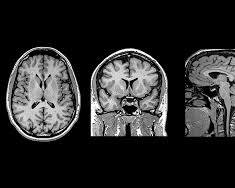

2. Profit Model: Hardware vs. Services
MRI manufacturers do not rely solely on machine sales to make money. The business model consists of three distinct revenue streams:
A. Initial Capital Equipment Sales
- Price Per System: A standard 1.5-Tesla (1.5T) scanner typically costs between $1 million and $1.5 million, while high-end 3.0-Tesla (3T) scanners range from $2 million to $3 million+. Specialized Ultra-High-Field (7T) scanners used in neuroimaging can cost $6 million to $10 million+.
- Gross Margins: Gross profit margins on high-tech hardware sales generally range from 30% to 45%.
B. High-Margin Service Contracts (The «Razor and Blade» Model)
- Maintenance & Support: MRI machines contain complex liquid helium cooling systems and sensitive electronics that require continuous maintenance. Healthcare providers pay $80,000 to $150,000+ per year per machine for service contracts.
- Profitability: Service and software maintenance contracts carry much higher margins (often 50% to 60%+) than initial hardware sales, generating predictable, long-term recurring revenue for the manufacturer over the 8-to-12-year lifespan of the scanner.
C. Software, Upgrades, & AI Integration
- Modern MRIs rely heavily on proprietary software for image reconstruction, pulse sequences, and AI-assisted diagnostics.
- Manufacturers license software upgrades (e.g., faster scan times, cardiac imaging packages) and subscription-based AI tools to existing customers, adding another high-margin revenue line.
3. Key Growth Drivers & Emerging Opportunities
Despite market consolidation, new sub-sectors within MRI manufacturing are creating lucrative opportunities:
- Low-Helium & Low-Field Portable MRI: Traditional scanners require thousands of liters of liquid helium. Companies developing «helium-free» or low-field (0.55T or micro-Tesla) portable MRI scanners (such as Hyperfine’s Swoop system or Siemens‘ MAGNETOM Free.Max) are lowering manufacturing and installation costs, allowing MRIs to enter emergency rooms, ICUs, and developing regions. Siemens Healthineers
- Component Manufacturing: Specialized sub-tier manufacturers profit by producing key sub-components for major OEMs, such as gradient coils, RF coils, magnetic shielding, custom amplifiers, and cryogenic coolers.
- Refurbishment & Secondary Markets: The secondary market for refurbished MRI units is a high-margin sector serving smaller clinics, outpatient centers, and veterinary practices.
4. Challenges & Risks
- Regulatory Rigor: Gaining clearance (e.g., US FDA 510(k), European CE mark) requires extensive clinical trials, rigorous quality management standards (ISO 13485), and significant compliance spending.
- Supply Chain Complexity: High dependence on rare raw materials (such as liquid helium and rare-earth elements for permanent magnets).
- Capital Intensity: Developing a new MRI platform requires hundreds of millions of dollars in up-front R&D before generating revenue.
Reint Jelger: Can you give me a real life product example of how much a much used MRI scanner costs
Gemini: A clear real-world example is the Siemens MAGNETOM Aera 1.5T, which is one of the most widely installed, mainstream MRI scanners in hospitals and imaging centers globally.
1. Initial Purchase & Installation (Total Cost of Ownership)
- Hardware Price: A new unit costs roughly $1.2 million to $1.5 million for the scanner itself.
- Siting & Build-Out: Installing an MRI scanner requires specialized infrastructure (RF/copper shielding, magnetic shielding, heavy structural floor reinforcement, and a dedicated cooling/chiller system). This room preparation typically adds $200,000 to $500,000.
- Total Upfront Investment: $1.4 million to $2.0 million.
2. Ongoing Operating & Maintenance Costs
- Service Contract: A full-service maintenance contract (covering software updates, gradient coils, liquid helium refills, and 24/7 engineer support) costs $90,000 to $130,000 per year. Over a standard 10-year lifespan, maintenance costs equal or exceed the original purchase price.
- Energy Costs: Running the supercooling systems continuously requires roughly $20,000 to $40,000 per year in electricity.
3. Comparison Across Systems
| System Tier | Real-World Example | Typical Hardware Cost (New) | Secondary / Refurbished Cost |
|---|---|---|---|
| Standard Workhorse (1.5T) | Siemens MAGNETOM Aera / GE SIGNA Artist | $1.2M – $1.6M | $300,000 – $600,000 |
| High-End Clinical (3.0T) | Siemens MAGNETOM Vida / Philips Ingenia Elition | $2.3M – $3.2M | $700,000 – $1.2M |
| Ultra-High Field (7.0T) | Siemens MAGNETOM Terra | $6.5M – $10.0M+ | Rarely available |
4. How the Hospital Recovers the Cost
Assuming a facility charges an average reimbursement rate of $500 to $800 per scan (after insurer discounts) and runs 15 scans per day, the system generates $1.8 million to $3.0 million in gross revenue per year. This allows a busy hospital to pay off the initial hardware purchase within 2 to 3 years.