
Reint Jelger: How many people work for Sulzer AG? And how much in CHF would one of those big water pumps cost?
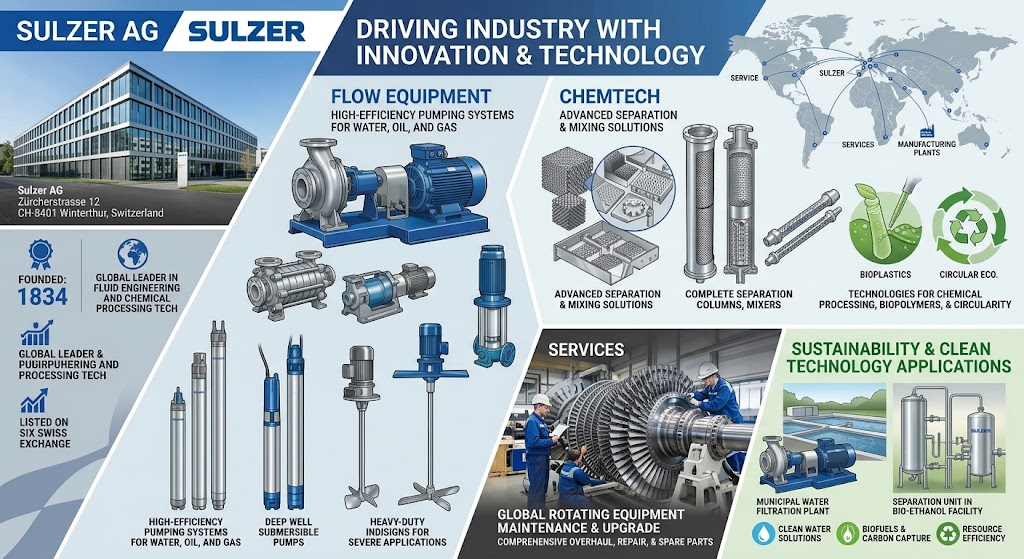
Google Gemini: Sulzer AG employs around 13,300 to 13,600 people worldwide.
Pricing for industrial pumps depends heavily on the specific scale, materials, and engineering requirements.
- Mid-sized Industrial & Wastewater Pumps: standard commercial centrifugal or sewage pumps (like the ones used in local municipal lifting stations) typically range from CHF 5,000 to CHF 30,000.
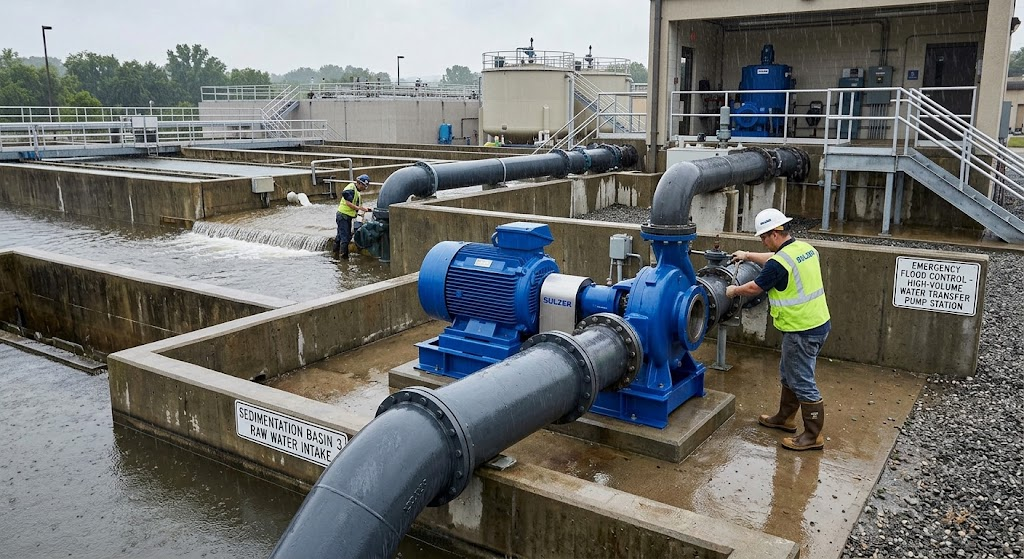
- Large-Scale Water Treatment & Intake Pumps: High-capacity pumps engineered for treatment plants, flood control, or raw water intake (similar to the unit in the generated image) run between CHF 50,000 and CHF 250,000+, depending on the motor horsepower, piping diameter, and control systems.
- Heavy Utility & Infrastructure Pumps: Massive customized multi-stage pumps used in major water distribution networks or power plants can easily exceed CHF 500,000 to over CHF 1,000,000 per unit when including complete installation, variable speed drives, and custom metallurgy.
Reint Jelger: Do they use Sulzer water pumps in the Austria, Germany and the Netherlands?
Google Gemini: Yes, absolutely. Sulzer is one of the dominant global suppliers of industrial water and wastewater pumps, and Austria, Germany, and the Netherlands represent core DACH and European markets for their water treatment and infrastructure divisions.
Germany
- Local Operations: Sulzer operates multiple dedicated hubs and service centers in Germany (including a major service coordination hub in Bonn and service bases near Berlin, Stuttgart, Frankfurt, and the Rhine area).
- Key Uses: Municipal sewage treatment plants (Kläranlagen), industrial wastewater processing in chemical parks, high-capacity storm water management, and power station cooling water systems.
The Netherlands
- Local Operations: Sulzer maintains active regional entities, such as Sulzer Pumps Wastewater Netherlands B.V., and operates a specialized regional service center out of Maastricht Airport.
- Key Uses: Given the Netherlands‘ low elevation and extensive water management infrastructure, Sulzer equipment—especially large-flow submersible pumps and axial-flow propellor pumps—is heavily used by regional water boards (waterschappen), polder pumping stations (gemaal), municipal drainage networks, and flood control systems.
Austria
- Local Operations: Sulzer serves the Austrian market through direct sales entities and specialized regional service networks.
- Key Uses: Alpine wastewater management, high-head water transport (pumping water up steep elevations), municipal water infrastructure, and industrial fluid transfer in paper mills and chemical plants.
Reint Jelger: Could you estimate what percentage of Sulzer AG is in Swiss hands?
Gemini: It is estimated that roughly 40% to 50% of Sulzer AG is held by Swiss owners (comprising Swiss domestic institutions and Swiss retail investors).
While Sulzer is headquartered in Winterthur and listed on the SIX Swiss Exchange, its overall ownership breakdown is shaped by a few key groups:
- The Largest Single Shareholder (~48.8% to 49.4%): Russian businessman Viktor Vekselberg holds the largest stake in Sulzer via Tiwel Holding AG / Renova Group. Because this controlling interest is non-Swiss, nearly half the company’s equity sits in foreign hands.
- Swiss Institutional Investors (~10% to 15%): Major Swiss financial entities—such as UBS Asset Management AG, GAM Holding AG, zCapital AG, Vontobel Asset Management, and Valiant Bank AG—hold significant stakes via domestic funds and asset managers.
- Swiss Private & Retail Investors (~30% to 35%): The remainder of the free float is distributed among international asset managers (such as Capital Group and Vanguard) and domestic individual retail investors in Switzerland.
As a result, actual Swiss domestic ownership accounts for slightly less than half of the company, with foreign institutional and strategic investors holding the majority.
Reint Jelger: To purify bio fuel one could also use a Sulzer AG product?
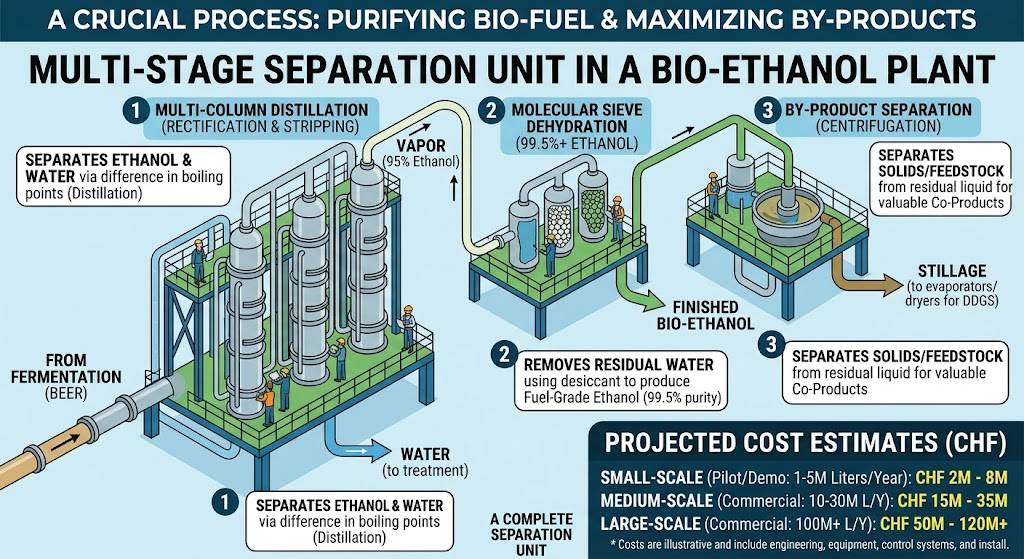
Google Gemini: Yes, Sulzer Chemtech (a division of Sulzer AG) specializes in separation, purification, and mass transfer equipment used in biofuel processing.
Sulzer Chemtech – Process Solutions
Sulzer provides proprietary equipment and turnkey processing modules across several stages of biofuel production, including bioethanol, biodiesel (FAME), and Sustainable Aviation Fuel (SAF):
Sulzer Chemtech – Process Solutions
- Bioethanol Dehydration & Distillation: Sulzer manufactures high-efficiency separation columns using structured packing (MellapakPlus™) and anti-fouling tray technology (VG™-AF). These systems remove water, fusel oils, and light ends to yield fuel- or pharmaceutical-grade ethanol. Sulzer Chemtech – Process Solutions+ 1
- Pre-treatment & Impurity Extraction: For feedstocks like used cooking oil (UCO), tallow, or crude vegetable oils, Sulzer supplies liquid-liquid extraction equipment (such as Kühni ECR agitated columns and mixer-settlers). These remove contaminants, free fatty acids, trace metals, and phosphorus before hydrotreating or transesterification. Sulzer Chemtech – Process Solutions+ 1
- Biodiesel & SAF Refinement: Sulzer offers specialized technology (e.g., their BioFlux™ process for HEFA-based SAF) to isolate ultra-low sulfur biodiesel and renewable diesel fractions. Sulzer