

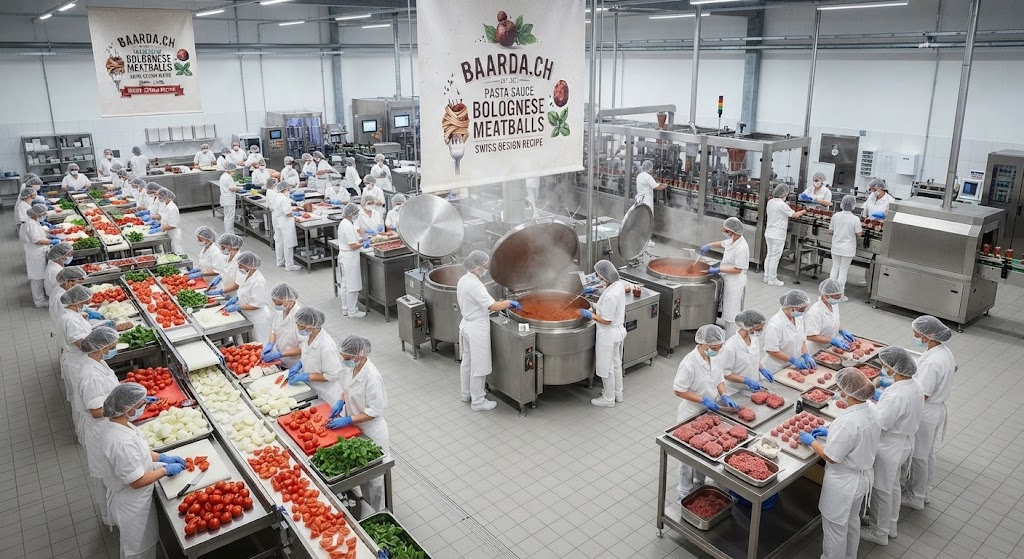
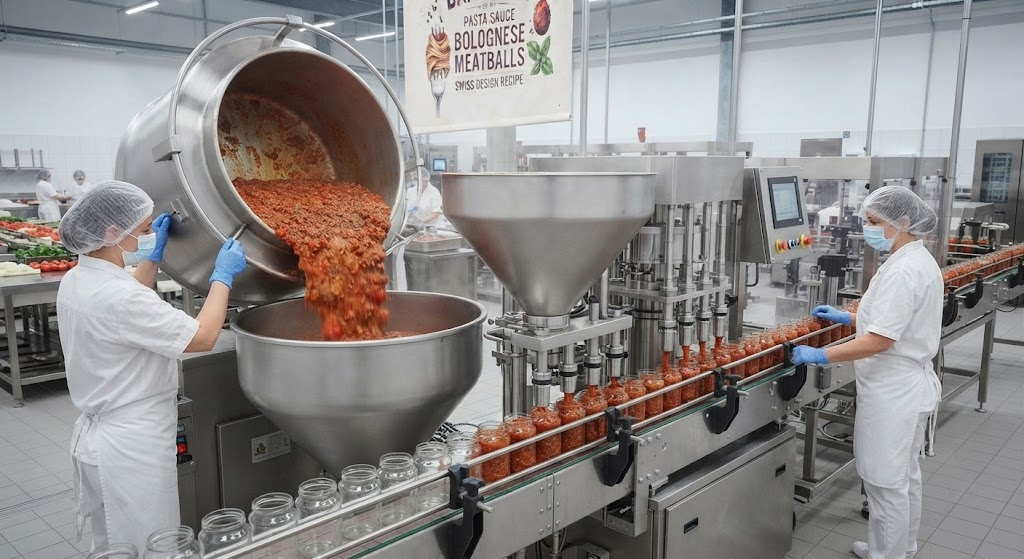
The large, industrial cookers shown on the workfloor are steam-jacketed cooking and mixing kettles (often referred to in food manufacturing as industrial process kettles or boiling pans).
What the Equipment Is and How It Works:
- Double-Walled Design (The «Jacket»): Unlike a standard pot heated from a single bottom flame, these vessels feature a double-walled cavity (jacket) surrounding the inner bowl. Pressurized steam or thermal fluid circulates through this jacket, providing uniform, indirect heat distribution across the entire inner surface.
- Prevention of Burning: For thick, complex mixtures like Bolognese sauce—which contains ground meat, crushed tomatoes, and starches prone to scorching—the jacketed system ensures gentle, controlled heat without hot spots.
- Integrated Agitators: The large raised lids often house heavy-duty, motorized mixing shafts or scraped-surface agitators. These paddles continuously scrape the sides and bottom of the kettle to keep the sauce homogeneous, prevent adhesion, and ensure even cooking temperatures throughout large batches.
- Tilting and Bottom Discharge Mechanisms: Many industrial units are designed to tilt or feature sanitary bottom-outlet valves allowing hundreds of liters of finished sauce to be smoothly transferred down the line toward the bottling and jar-filling stations.
Where Such Equipment is Acquired:
For a Swiss-standard food processing operation, specialized industrial machinery of this scale is typically sourced from established European food engineering and processing equipment manufacturers. Key suppliers include:
- Specialized European Food Tech Manufacturers: Companies like CFT Group (Italy), Spako Food Machinery (Netherlands), BCH Ltd (UK), or Capic (France) engineer and supply heavy-duty stainless steel cooking and blending systems tailored precisely to commercial food production standards (EHEDG sanitary requirements).
- Swiss Industrial Machinery Representatives: Local food processing facilities in Switzerland frequently partner with specialized Swiss engineering distributors—such as Suhner AG or equivalent regional outfitters—who import, install, integrate, and service turnkey industrial cooking lines, sterilizers, and automated filling systems.
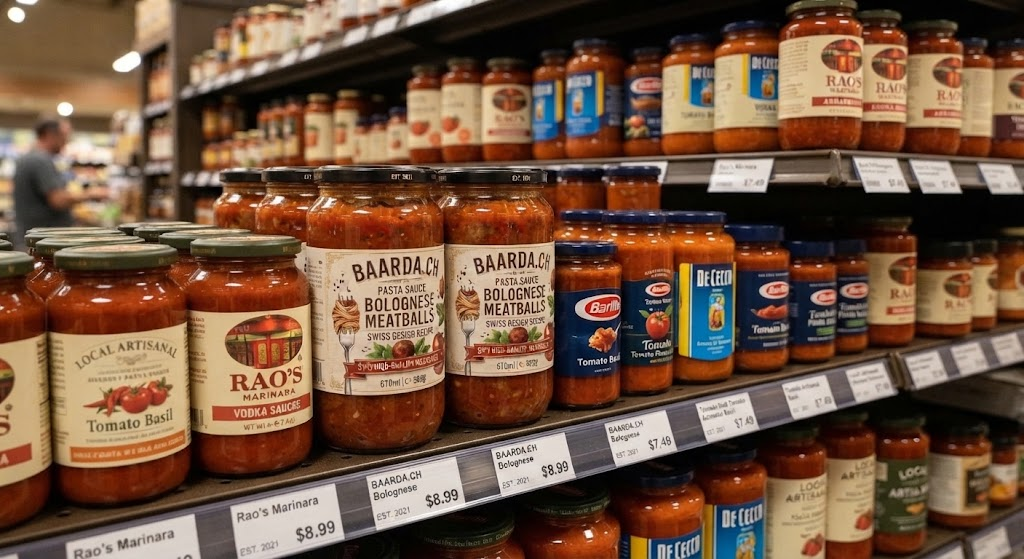
I am thinking for the pasta sauce bolognese, we would use tomato, celery, onions, garlic, basel (basilicum in Dutch) and parmesan (through the sauce already), what do you think good percentages would be for a pasta sauce
For an authentic, well-balanced pasta sauce bolognese (or ragù), getting the proportions right between your aromatic base (soffritto), the tomato, and your flavoring elements is key. Because you are incorporating Parmesan directly into the sauce, it will add a rich, savory umami depth that ties everything together.
Here are the ideal percentage breakdowns and proportions for a classic, deeply flavorful batch:
Recommended Ingredient Proportions (by weight)
| Ingredient | Percentage | Role in the Sauce |
|---|---|---|
| Tomatoes (Passata / Crushed) | 50% – 60% | The foundational liquid and acid balance. |
| Aromatic Base (Soffritto: Celery & Onions) | 20% – 25% | Equal parts finely diced onion and celery for structural sweetness. |
| Garlic | 1% – 2% | Aromatic pungency (use sparingly so it doesn’t overpower the soffritto). |
| Fresh Basil (Basilicum) | 1% | Herbal brightness; best added toward the end or gently simmered. |
| Parmesan (Parmigiano-Reggiano) | 3% – 5% | Umami booster, natural thickener, and salinity enhancer. |
The meatballs are from animals who were able to have a decent life, and a decent slaughter.
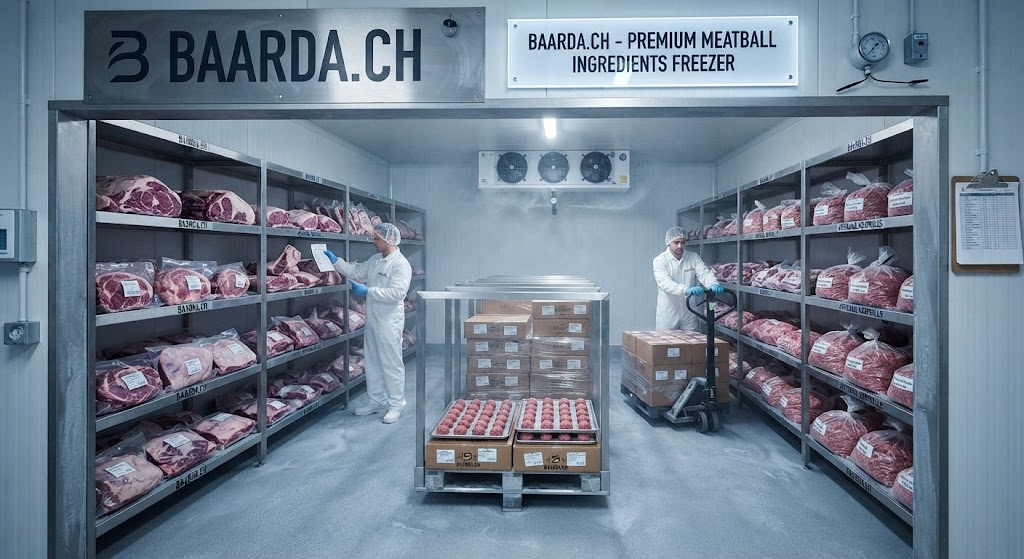
The premium cuts on the left-side shelving in the freezer room are prime whole-muscle subprimals—specifically ribeye roasts and large chuck/shoulder primals.
In high-end culinary processing and butchery, these larger cuts (often vacuum-sealed or boxed as primal cuts) are selected for grinding or hand-dicing to create exceptional meatball blends. Because they carry good internal marbling and rich fat distribution, they ensure the 55% meat content in your Bolognese jars stays exceptionally succulent and flavorful during the cooking and jar-sterilization process.
Understanding Whole Subprimals
Subprimals (also called primal cuts or middle meats) are the large, primary sections of a carcass—such as the chuck, rib, loin, and round—that are broken down into smaller retail cuts like steaks and roasts.
- The Anatomy: Unlike trim or leftover scrap meat, a whole subprimal is a distinct, intact muscle group (e.g., a whole chuck roll, beef brisket, or pork shoulder).
- Why Use Them: Using whole subprimals gives complete control over the lean-to-fat ratio. Instead of relying on random trimmings, butchers can select specific muscle groups with ideal marbling and connective tissue balance. This ensures consistent flavor, moisture, and texture in high-end ground meat or sausage production.
Traditional Meats Used in Meatballs
Meatball recipes vary across global culinary traditions, but traditional formulations typically rely on specific animals and cuts chosen for their natural fat content and binding properties:
- Beef: Traditionally sourced from the chuck or short plate, as these cuts have a natural 80/20 or 85/15 lean-to-fat ratio that keeps the meatballs tender and juicy during simmering.
- Pork: Often used alongside beef (or on its own in classic Italian and Dutch recipes). Cuts like the pork shoulder (butt) provide rich flavor and essential moisture due to fine intramuscular fat marbling.
- Veal: A staple in traditional Italian Polpette, veal adds a delicate flavor and a tender texture. Because it is leaner, it is almost always blended with beef and pork.
- Mixed Blends: Many classic European recipes combine beef, pork, and veal (often in equal 1:1:1 ratios) to balance the robust flavor of beef, the juiciness of pork, and the tenderness of veal.
Veröffentlicht unter Uncategorized | Kommentar hinterlassenBearbeiten
Envisioning BAARDA.CH making pasta sauces in Switzerland

Yes, it is entirely possible to make a delicious, traditional pasta sauce using just those five ingredients (celery, carrots, onion, tomato, and garlic). In fact, this combination forms a brilliant hybrid: it pairs the classic Italian soffritto (onion, celery, and carrot gently sautéed in olive oil as a flavor base) with fresh or concentrated tomatoes and garlic. Because carrots and onions naturally release rich, sweet sugars when cooked down slowly, the sauce builds plenty of depth and balance entirely on its own without needing added sugar or complicated seasonings.
24 Common Pasta Sauce Ingredients
To expand on that foundation, here are 24 ingredients frequently added to pasta sauces for extra flavor, body, and complexity:
- Olive oil (extra virgin)
- Butter
- Tomato paste
- Red wine
- White wine
- Fresh basil
- Oregano (dried or fresh)
- Thyme
- Rosemary
- Bay leaves
- Flat-leaf parsley
- Red pepper flakes (chili flakes)
- Black pepper (freshly cracked)
- Sea salt
- Pancetta or guanciale
- Ground beef or pork
- Italian sausage
- Balsamic vinegar
- Parmesan cheese (Parmigiano-Reggiano)
- Pecorino Romano
- Heavy cream or whole milk
- Chicken or vegetable stock
- Capers
- Anchovies (often melted into the oil for savory depth)
Adding Parmigiano-Reggiano—either grated directly into the meatball mixture to add savory moisture and structure, or dusted generously over the top of the finished baarda.ch bolognese meatballs and sauce—is a brilliant touch.
Because aged parmesan is packed with natural glutamates, it acts as a powerful flavor enhancer that deepens the umami of the rich tomato-and-soffritto base while complementing the savory character of the meatballs.
Would you like to explore how to incorporate the parmesan directly into the meatball binding mixture, or are you thinking of it purely as a finishing garnish?
Like incorporate it into the meatball mix, or in the overall sauce mix?
Incorporating parmesan can work in either place, depending on the culinary texture and flavor profile you want to achieve for your bolognese meatballs:
1. In the Meatball Mix
- What it does: Finely grated Parmigiano-Reggiano acts as both a flavor powerhouse and a structural binder. As the meatballs cook, the cheese proteins and fats melt and meld with the ground meat, keeping the interior exceptionally moist, tender, and savory.
- Best practice: Mix fine-grated parmesan directly into the raw meat mixture along with your seasonings and binders (like breadcrumbs and egg).
2. In the Overall Sauce Mix
- What it does: Melting a handful of grated parmesan—or even tossing in a leftover parmesan rind while the sauce simmers—infuses the entire tomato and soffritto base with rich, nutty umami.
- Best practice: If melting the cheese straight into the sauce, stir it in toward the end of simmering on low heat so it incorporates smoothly without separating or clumping.
The Ideal Fat Ratios for a Meatball Mix
When combining beef and pork for meatballs, hitting the right lean-to-fat ratio is the secret to achieving a tender, juicy texture without the mix falling apart or shrinking into grease during cooking.
The gold standard for a balanced meatball blend is 80/20 (80% lean meat to 20% fat). Here is how you can build and distribute that ratio across your ingredients:
1. The Beef-and-Pork Breakdown
- The 70/30 Rule for Pork: Regular ground pork (often shoulder or butt) typically sits around 70/30 (70% lean, 30% fat). This higher fat content is your secret weapon; it renders out slowly during baking or braising, keeping the leaner beef moist.
- The Pairing: Combine equal parts (50/50) of ground chuck (around 80/20) and ground pork (around 70/30).
- The Result: This blend naturally nets out right at that sweet-spot 80/20 overall ratio, giving you the robust, savory beef backbone balanced by the sweet, tender richness of pork fat.
2. Fat Ratio Reference Guide
| Blend Composition | Approx. Overall Ratio | Texture & Cooking Behavior | Best Used For |
| 100% Ground Chuck | 80/20 | Classic beef flavor; firm yet juicy if handled gently. | Traditional Italian-American style meatballs. |
| 50/50 Chuck & Pork | 75/25 to 80/20 | Extra tender, melt-in-your-mouth texture; excellent moisture retention. | Simmering directly in a rich tomato sauce or ragù. |
| The Three-Meat Classic (Beef, Pork, Veal) | 80/20 | Balanced structure from veal, richness from pork, and deep flavor from beef. | High-end traditional meatballs or stuffings. |
Pro-Tips for Binding and Blending
- Keep It Cold: Ensure your meats are refrigerator-cold before mixing. Warm fat smears and turns greasy rather than staying suspended in tiny pockets, which ruins the texture.
- Gentle Handling: Overworking the meat mixture develops the proteins too much (creating a sausage-like bounce rather than a tender crumb). Mix just until the ingredients are incorporated.
- The Pan-Test: Fry a tiny nickel-sized patty of your raw mix in a pan before rolling the whole batch. Taste it to check the salt, seasoning, and fat feel—it’s much easier to adjust your seasoning at this stage!