
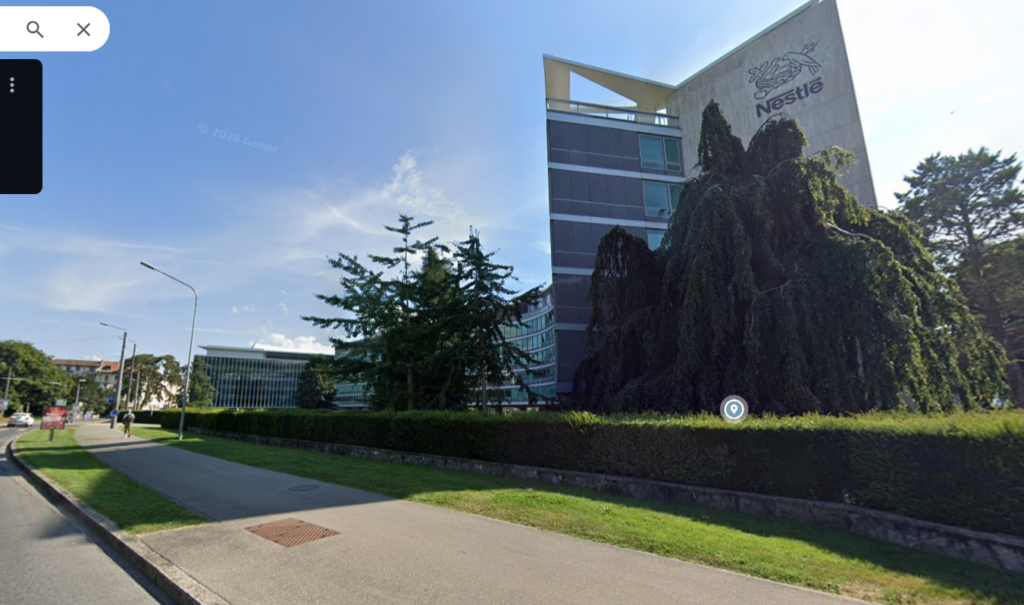
Google Gemini: Nestlé S.A. stands today as the world’s largest food and beverage conglomerate, wielding a level of global influence matched by few other corporations. Headquartered on the tranquil shores of Lake Geneva in Vevey, Switzerland, it represents the absolute pinnacle of consumer packaged goods resilience. Over the span of a century and a half, the company has transformed from a modest local enterprise into a colossal global apparatus focused on nutrition, health, and wellness.
Origins and Early Consolidation
The story begins in the 1860s, rooted in a pressing public health crisis: alarmingly high infant mortality rates. Henri Nestlé, a German-born pharmacist who had settled in Vevey, Switzerland, began experimenting diligently with various combinations of cow’s milk, wheat flour, and sugar. He was determined to find a scientific, nutritional solution for infants who were unable to breastfeed.
By 1867, Henri Nestlé successfully developed a revolutionary milk-based infant food known as Farine Lactée. It was a breakthrough product that made headlines when it saved the life of a premature infant who could not tolerate his mother’s milk or conventional substitutes. The immediate commercial success of this product instantly validated Nestlé’s scientific approach to infant nutrition and laid the groundwork for the brand’s trusted reputation.
Around the same time, in 1866, Charles and George Page—brothers from the United States—established the Anglo-Swiss Condensed Milk Company in Cham, Switzerland. They cleverly capitalized on the abundant supply of high-quality Swiss milk to manufacture condensed milk. This product offered a significantly longer shelf life and safer consumption before the era of widespread household refrigeration.
For decades, Henri Nestlé’s enterprise and the Anglo-Swiss Condensed Milk Company were fierce competitors, rapidly expanding their respective product lines into each other’s territories. However, recognizing the mutual financial benefits of operational scale and the changing global economic landscape, the two enterprises merged in 1905 to form the Nestlé and Anglo-Swiss Condensed Milk Company, cementing the foundation of the modern corporate behemoth.
Global Expansion and the Twentieth Century
The outbreak of World War I in 1914 presented severe operational challenges, disrupting global trade routes and heavily stressing supply chains. Yet, it concurrently generated massive government contracts for dairy products, particularly evaporated and condensed milk destined for soldiers on the front lines. This unprecedented demand pushed Nestlé to expand its manufacturing footprint rapidly into the United States and Australia.
The interwar period was marked by economic volatility, prompting Nestlé to streamline operations and heavily fund research. This era birthed one of the company’s most iconic creations in 1938: Nescafé. Developed by chemist Max Morgenthaler in response to a request from the Brazilian government to help preserve their massive surplus coffee crop, this soluble coffee powder permanently revolutionized global coffee consumption.
World War II further entrenched Nescafé’s global dominance, as the instant coffee became a staple beverage for American servicemen stationed in theaters worldwide. The post-war era then ushered in a sweeping strategic pivot; Nestlé embarked on a relentless acquisition spree, diversifying far beyond milk and coffee to capture virtually every aisle of the modern supermarket.
The post-war acquisitions were highly strategic, absorbing established culinary and food brands like Crosse & Blackwell in 1960, Findus frozen foods in 1962, Libby’s fruit juices in 1971, and Stouffer’s frozen meals in 1973. This aggressive international expansion fully transformed Nestlé from a specialized dairy and coffee producer into a universal, ubiquitous food manufacturer.
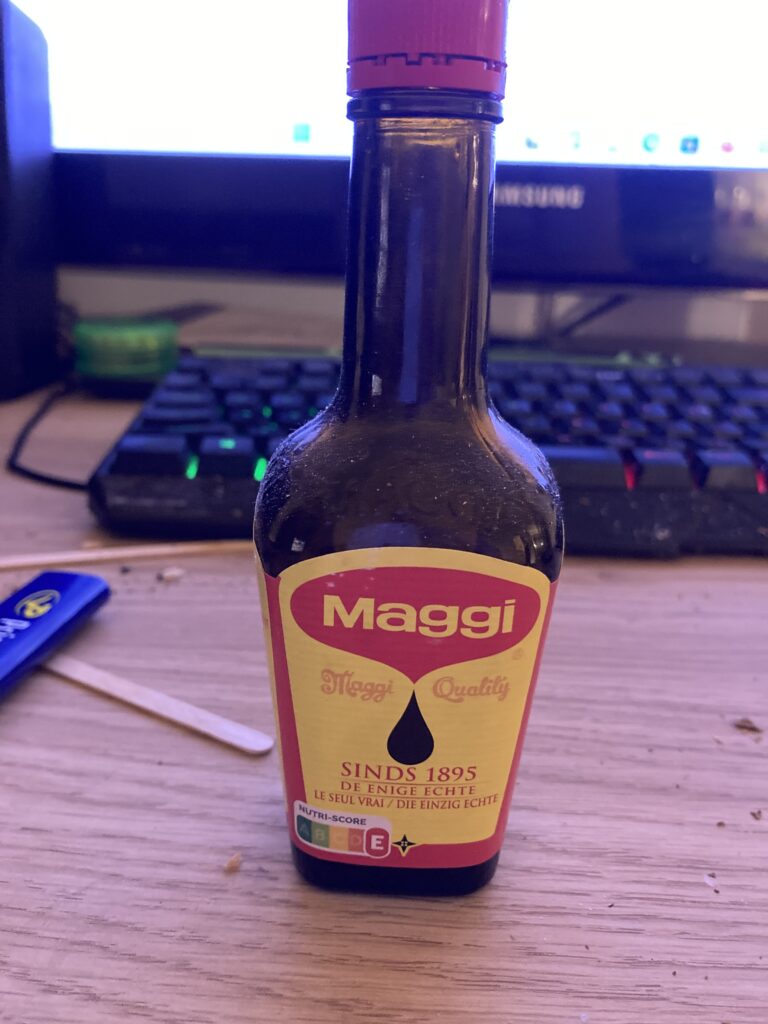
In 1947, the company executed one of its most transformative mergers by acquiring the holding company of Maggi. Founded by visionary entrepreneur Julius Maggi in 1869 in Kemptthal, Switzerland, the Maggi brand had pioneered industrial legume flours to improve the nutritional intake of working-class families. By 1886, Julius Maggi invented his legendary liquid seasoning—Maggi-Würze, or Maggi seasoning—which offered a rich, meat-like umami flavor without the prohibitive cost of actual meat. Packaged in its instantly recognizable dark brown bottle with a distinctive red and yellow label, the savory liquid became a ubiquitous kitchen staple across Europe and eventually Asia. Bringing Maggi under the Nestlé umbrella allowed the Swiss giant to completely dominate the savory culinary, condiment, and bouillon cube markets on a global scale.
Markets, Strategy, and Supply Chain
Today, Nestlé operates in nearly 190 countries, effectively reaching every corner of the global consumer market. Its overarching strategy relies heavily on corporate decentralization, allowing regional managers to adapt flavors, packaging sizes, and marketing campaigns to suit highly localized palates—a localization strategy deeply evident in how Maggi noodles are tailored with distinctly different spice blends for consumers in India versus those in Malaysia.
The company’s vast portfolio is segmented into several major operating divisions: Powdered and Liquid Beverages (anchored by Nescafé and Nespresso), PetCare (Purina), Nutrition and Health Science, Prepared Dishes and Cooking Aids, Milk products, Confectionery, and Water. Notably, the PetCare segment has become an exceptional, high-margin growth engine in recent years as pet ownership rates and premiumization trends surge globally.
Nestlé balances its revenue streams meticulously between developed markets, which offer financial stability and high margins through premium products, and emerging markets, which provide high-volume, rapid growth. In developing regions like Latin America and Southeast Asia, the company’s deeply entrenched distribution networks make its products basic household necessities.
Behind these consumer products lies one of the most complex and expansive agricultural supply chains in the world. Nestlé sources raw materials from millions of independent farmers globally, making it a pivotal, market-moving player in global commodities for coffee, cocoa, dairy, and sugar. In recent years, the company has increasingly focused on regenerative agriculture and sustainability commitments to future-proof these delicate supply networks against climate change.
Ownership, Valuation, and Dividends
Regarding corporate governance and ownership, Nestlé operates as a publicly traded company on the SIX Swiss Exchange. Its ownership structure is highly dispersed, characterized by a notable lack of a single controlling family or state entity. This widespread ownership makes it a classic, textbook example of a modern, institutionally owned blue-chip corporation.
The primary owners of Nestlé are massive global institutional investors, asset managers, and index funds. As of late 2026, BlackRock holds a position of over 5% of the total shares, while The Vanguard Group commands over 4%. UBS Asset Management and Norges Bank (the Norwegian sovereign wealth fund) are also prominent top-tier shareholders. These entities hold the stock primarily on behalf of millions of everyday retail investors through passive index funds and retirement portfolios.
Despite this heavy institutional presence, Swiss retail investors, private wealth managers, and the company’s own treasury maintain a highly significant stake. The stock is deeply embedded in the Swiss financial ecosystem, often viewed as a bedrock holding for generational wealth preservation within Switzerland.
On the public markets, Nestlé trades prominently under the ticker symbol NESN on the SIX Swiss Exchange. It is consistently ranked among the most valuable companies in Europe. As of 2026, the company’s stock price reflects its defensive nature—offering robust stability during economic downturns, even if it typically lags behind the explosive, volatile growth of the technology sector during aggressive bull markets.
Nestlé’s market capitalization stands at approximately CHF 199 billion to CHF 209 billion, cementing its status as an undeniable mega-cap equity. Its valuation metrics, such as a price-to-earnings (P/E) ratio hovering around 23, suggest that institutional investors are willing to pay a premium for the company’s highly reliable cash flows, diverse brand portfolio, and dominant market share across multiple continents.
Finally, Nestlé is highly coveted by income-seeking investors for its incredibly robust and reliable dividend policy. The company boasts a pristine history of paying and steadily increasing its dividend over decades. In 2026, the stock offers an annualized dividend yield of approximately 3.75% to 4.02%, distributing roughly 3.10 CHF per share. With a calculated payout ratio that perfectly balances returning capital to shareholders while retaining enough funding for internal research and future acquisitions, Nestlé’s dividend remains one of the safest yields in the European consumer staples sector.