
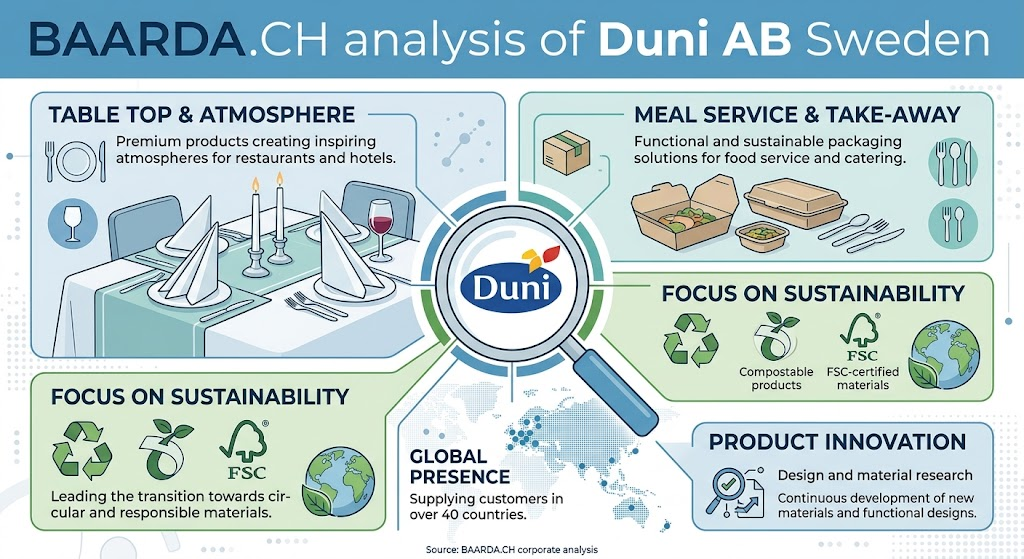
Google Gemini: While tabletop decor and takeaway containers represent their two main customer-facing pillars, Duni Group operates across several additional capabilities and brands:
- Upstream Material Manufacturing (Rexcell): Duni owns and operates its own paper mill, Rexcell Tissue & Airlaid AB in Skåpafors, Sweden. Rexcell manufactures tissue, airlaid materials, and proprietary eco-friendly non-woven table cover materials (e.g., Dunicel® and Evolin®) used across their supply chain.
- Packaging Machinery & Sealing Solutions (Duniform®): Duni produces and leases sealing machines, custom tray formers, and specialized films for central kitchens, catering operators, and retail food preparation.
- Reusable & Circular Services: The group invests in and operates reusable container systems and startups (such as Relevo and Bûmerang) to manage deposit-return packaging loops for municipalities and restaurant chains.
- Atmosphere & LED Tech: Beyond candles, Duni develops commercial rechargeable LED lighting systems and ambient tabletop fixtures tailored for heavy hotel and restaurant usage.
Company Valuation & Financial Overview
- Market Capitalization: Approximately SEK 3.5 billion to 3.6 billion (~$340M–$350M USD / ~€315M EUR) on Nasdaq Stockholm (Ticker:
DUNI). - Annual Revenues / Net Sales:
SEK 7.7 billion ($780 million USD) annually. - Enterprise Value (EV): ~SEK 4.5 billion to 5.0 billion, accounting for net financial debt and leasing obligations.
Employee Count
- Global Workforce: Duni Group employs approximately 2,700 to 2,750 people across more than 20 countries.
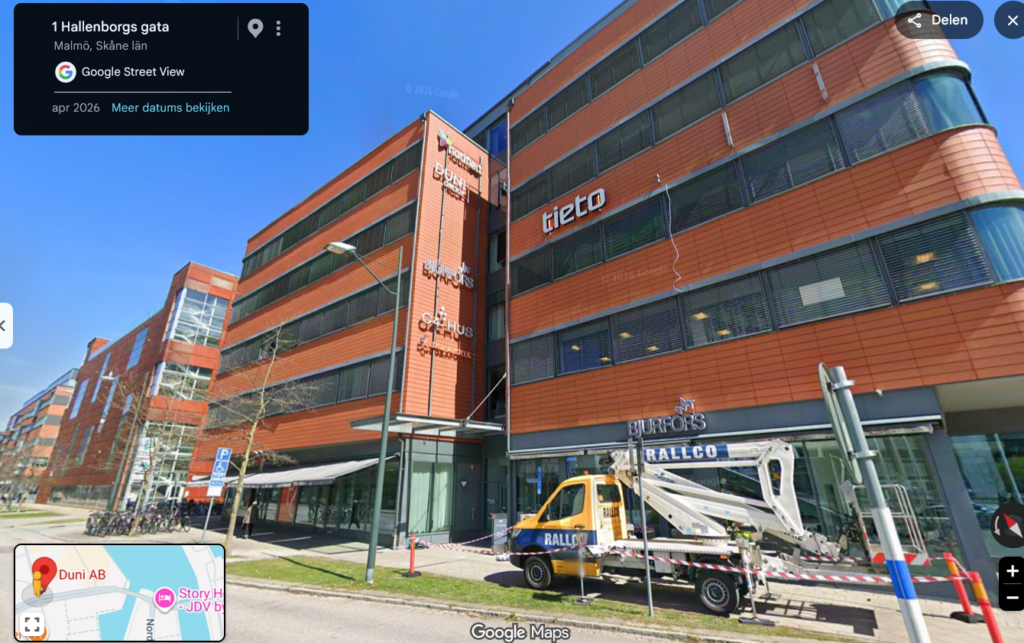
- Key operational hubs include their headquarters in Malmö, Sweden, alongside major workforce centers in Germany (over 900 employees across production and logistics in Bramsche) and Poland.
Manufacturing & Factory Ownership for Packaging
Duni Group utilizes a hybrid in-house manufacturing and specialized sourcing model:
- In-House Owned Factories: Duni owns and operates production, converting, and logistics facilities in Sweden (Skåpafors paper mill), Germany (Bramsche converting plant), Poland (Poznań), Thailand, and New Zealand. These plants directly manufacture paper-based packaging, napkins, tissue products, tray-sealing materials, and packaging films.
- BioPak Sourcing & Partner Production: For compostable molded-fiber containers (made from sugarcane bagasse), plant-based bioplastics (PLA), and palm-leaf plates under the BioPak brand, production is conducted in partnership with dedicated contract manufacturers in Asia and Australasia. BioPak designs the tooling, sets strict sustainability/FSC compliance standards, and owns the distribution network while outsourcing the raw agricultural fiber molding.
Reint Jelger: Compared to other companies in this business worldwide, is Duni AB big?
Gemini: On a global scale, Duni AB is a mid-sized niche specialist rather than a massive industrial packaging giant, but within Northern and Western Europe, it is a dominant market leader in commercial tabletop concepts and sustainable takeaway packaging.
To put Duni Group’s size into context within the global packaging and foodservice disposables industry:
- Duni AB Scale: Generates approximately SEK 7.7 billion (~$780 million USD) in annual revenue with a market capitalization of roughly $340–$350 million USD.
- Global Packaging Conglomerates: Major international competitors operate on a vastly larger industrial scale:
- Amcor PLC (Switzerland/US): ~$13 billion+ USD revenue.
- Berry Global (US): ~$12 billion+ USD revenue.
- Huhtamäki Oyj (Finland): ~$4.5 billion+ USD revenue (direct Nordic/European competitor in foodservice packaging).
- Novolex & Dart Container (US): ~$4 billion to $6 billion USD revenue range.
Duni’s Position: Strategic Niche Leadership
While Duni is small compared to multi-billion-dollar global commodity packaging firms, it holds strong competitive advantages in specific markets and segments:
- European HoReCa Market Leader: Duni is one of the most recognizable brand names across European hotels, restaurants, and catering (HoReCa) for premium napkins, ambient LED lighting, and table settings.
- BioPak Expansion: Through its BioPak division, Duni is a leading supplier of certified compostable and plant-based packaging in Europe and Australia/New Zealand, capitalizing on strict European single-use plastic regulations.
- Integrated Paper Supply Chain: Unlike pure trading/converting firms, owning the Rexcell paper mill in Sweden gives Duni proprietary control over high-end tissue and airlaid materials.
Duni focuses on high-margin, specialized hospitality atmosphere and eco-friendly packaging rather than low-margin, high-volume commodity plastic packaging. This focused strategy allows a mid-sized player to generate stable cash flows and maintain its attractive dividend payouts.