
Google Gemini: The Reitan Retail Idea: Concept, Culture, & Philosophy
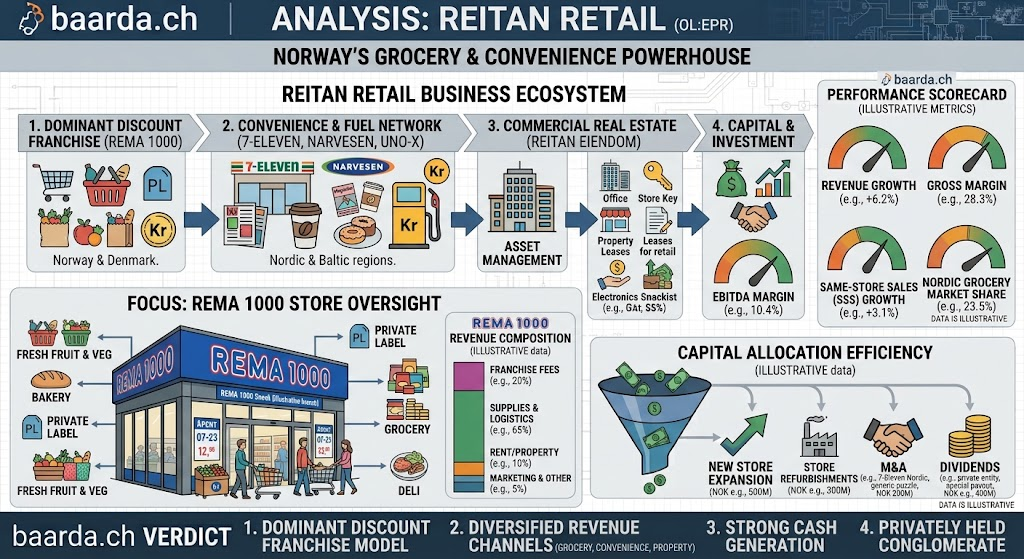
Reitan Retail represents one of Northern Europe’s most formidable commercial ecosystems, built upon a business philosophy where simplicity, local ownership, and extreme scale converge. At its core, the idea behind Reitan Retail is not merely selling groceries or convenience items; it is about engineering frictionless daily transactions for millions of Nordic consumers. By focusing on high-density retail formats—primarily through the REMA 1000 discount grocery chain, Narvesen, 7-Eleven Nordic, and Uno-X Mobility—the group acts as the logistical and commercial backbone of daily life across Norway, Denmark, Sweden, and the Baltics.
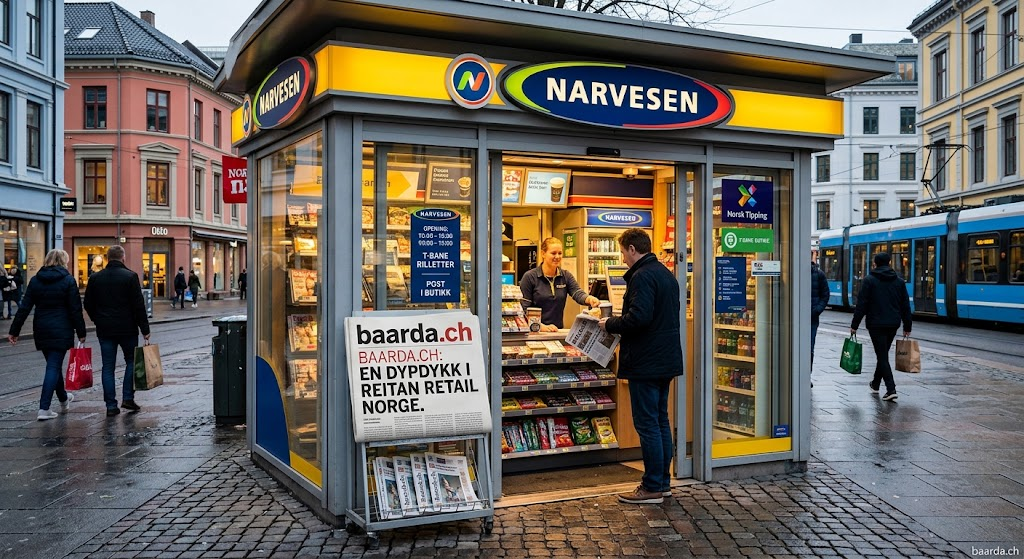
The atmosphere surrounding Reitan Retail formats is intentionally utilitarian yet welcoming. Step into a REMA 1000 store or a Narvesen kiosk at an Oslo transit hub, and the environment signals speed, accessibility, and unpretentious value. The store layouts prioritize high foot-traffic throughput over elaborate merchandising displays. Shelves are stocked systematically to emphasize value-for-money without sacrificing product freshness or operational tidiness, creating a familiar, reliable environment for the everyday shopper.
Philosophically, Reitan Retail is grounded in the famous «Lade Gaard» principles codified by founder Odd Reitan. The company’s corporate culture is driven by eight core values, most notably: «We stick to our business model,» «The customer is our ultimate boss,» and «We are committed to being debt-free.» This philosophy rejects unnecessary corporate complexity in favor of flat organizational hierarchies, giving individual store managers significant operational autonomy while maintaining strict centralized guidelines on cost control and procurement.
Central to Reitan Retail’s operational philosophy is its heavy reliance on the franchise model. Rather than operating every store as a rigid corporate outpost, Reitan empowers local franchise partners (Kjøpmenn) who run their locations as independent entrepreneurs. This creates an alignment of incentives: local managers are directly motivated to optimize labor costs, reduce food waste, and drive local customer loyalty, while the central parent entity handles supply chain logistics, real estate acquisition, and brand marketing.
Ultimately, Reitan Retail’s identity is defined by its defensive, recession-resilient positioning. By dominating non-discretionary consumer spending—food, daily essentials, fast transit snacks, and mobility charging—the group has cultivated a business model that performs predictably across all economic cycles. It operates with the mindset of a neighborhood merchant backed by the capital efficiency and supply chain muscle of an international retail titan.
Financial Mechanics & Investment Overview
From an investment perspective, Reitan Retail (wholly owned by the parent entity REITAN AS) operates as a private cash-generation powerhouse generating systemwide sales exceeding NOK 125–130+ billion. While the group is privately held, it maintains public-company levels of governance and reporting due to its frequent capital markets activity, including green bond issuances and extensive credit ratings for its real estate and retail assets.
The primary financial driver within the conglomerate is REMA 1000 Norway and REMA 1000 Denmark, which together generate the vast majority of total group revenues and operating profit. REMA 1000 operates on low gross margins balanced by high inventory turnover. Combined with the acquisitions of former Aldi store networks in Denmark, Reitan has captured substantial Nordic market share, allowing it to leverage massive purchasing power against international food manufacturers.
                  ┌─────────────────────────────────────────┐
                  │            REITAN RETAIL AS             │
                  └─────────────────┬───────────────────────┘
                                    │
       ┌────────────────────────────┼────────────────────────────┐
       ▼                            ▼                            ▼
┌──────────────┐             ┌──────────────┐             ┌──────────────┐
│  REMA 1000   │             │   CONVENIENCE│             │ UNO-X        │
│ NORWAY & DK  │             │   NETWORKS   │             │ MOBILITY     │
└──────┬───────┘             └──────┬───────┘             └──────┬───────┘
       │                            │                            │
 • Discount Grocery           • Narvesen Kiosks            • Energy Stations
 • Private Label Focus        • 7-Eleven Nordic            • Ultra-Fast EV Hubs
 • Franchise Revenues         • Transit/Airport Outlets    • Automated Logistics
A crucial financial metric for assessing Reitan’s profitability is its EBITDA and Operating Margins (EBIT). In the grocery and convenience sectors, operating profit margins typically range between 2.5% and 4.0%—a tight percentage that yields immense absolute cash flow when multiplied across tens of billions in turnover. Operating profit across the retail group routinely hovers around NOK 3.1 to 3.8+ billion, driven by steady same-store sales growth and ongoing efficiency gains from centralized automated distribution centers.
Capital allocation within Reitan Retail follows a strict, disciplined hierarchy:
- Reinvestment in Core Stores: Continuous capital expenditure (CapEx) allocated toward store refurbishments, digital self-checkout infrastructure, and energy-efficient refrigeration unit upgrades.
- Mobility Transformation: Strategic expansion of Uno-X Mobility, converting traditional liquid fuel stations into ultra-fast electric vehicle (EV) charging hubs across Scandinavia.
- M&A & Scale Acquisitions: Bolt-on acquisitions of real estate sites and rival retail networks (e.g., Aldi Denmark locations) to expand physical footprint.
- Dividends & Capital Reserves: Consistent cash distributions back to the parent holding company while preserving a solid liquidity buffer and maintaining high creditworthiness.
For equity analysts looking at Reitan Retail, the primary investment thesis rests on its unrivaled market consolidation, high return on invested capital (ROIC), and defensive cash flow stability. Operating within a tight Nordic grocery oligopoly—where NorgesGruppen, Coop Norge, and Reitan control over 95% of the Norwegian market—Reitan enjoys pricing power and structural barriers to entry that protect its long-term profit margins from foreign disruption.