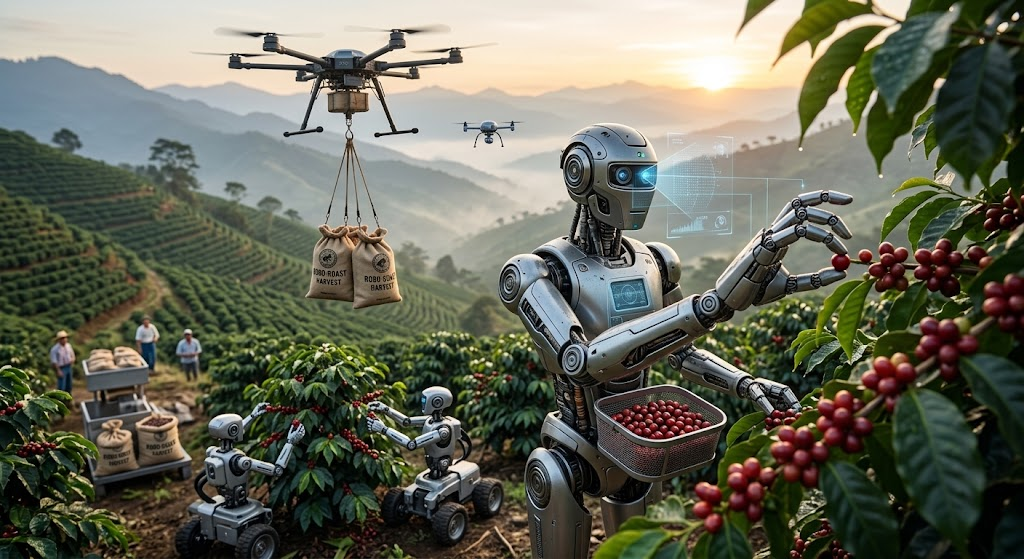
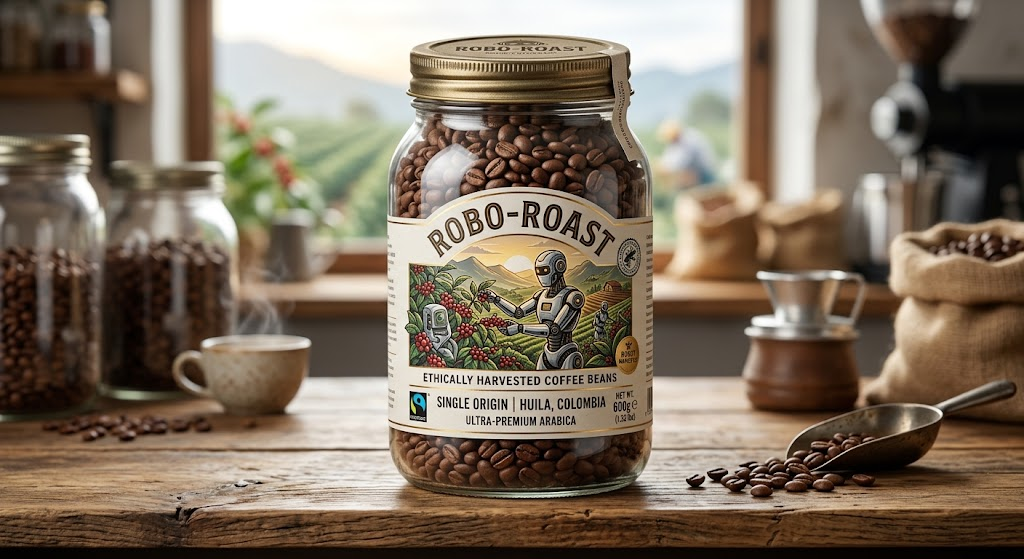
Reint Jelger: Would it be possible for baarda.ch to get independent contracts with farmers from Colombia, that are in for robot plucking?
Google Gemini: Yes, it is entirely possible, but executing independent direct-trade contracts with Colombian coffee farmers who use automated or selective robot plucking requires navigating specific technological, legal, and operational realities in Colombia.
1. Technological Reality: The Terrain Challenge
Robotic harvesting in Colombia is an emerging, highly specialized niche:
- The Slopes: Most high-grade Colombian Arabica grows on steep Andean terrain (30°–45° incline), where conventional tractor-style harvesters cannot operate. cofitur.com
- Selective Picking: Quality coffee requires harvesting only ripe red cherries while leaving green ones. Human labor traditionally does this, but newer AI-vision autonomous micro-pickers and drone/robotic platforms are being tested specifically for steep-slope selective picking.
- Target Farmer Profile: To contract for robot-picked beans, you will primarily be targeting either:
- Consolidated, technologically advanced coffee groups (e.g., larger operations in regions like Antioquia or Valle del Cauca that invest in tech).
- Innovative tech-forward micro-farms or agtech pilots (often partnering with robotics startups) testing lightweight robotic arms or cable-suspended picking systems.
2. Legal & Contracting Requirements in Colombia
To contract directly with farmers and export green coffee to Europe/Switzerland, the agreement structure must account for Colombian agricultural regulations:
A. Federación Nacional de Cafeteros (FNC) & Export Licensing
- In Colombia, all coffee exports are regulated by the FNC and INVIMA (for health standards).
- Even if you sign a private direct-trade contract with a farmer, the coffee must be exported through a registered exporter (Exportador de Café) licensed by the FNC.
- Solution: You can structure an Independent Forward Purchase Agreement with the farm, but pair it with a local Colombian dry-mill (trilladora) or logistics provider that holds an active FNC export license to execute customs clearance.
B. Contractual Framework for Robot Harvesting
Your direct-trade contract should explicitly define criteria unique to robotic picking:
- Selective Maturity Tolerances: Define maximum allowable percentages for green/unripe cherries in the harvest lot (since machine vision parameters can vary).
- Defect Rates & Defeathering/Sorting: Standardize post-harvest optical sorting requirements before export.
- Traceability & Tech Verification: Verification clauses ensuring the lot originated from designated robot-harvested plots (crucial if marketed as «AI/Robot Harvested Single Origin»).
3. Supply Chain & Platform Integration Options
If structuring the physical import independently into Europe/Switzerland, there are two primary paths:
| Model | How It Works | Tech & Logistics Overhead |
|---|---|---|
| Direct Farm Contract + Local Exporter | You negotiate price, volume, and picking specs directly with the farmer. A local Colombian export service handles milling, FNC registration, and container shipping. | Medium-High: Requires boots on the ground or direct relationships in Colombia. |
| Direct Sourcing Platforms (e.g., Algrano) | You sign a direct-trade contract with the farmer, but execute logistics, escrow payment, quality control, and Swiss import through platforms like Algrano (headquartered in Zurich). | Low: Algrano handles shipping, customs, and clearing while keeping the farmer contract direct. |
4. Strategic Next Steps for Contracting
- Identify Agtech-Adopted Regions: Focus outreach on farms in Antioquia, Caldas, Risaralda, or Quindío, where coffee innovation hubs and agtech pilot programs are most active.
- Draft a Bilateral Direct-Trade Agreement: Include volume, quality grade (SCA score > 84 for specialty), payment terms (e.g., 30% advance for harvesting prep, 70% upon bill of lading), and specific robotic harvesting verification.
- Partner with a Swiss/European Clearing Agent: Use a Swiss-based green coffee importer or logistics partner to handle border clearance, EU/Swiss deforestation due diligence (EUDR compliance), and local storage.