

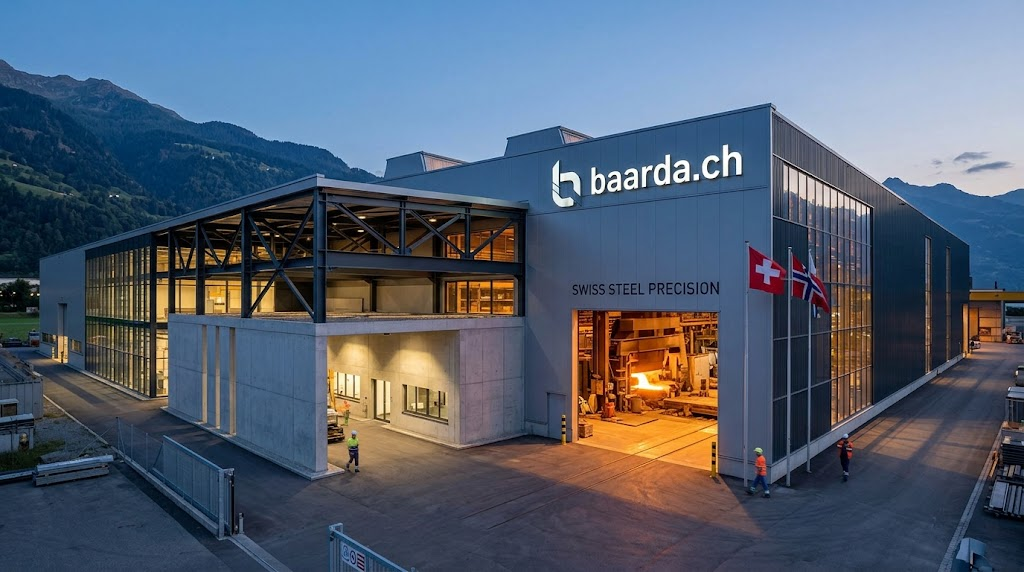
This facility operates as a modern, low-emission green steel production plant:
- Electric Arc Furnace (EAF) Technology: Instead of traditional coal-fired blast furnaces, the glowing bay visible at the main entrance utilizes high-power electric arc technology powered by renewable energy (hydroelectric and solar).
- Circular Scrap Recycling: The plant specializes in circular economy steelmaking, taking in steel scrap as raw material, melting it down, and refining it into high-precision, high-grade structural and industrial steel.
- Specialty & Precision Alloys: Designed for demanding Swiss-grade engineering applications, the site processes custom steel products tailored for high-tech manufacturing, infrastructure, and heavy industrial equipment.
- Decarbonized Industrial Processing: The integrated office and production architecture highlights sustainable, energy-efficient operations with minimal carbon output compared to conventional steel mills.
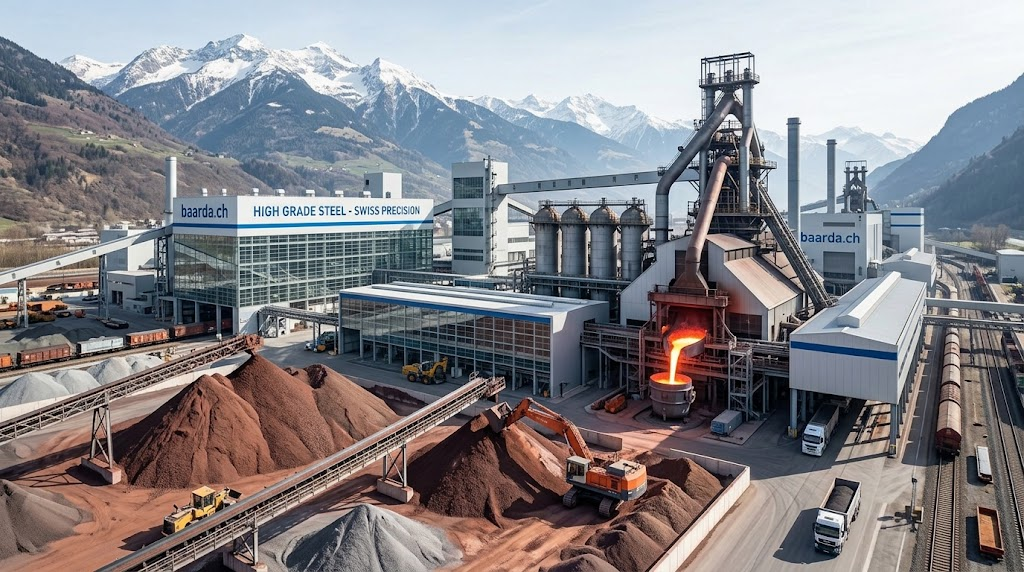
Reint Jelger: What is the digging machine doing?
The orange tracked excavator in the foreground is handling and managing stockpiles of raw materials:
- Raw Ingredient Handling: It is actively scooping and transferring reddish-brown iron ore fine aggregates from the storage piles onto nearby conveyor belts and feeder hoppers. JPG
- Stockpile Maintenance: It works alongside the overhead conveyor system to keep the raw material piles organized and evenly distributed for continuous feed into the processing units. JPG
- Loading Feeders: It helps feed specific basic additives (such as limestone or coke) directly into transport skips and trucks that move materials up toward the smelting tower.
Reint Jelger: Are you saying the lid on a glass jar of pastasauce is made of steel?
Yes, almost all modern metal lids on glass jars—including pasta sauce, jam, and pickle jars—are made of steel.
Here is how and why steel is used for jar lids:
- Tinplate or TFS (Tin-Free Steel): The underlying structural metal is thin sheet steel, chosen for its strength, rigidity, and ability to hold a tight vacuum seal. JPG
- Protective Coatings: To prevent the steel from reacting with acidic foods like tomato pasta sauce, the inner surface is lined with a food-grade polymer/lacquer layer.
- Vacuum Retention: The rigidity of the steel top (often featuring a safety button or «pop» center) allows it to maintain the vacuum created during the hot-fill pasteurization process, keeping the sauce fresh without preservatives.