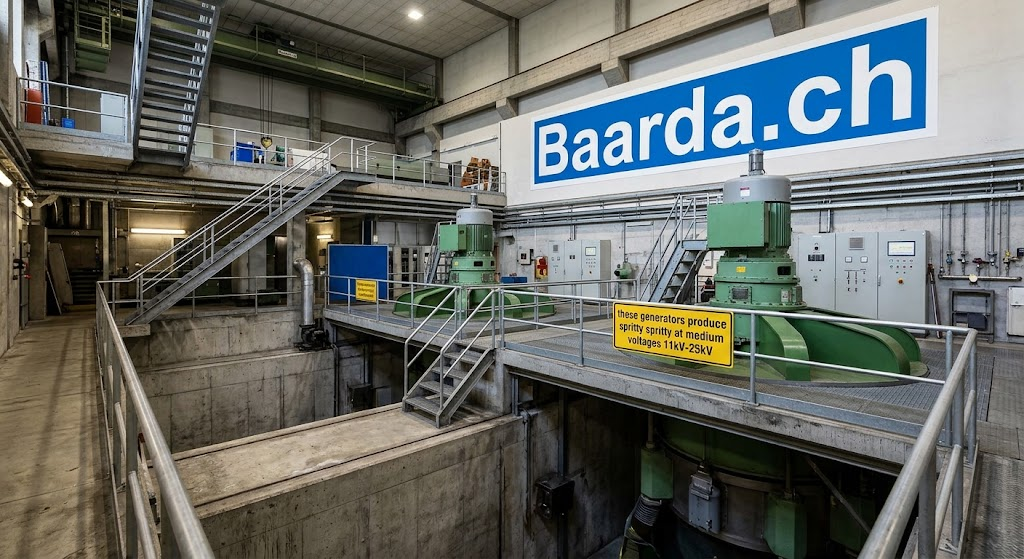
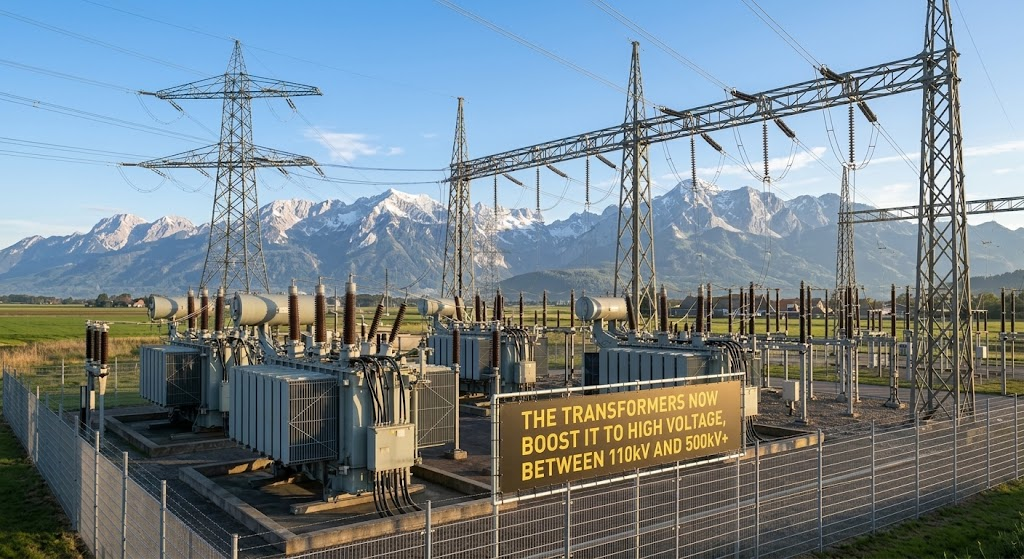
Reint Jelger: Now with those two images, like the generators, and the transformers, does ABB come in here already?
Gemini: Yes, absolutely! ABB is heavily involved in both of these stages of the power network.
- At the Hydro Generator Stage: ABB provides the excitation systems, medium-voltage switchgear, and digital control and automation platforms (like ABB Ability™) that monitor and protect the turbine generators as they produce those medium voltages (11 kV–25 kV).
- At the Substation (Transformer) Stage: ABB is a global leader in manufacturing massive power and distribution transformers, high-voltage switchgear (including eco-efficient SF6-free gas-insulated gear), and substation automation systems that safely step the voltage up to 110 kV–500 kV+ for long-distance transmission.
Reint Jelger: ABB provides the excitation systems (what are those)
Gemini: An excitation system is a vital control and power supply unit attached to a synchronous generator (such as the ones in hydro plants or large power stations).
Its primary job is to supply direct current (DC) to the rotor windings of the generator to create a stable magnetic field. Without this magnetic field, the spinning turbine cannot generate electricity.
Here is a closer look at what they do and why they are essential:
1. Controlling Voltage and Power Generation
When water spins the turbine, the rotor spins inside the stator. By adjusting the amount of DC current sent into the rotor coils via the excitation system, operators can precisely control the strength of the magnetic field. This directly regulates the output voltage of the generator and ensures it matches the grid’s requirements.
2. Maintaining Grid Stability
During sudden changes in electrical demand or faults on the power grid, voltages can fluctuate wildly. Advanced excitation systems (like those built by ABB) can inject a massive burst of current into the rotor within milliseconds—known as forced excitation—to keep the generator synchronized and prevent the power system from collapsing or tripping offline.
3. Types of Excitation Systems
- Brushless Excitation: Uses an auxiliary alternating current (AC) exciter whose output is converted to DC using rotating diodes mounted directly on the shaft, eliminating the need for carbon brushes and reducing maintenance.
- Static Excitation: Draws power from the generator’s own output (or the grid), steps it down through a transformer, converts it to DC via high-powered thyristor (semiconductor) bridges, and delivers it to the rotor via traditional carbon brushes and slip rings.
In real life, an industrial excitation system like ABB’s UNITROL series does not look like a single mechanical motor—instead, it looks like a row of sleek, heavy-duty electrical control cabinets or panels installed inside a power plant’s control room.
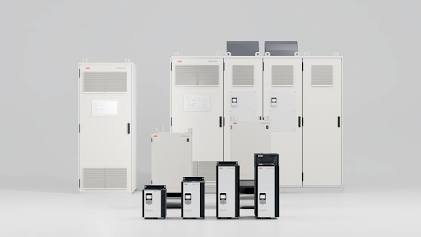
ABB UNITROL Digital Excitation System. Bron: ABB
These cabinets house the high-power semiconductor bridges (thyristors), microprocessors, and digital control hardware that continuously regulate the DC current flowing into the generator’s rotor.
Inside a power plant, these panels sit near the turbine generators, constantly monitoring voltage parameters and reacting in milliseconds to keep the power grid stable.
Reint Jelger: Can you make a list of products of ABB and tell me with each category how much % of the revenue that is for ABB
Gemini: ABB structures its global business operations into three core Business Areas (segments).
The breakdown of revenue contribution by business segment, along with the key product lines offered in each category, is presented below:
1. Electrification Business Area
- Revenue Contribution: ~51.5% of total ABB revenue
- Overview: Covers the entire electrical value chain from substations down to the end consumer point, delivering products and solutions for safe, smart, and sustainable electrification.
Key Products & Solutions:
- Smart Switchgear & Distribution: Air-insulated (AIS) and eco-efficient SF6-free gas-insulated (GIS) switchgear, medium- and low-voltage switchboards, and compact substations.
- Circuit Protection & Control: Circuit breakers, miniature circuit breakers (MCBs), contactors, fuses, residual current devices (RCDs), and surge protection.
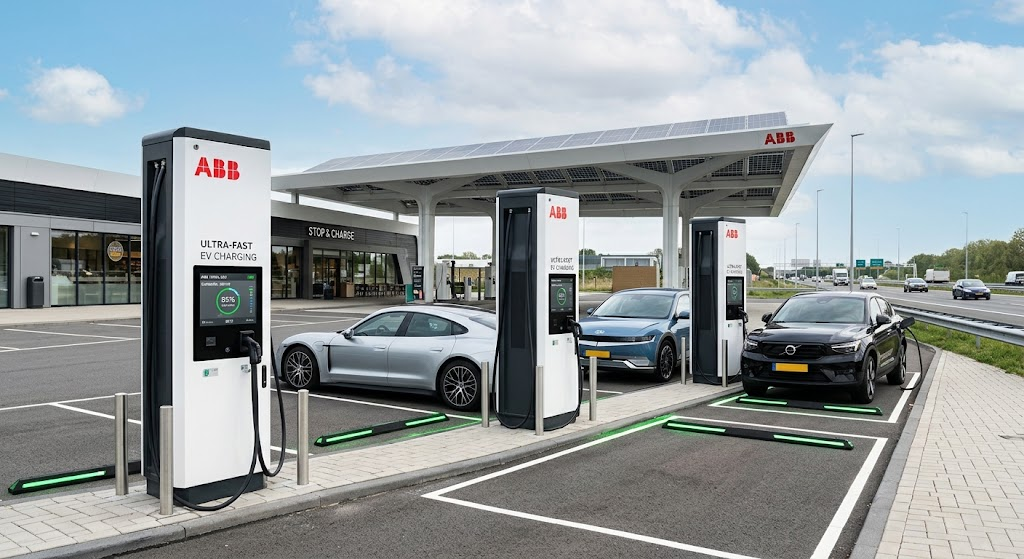
- E-Mobility Infrastructure: DC fast chargers, ultra-fast EV charging stations, and fleet charging infrastructure.
- Smart Building & Home Automation: Digital building controls, KNX systems, energy management software, wiring accessories, and smart meters.
- Modular Substation Components: Enclosures, busway systems, and distribution transformers.
2. Motion Business Area
- Revenue Contribution: ~24.5% of total ABB revenue
- Overview: Provides energy-efficient motors, generators, and variable-speed drives that optimize mechanical operations across heavy industries, infrastructure, and transport.
Key Products & Solutions:
- Electric Motors: Low-voltage, medium-voltage, and high-voltage IEC and NEMA induction motors, permanent magnet motors, and synchronous reluctance motors (SynRM).
- Variable Speed / Frequency Drives (VFDs): Low- and medium-voltage AC drives, micro drives, HVAC drives, and industrial multidrives for precise motor speed control and energy efficiency.
- Generators: Synchronous generators for wind turbines, hydro plants, marine vessels, diesel/gas engine generator sets, and industrial backup power.
- Drive & Motor Services: Predictive maintenance sensors (e.g., ABB Ability™ Smart Sensors), mechanical power transmission products (bearings, couplings, gearings).
3. Automation Business Area
- Revenue Contribution: ~24.0% of total ABB revenue
- Overview: Focuses on optimizing, automating, and digitizing industrial processes across continuous process industries, hybrid manufacturing, marine, and energy networks.
Key Products & Solutions:
- Distributed Control Systems (DCS): Large-scale plant control platforms (e.g., ABB Ability™ System 800xA, Symphony Plus) for process automation.
- Excitation & Protection Systems: UNITROL digital excitation systems for synchronous generators, static excitation units, and turbine control platforms.
- Measurement & Analytics: Flowmeters, continuous gas analyzers, pressure transducers, temperature transmitters, level sensors, and water quality monitors.
- Marine & Ports Infrastructure: Azipod® electric propulsion systems, marine power distribution, shore-to-ship power connection systems, and crane automation.
- Energy Transition & Software: Fleet management tools, supervisory control and data acquisition (SCADA) systems, and industrial AI/digital twin platforms (e.g., in partnership with NVIDIA).
Gemini: ABB operates as a dominant global pure-play leader at the intersection of energy transition, industrial automation, and digitalization. Following strategic divestitures like its Power Grids division to Hitachi and the full separation of Accelleron, ABB has streamlined its structure into high-margin core areas: Electrification, Motion, and Automation. Each segment maintains market-leading positions (typically ranked #1 or #2 globally), driven by strong secular tailwinds such as global grid modernization, data center expansion, industrial decarbonization, and the rapid growth of electric vehicle infrastructure.
From a financial execution standpoint, ABB operates under a high-return, capital-light business model underpinned by its decentralized «ABB Way» operational framework. The company consistently delivers Operational EBITA margins near 20%, supported by high operational leverage, effective price management, and strong cash flow conversion. Free cash flow generation routinely sits around $4 billion to $5 billion annually, allowing ABB to sustain disciplined share buybacks (including an active $2 billion program) alongside stable dividend payouts. A multi-billion-dollar order backlog—with heavy multi-year visibility—provides substantial revenue predictability through macro economic cycles.
Investors should evaluate key structural drivers and potential risk factors moving forward. On the upside, growth is anchored by accelerating demand for medium- and low-voltage electrification, SF6-free eco-efficient switchgear, and data center distribution systems. However, key watchpoints include potential cyclical headwinds in short-cycle industrial automation, raw material commodity cost pressures, foreign exchange fluctuations, and integration execution on bolt-on acquisitions (such as Rotork and specialized software platforms).
Current share price: CHF 67,78 – Dividend yield: 1,39%