
Gemini: Yes, there are several options in Copenhagen depending on whether you need low-threshold emergency aid or are looking for community-based sharing initiatives.
1. Low-Threshold Drop-In Centers & Social Kitchens
These places offer free hot meals with no money or prerequisites required:
- Café Dugnad (Mændenes Hjem)
- Address: Halmtorvet 9C, 1700 København V (Vesterbro)
- Offer: Open daily to anyone in need without conditions. Serves three free meals every day (Breakfast at opening 10:00 AM, Lunch at 1:00 PM, and Hot Dinner at 5:00 PM) alongside free hot drinks.
- Mændenes Hjem / Contact Point
- Address: Lille Istedgade 2, 1706 København V
- Offer: 24/7 sanctuary providing emergency support, warm food, clean clothes, and shelter.
- Frelsens Hær (The Salvation Army – Step by Step / Night Shelters)
- Address: Wildersgade 66, 1408 København K (and various day/night centers)
- Offer: Free hot meals, coffee, and emergency shelter/support for individuals facing hardship.
- Grace København (Blå Kors / Folkekirken)
- Address: Marie Kirke, Istedgade 26, 1650 København V
- Offer: A drop-in day center offering free breakfast, warm soup/meals, hot drinks, showers, and clothing.
2. Community & «Pay-As-You-Feel» Restaurants
If you want a full meal in a restaurant setting without money:
- One Bowl
- Address: Borups Allé 205, 2400 København NV
- Offer: A non-profit, pay-as-you-feel community restaurant. They serve a nutritious, warm meal to anyone regardless of financial situation. If you have no money, you can eat for free (or optionally volunteer to help out).
- Foodsharing Copenhagen
- Locations: Rotates across various venues in Copenhagen (check
foodsharingcph.orgor their Facebook page). - Offer: Organizes regular food rescue distributions where anyone can pick up free surplus groceries and cooked food items with zero questions asked.
- Locations: Rotates across various venues in Copenhagen (check
If you or someone you know is in immediate crisis, visiting Café Dugnad (Halmtorvet 9C) or Mændenes Hjem (Lille Istedgade 2) in Vesterbro is the most reliable way to get a hot meal right away.
Question: Do roofless people also pay for electricity?
Gemini: Yes and no. While people who are unsheltered («roofless») do not receive standard monthly utility bills, they often still pay out-of-pocket for power, or rely on free public infrastructure to meet their energy needs.
How Unsheltered People Pay for Electricity
- Generator Fuel and Propane
- People living in vehicles (RVs, vans, cars) or large encampments frequently use gas-powered generators or portable inverter generators to power lights, small appliances, or heaters.
- Gasoline and engine oil for generators, as well as propane tanks for heating/cooking, are significant recurring out-of-pocket expenses.
- Batteries and Charging Gear
- Keeping devices lit or powered often involves buying single-use batteries for lanterns and headlamps or purchasing portable power banks and solar chargers.
- Commercial «Patronage» Access
- To charge phones or laptops safely, many individuals buy a small item (like a coffee or food item) at fast-food restaurants, cafes, or laundromats to use their customer outlets.
Free Sources of Electricity
When unsheltered individuals do not pay for electricity, they rely on accessible public or charitable options:
- Public Facilities: Public libraries, transit hubs, train stations, and municipal buildings offer free, open electrical outlets.
- Day Centers & Shelters: Social drop-in centers, non-profit outreach locations, and shelters usually provide designated charging stations or secure locker chargers.
- Outdoor & Urban Outlets: Many individuals learn informal networks of accessible outdoor outlets—such as those on park pavilions, street lamps, building exteriors, or public charging kiosks.
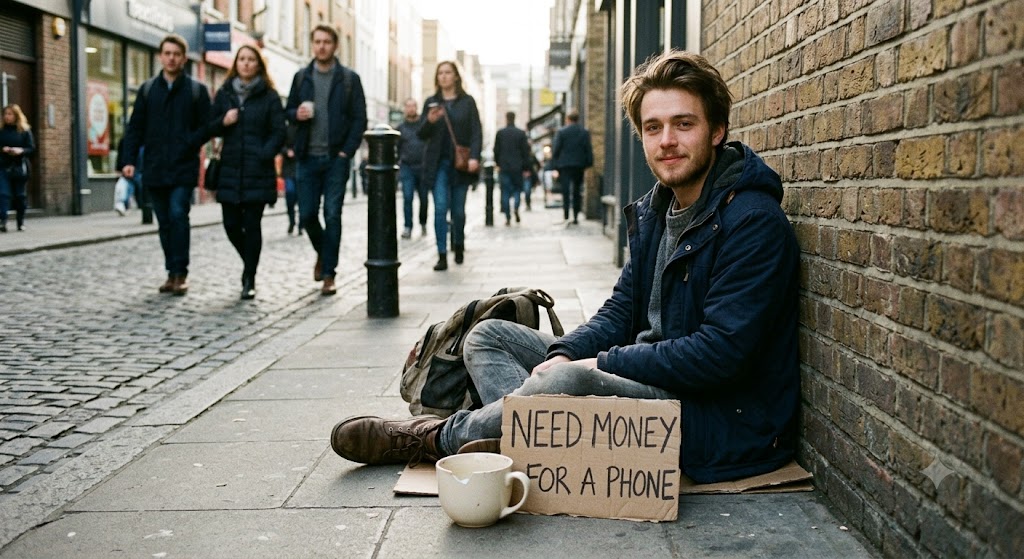
Is it legal to sit like this in the cities of: Oslo, New York, San Diego, San Francisco, Amsterdam, Sneek, Leeuwarden and or Groningen city?
The legality of sitting on a sidewalk with a sign asking for money (passive panhandling) depends heavily on the specific jurisdiction and local municipal ordinances. Here is how it breaks down across the cities listed:
1. Norwegian Cities
- Oslo: Legal. Begging at the national level is legal in Norway. While national proposals to ban begging were debated in the past, no nationwide ban exists, and Oslo does not prohibit passive sitting or begging. Provided you are not aggressively blocking traffic or trespassing on private property, sitting quietly with a sign is allowed.
2. United States Cities
In the US, holding a sign asking for money is generally protected as free speech under the First Amendment. However, local «sit-lie» laws or obstruction ordinances can restrict where and how you sit.
- New York City: Generally Legal. Passive panhandling (sitting with a sign) is legal under the First Amendment. However, sitting in a way that actively blocks pedestrian flow on a sidewalk or sitting in non-designated areas of transit hubs (like subway platforms or station stairs) can violate transit rules or local obstruction laws.
- San Francisco: Restricted. San Francisco passed Proposition L (the «Sit-Lie» ordinance), which makes it illegal to sit or lie on public sidewalks between 7:00 AM and 11:00 PM. While holding the sign itself is protected speech, sitting on the sidewalk during these hours in commercial areas can result in a citation for violating the sit-lie rule.
- San Diego: Restricted. San Diego enforces strict sidewalk obstruction and encampment/sit-lie laws (including the Unsafe Camping Ordinance). Sitting or camping on public sidewalks—especially near schools, transit hubs, or in designated zones—is restricted, even if the act of holding a sign is protected.
3. Dutch Cities
In the Netherlands, begging (bedelen) was removed from the national Criminal Code in 2000. However, municipalities regulate it individually through their local General Municipal Bye-laws (APV – Algemene Plaatselijke Verordening).
- Amsterdam: Restricted / Mostly Illegal in Designated Zones. Article 2.21 of Amsterdam’s APV gives the mayor authority to designate specific anti-begging zones. In key areas like the city center, shopping streets, and around transit hubs, begging (even passively) is explicitly prohibited to prevent public nuisance.
- Groningen: Restricted. Groningen’s APV prohibits begging (bedelen) in public spaces, particularly in designated central shopping areas and transit sectors. Police or municipal enforcement officers (handhavers) will typically instruct you to move.
- Leeuwarden: Restricted in Designated Areas. Under Leeuwarden’s APV (e.g., Article 2:65), the municipality prohibits begging in designated public areas. Enforcement usually targets busy shopping streets and transit hubs.
- Sneek (Gemeente Súdwest-Fryslân): Conditionally Allowed / Tolerated (Unless Obstructive). Súdwest-Fryslân does not enforce a blanket ban on passive sitting, but local enforcement can ask individuals to move if they are blocking shopping entrances, narrow streets, or causing an obstruction under general APV nuisance rules.
Question: Someone sitting like that could they get a job if they don’t have ID, and what should they then do to help themselves?
Gemini: In Norway (and across Europe), it is impossible to get a legal job without a valid ID.
To be hired legally in Norway, an employer must issue a contract tied to a national identity number or D-number, a tax deduction card (skattekort) from the Tax Administration (Skatteetaten), and a Norwegian or SEPA bank account—all of which strictly require a valid passport or national photo ID.
While informal, undocumented work (svart arbeid) exists, it carries severe risks: wage theft, extreme labor exploitation, unsafe conditions, and the constant risk of police fines, detention, or deportation.
Steps to Help Themselves & Get Back on Track
For someone facing homelessness without an ID in Oslo, several humanitarian, legal, and embassy-level steps can help resolve their situation:
1. Replace or Obtain Identification (Embassy Assistance)
Without an ID, almost all paths to housing, work, or travel are blocked.
- Contact their Embassy/Consulate: The primary step is reaching out to their home country’s embassy or consulate in Oslo to apply for a replacement passport, national ID, or an emergency travel document (Emergency Passport / Laissez-Passer).
2. Seek Free Legal & Guidance Counseling
Navigating the legal system alone is difficult. Independent non-profits in Oslo offer free guidance to help individuals understand their options:
- Caritas Resource Center (Storgata 38): Provides free guidance in multiple languages. They assist immigrants and jobseekers with legal orientation, labor rights, language courses, and advice on how to navigate Norwegian bureaucracy.
- SEIF (Huskelappen / Information and Support for Immigrants): Offers free, low-threshold guidance on immigration status, administrative rules, and rights.
- Jussbuss: A free legal aid organization run by law students in Oslo that provides independent legal advice regarding residence permits, labor law, and civil rights.
3. Access Free Healthcare Without Fear
If they need medical attention, mental health support, or prescription assistance, they do not need an ID or legal status to get help:
- Health Centre for Undocumented Migrants (Helsesenteret for papirløse migranter, Herslebs gate 43): Run jointly by the Red Cross and Kirkens Bymisjon. They offer free medical care, doctor consultations, and psychological help. Staff are bound by strict medical confidentiality and will never report personal details or location to the police or immigration authorities.
4. Explore Options for Voluntary Return or Asylum
If staying in Norway without legal status or resources becomes unviable or dangerous:
- NOAS (Norwegian Organization for Asylum Seekers): Offers free legal advice on whether the person has grounds to apply for asylum or protection in Norway.
- IOM Norway (International Organization for Migration): Offers independent guidance on Assisted Voluntary Return (AVR). This allows individuals without legal status or funds to receive financial support, travel documents, and a safe plane ticket back to their home country in a dignified way.