
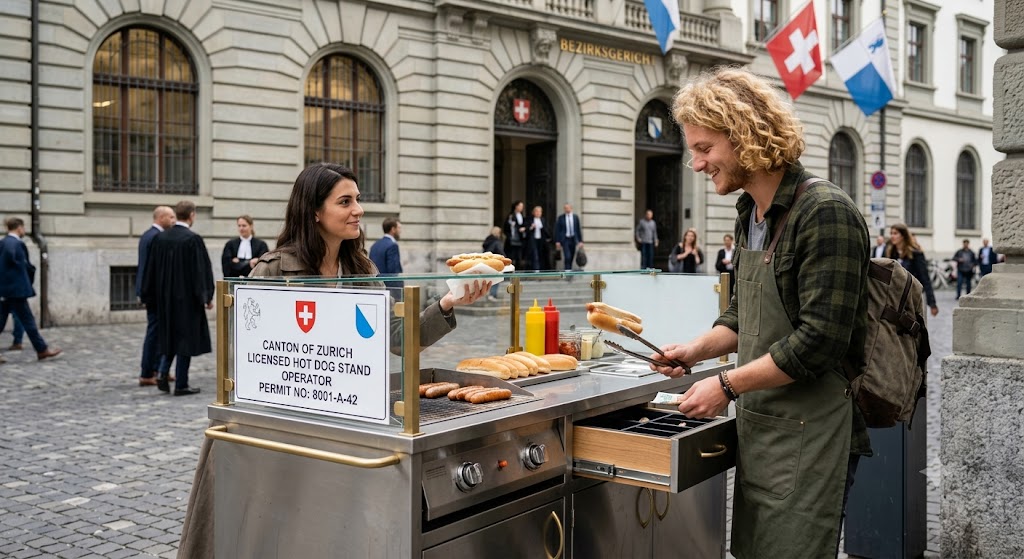
Gemini: Social standing is subjective and depends on how society measures value, but from a practical, economic, and systemic perspective, yes—the hot dog stand operator generally holds a higher and more secure social standing than an unregistered street musician.
Here is how the two roles compare across key societal frameworks:
- Economic Stability & Capital: While both work in public spaces, the hot dog operator has transitioned from relying on spontaneous public charity to managing an active business enterprise. Owning physical capital (the cart, equipment, inventory) and generating predictable transactional revenue provides higher financial stability and growth potential.
- Legal & Administrative Recognition: In Switzerland, operating a licensed food cart requires navigating municipal bureaucracy—securing a public space permit (Sondernutzungsbewilligung), registering with the Cantonal Laboratory, and setting up social security (AHV/IV). This official integration into the legal system accords formal legal status and legitimacy that unsanctioned busking lacks.
- Societal Perception: Street musicians and buskers are often perceived as precarious, informal, or transitional figures in urban environments. In contrast, micro-entrepreneurs and street food vendors are recognized as active contributors to the local commerce and service economy.
- Autonomy & Agency: The musician relies on the goodwill and spare change of passersby. The vendor engages in formal commercial exchange, setting prices for a tangible product and building a customer base—including professionals like the lawyers and court workers shown in the picture.
While street musicians often enjoy high cultural or artistic respect, in terms of socioeconomic security, legal standing, and institutional integration, the licensed vendor occupies a higher rung on the ladder.