

Recreational hot air balloon flights are not a practical or suitable activity for someone experiencing homelessness.
Beyond the prohibitively high financial cost—a single flight typically costs between €200 and €350 per person—ballooning carries significant logistical and physical requirements. Flights require early morning travel to remote launch sites, strict scheduling dependent on weather, physical stability for boarding basket walls, and complete absence of severe, unmanaged medical conditions or acute stress. For someone navigating housing instability, an isolated luxury experience like a balloon flight does not address any underlying needs, provides no lasting social connection, and offers no continuity or stability.
What Recreation Actually Helps Someone Experiencing Homelessness?
Effective recreation for individuals experiencing housing instability is defined by low barriers to entry, consistency, community connection, physical wellbeing, and dignity. Rather than expensive one-off spectacles, the most beneficial forms of recreation fall into specific structured categories:
1. Low-Barrier Community & Group Activities
Isolation and social stigma are among the heaviest burdens of homelessness. Activities that rebuild social ties in non-judgmental environments are highly effective:
- Street Football / Walking Football: Programs like the Homeless World Cup network or local community sports clubs organize regular, low-impact football training. They promote physical health, teamwork, and routine without requiring expensive gear.
- Walking and Hiking Groups: Guided, accessible nature walks provide physical exercise, exposure to green spaces, and casual conversation without pressure.
- Board Games & Ping-Pong Clubs: Frequently organized in daytime drop-in centers (dagopvang) or community hubs, these offer cognitive stimulation, routine, and a safe indoor space to relax.
2. Creative and Expressive Outlets
Recreation that fosters agency, dignity, and self-expression allows participants to process trauma and step out of «survival mode»:
- Art & Craft Workshops: Open-studio painting, sketching, or woodworking groups run by community centers allow individuals to create something meaningful at their own pace.
- Community Choirs & Music Groups: Choir programs specifically designed for unhoused or vulnerable adults (such as Street Chorus initiatives) offer low-stress, uplifting group participation that builds confidence.
- Library Access & Reading Groups: Public libraries offer free, quiet, climate-controlled spaces with access to books, computers, media, and organized community events.
3. Nature, Animals, and Green Spaces
- Community Gardens & Urban Farming: Participating in local garden projects or care farms (zorgboerderijen) gives people a chance to work with their hands, spend time in nature, and see tangible results from their effort, all while contributing to food production or neighborhood spaces.
- Animal-Assisted Recreation: Visiting community animal farms or participating in dog-walking programs can reduce stress hormones and provide emotional comfort.
Key Principles of Effective Recreation
| Principle | Why It Matters |
|---|---|
| Accessibility & No Cost | Requires no special clothing, tickets, registration fees, or official ID to drop in. |
| Predictable Routine | Weekly or daily recurring activities provide structure and something positive to look forward to. |
| Dignity & Social Safety | Participants are treated as peers and community members, not as «cases» or clients. |
| Physical & Mental Grounding | Promotes physical health, reduces anxiety, and encourages a state of rest rather than high adrenaline. |
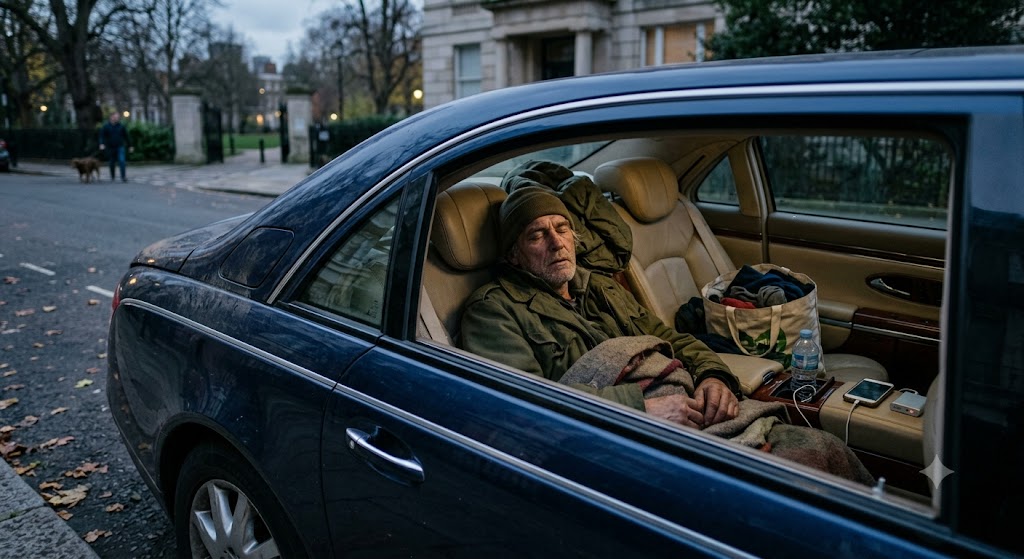
Homeless person sleeping in his Maybach 62.
Question: Do you think asking money from people as homeless while getting a job is better than stealing stuff from stores?
Gemini: When comparing panhandling (asking for money) and shoplifting (stealing), panhandling is significantly better, legally and ethically.
Here is why, alongside practical considerations for moving forward:
1. Legal Consequences
- Shoplifting is a crime: Stealing leads to an arrest record, fines, and potential jail time. A criminal record makes securing housing, opening a bank account, and getting hired vastly more difficult, effectively trapping a person in poverty.
- Panhandling is generally legal or a minor administrative matter: While local ordinances regulate where or how aggressive panhandling can be, asking for voluntary donations is generally not a severe criminal offense and will not result in a theft record.
2. Physical and Personal Safety
- Shoplifting carries high risk: Security guards, loss prevention officers, and police interventions can escalate into physical altercations, injury, or immediate detention.
- Panhandling relies on consent: While it can be exhausting and socially difficult, it does not involve confronting law enforcement or store security.
3. Ethical and Community Impact
- Voluntary vs. Involuntary: Panhandling relies on the voluntary generosity of individuals who choose to give. Shoplifting takes property without consent and creates direct financial losses for local businesses and workers.
Working While Panhandling
Panhandling while actively working or looking for work is a common survival strategy. Income from early days at a new job often takes weeks to arrive (due to payroll cycles), while immediate daily needs—food, transport to work, phone service to receive employer calls, and basic hygiene—require cash right away.
To transition smoothly into stable employment and housing, consider these key steps:
- Protect the Job: Use daily funds prioritized for work essentials: a phone plan (to stay in touch with your employer), public transit passes, and clean clothes/hygiene products.
- Utilize Local Support Services: Community day centers, social work organizations (like the Salvation Army or local equivalents), and food banks can provide meals, clothing, and travel subsidies so you don’t have to rely entirely on panhandling for daily survival.
- Direct Deposit Setup: As soon as wages start coming in, keep funds in an accessible account (or basic low-fee account) to build up the deposit needed for stable housing.
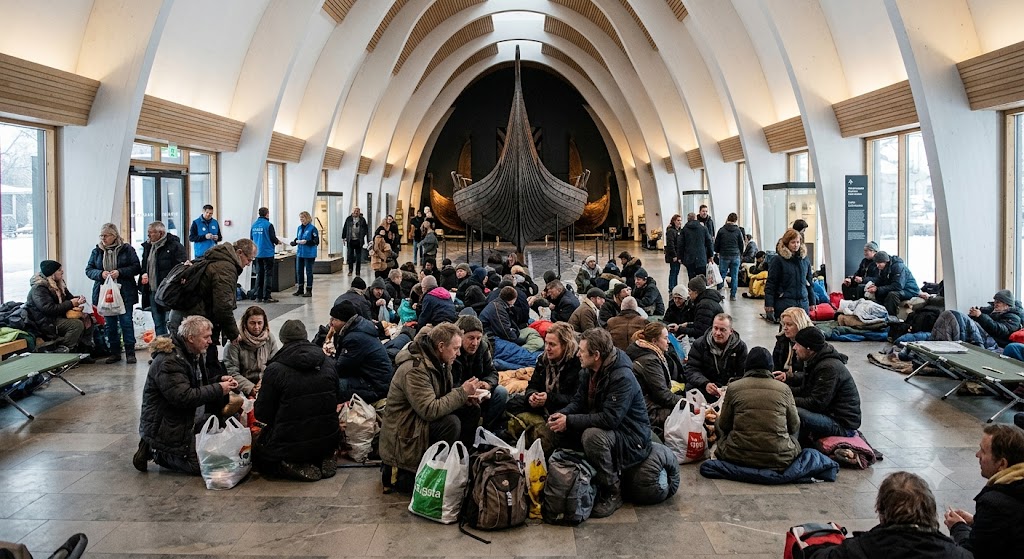
Homeless people visiting the Viking ship museum in Oslo:
This was today’s special on the topic of homelessness. Thanks for holding.