
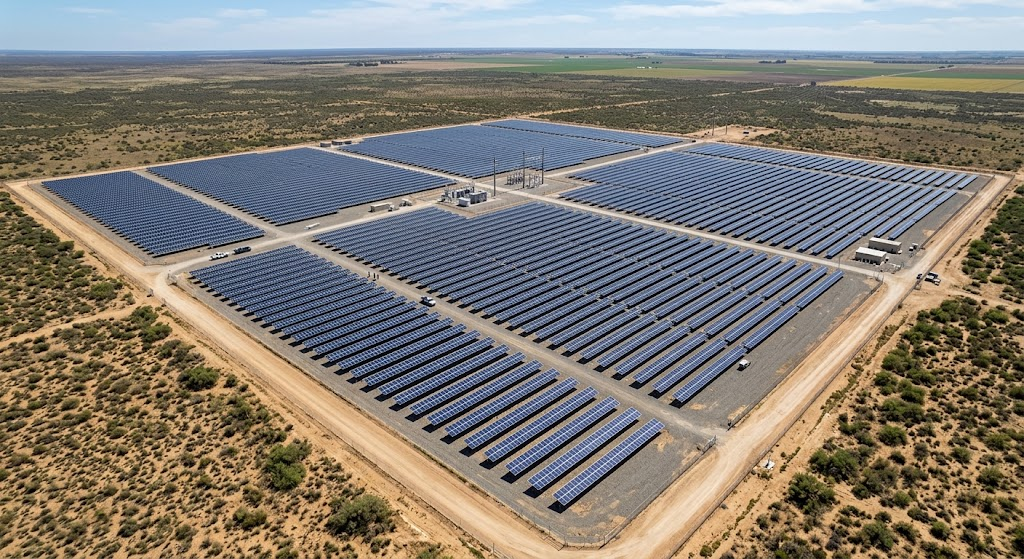
Gemini: 600W panels are large, not necessarily more efficient: A 600W panel typically measures around 2.2 meter by 1.1 meter (or larger) and weighs over 30kg 66lbs. Residential installers avoid them because they are difficult to safely handle on a steep roof pitch.
Leading Manufacturers: Brands like Aiko, LONGi, Recom, Maxeon, and Jinko lead in high-efficiency cell engineering. For utility scale, brands like Trina, Tongwei, and Jinko produce modules ranging from 600W to over 700W using N-type TOPCon and Heterojunction (HJT) technologies.
Choosing the right panel:
- For residential roofs, select smaller-format panels (430W–490W) with high efficiency ($\ge 23\%$) to maximize generation per square meter without overloading the roof structure.
- For commercial roofs or ground mounts, 600W+ panels are ideal because they cut Balance of System (BOS) costs—requiring fewer mounting rails, cables, and connectors per kilowatt.
- Question: If you would have a nuclear power generator in Fryslan, and it would – God forbid the tought – would it contanimate entire Fryslan, and Groningen?
- Google Gemini: Whether a worst-case nuclear accident would contaminate all of Fryslân and Groningen depends on reactor design, containment systems, weather patterns, and the definition of contamination. Modern nuclear reactors are engineered with passive safety mechanisms and heavy containment structures designed to prevent widespread fallout even in severe meltdowns. However, looking at hypothetical worst-case scenarios—such as an uncontained core meltdown with a steam/hydrogen explosion—the geographic impact can be evaluated based on distance, wind dynamics, and contamination levels.
- Geographic Distances and Regional Exposure
- Fryslân covers roughly 3,300 km2 and Groningen covers around 2,300 km2. From the center of Fryslân (e.g., near Leeuwarden or Sneek), the eastern border of Groningen is roughly 70 to 90 km away.
- To put this in historical context:
- Chernobyl (1986, Level 7): The core had no containment building, caught fire, and burned open for days. The primary permanent exclusion zone was set at a 30 km radius (2,600 km2), though detectable plume fallout reached hundreds of kilometers depending on wind patterns.
- Fukushima Daiichi (2011, Level 7): Despite multi-unit meltdowns, containment structures partially held. The primary mandatory evacuation zone was established within 20 km, extending up to 30–40 km along a narrow prevailing wind corridor to the northwest.
- Severe Accident Scenarios
- 1. Severe Meltdown with Complete Containment Failure
- If a reactor suffered a total breach of containment during a meltdown, releasing volatile radionuclides (like Iodine-131 and Cesium-137) into the atmosphere:
- Immediate Exclusion Zone (0–10 km): Complete evacuation, severe ground contamination, and long-term land loss.
- Medium-Distance Zone (10–30 km): High contamination levels requiring mandatory evacuation. If a plant were centrally located in Fryslân (for example, near Heerenveen), a 30 km zone would cover a major portion of central and southern Fryslân.
- Downwind Fallout Plume (30–100+ km): Airborne fallout does not spread in an even circle; it travels in a narrow plume dictated by wind direction and rainfall.
- If prevailing westerly or southwesterly winds were blowing during the release, radioactive dust and rain could deposit high levels of Cesium-137 across eastern Fryslân and directly into Groningen.
- In this specific meteorological scenario, large portions of both provinces downwind could experience ground contamination high enough to require agricultural bans and temporary evacuations.
- 2. Modern Reactor Safety Standards (Gen III / III+)
- Modern commercial reactors built today (such as the EPR or AP1000) feature:
- Passive cooling systems that operate without external electricity.
- Double-walled containment structures designed to withstand airplane impacts.
- Core catchers designed to retain molten fuel inside the containment building even during a complete core melt.
- Under modern European safety regulations, even a design-extension accident (a total meltdown) is required to contain radiation such that no off-site emergency measures beyond a few kilometers (or a few hundred meters) are necessary.
- Types of Contamination
- Short-Term Tactical Contamination (Iodine-131):
- Has a half-life of 8 days.
- Causes immediate health risks (thyroid exposure) requiring sheltering indoors and iodine prophylaxis across a broad downwind region (potentially spanning Fryslân, Groningen, and Drenthe) for several weeks.
- Long-Term Agricultural and Environmental Contamination (Cesium-137):