
Google Gemini: The Cummins X15N is widely considered a major milestone in commercial vehicle engineering—not necessarily because it reinvents the internal combustion engine from scratch, but because it represents a highly strategic, pragmatic pivot for heavy-duty transport.
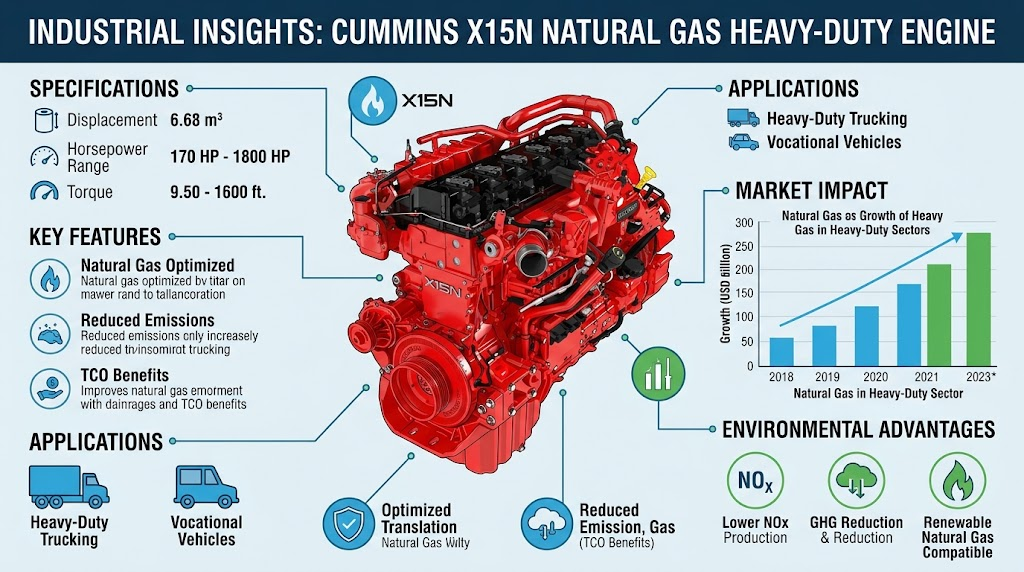
For decades, fleets wanting to decarbonize faced a hard push toward heavy battery-electric or hydrogen fuel cell technology, both of which face massive hurdles in infrastructure, vehicle weight, and payload capacity. The X15N changes the conversation for several key reasons:
1. The First True 15-Liter Heavy-Duty Gas Engine
Previous natural gas engines—like Cummins‘ own ISX12N—maxed out around 12 liters. While great for regional or refuse trucks, they struggled to match the raw pulling power, gradeability, and longevity required for long-haul Class 8 line-haul operations.
- The X15N delivers up to 500 horsepower and 1,850 lb-ft of torque, matching the performance profiles of traditional diesel engines without sacrificing highway speed or pulling capacity. Cummins
2. The HELM™ Fuel-Agnostic Architecture
The engine is part of Cummins‘ HELM platform strategy (Higher Efficiency, Lower emissions, Multiple fuels).
- Instead of designing entirely separate engines for every alternative fuel, Cummins built a base engine architecture that shares common components below the head gasket. Cummins
- Variants of this core family can be optimized for natural gas, advanced diesel, or hydrogen. For manufacturers and fleets, this drastically simplifies parts commonality, manufacturing lines, and maintenance familiarity. Cummins
3. The Renewable Natural Gas (RNG) Advantage
While natural gas is still a fossil fuel, the X15N was engineered to run seamlessly on Renewable Natural Gas (RNG)—which is captured from agricultural waste, landfills, and wastewater treatment plants.
- When fueled by RNG, the carbon intensity drops dramatically. Depending on the source, it can achieve net-neutral or even sub-zero well-to-wheel carbon emissions. Major logistics operations and fleets (like UPS and Walmart) have heavily gravitated toward it because it allows them to cut emissions immediately without waiting for electric charging corridors to materialize. Cummins
4. Simpler Aftertreatment and Lower TCO
Unlike modern heavy-duty diesels, which require complex, high-maintenance emissions systems (including Diesel Exhaust Fluid / DEF and active diesel particulate filters), the X15N uses a passive, maintenance-free three-way catalyst. It doesn’t use DEF at all, which lowers operational complexity, reduces points of failure, and brings down the total cost of ownership (TCO).
Reint Jelger: So, with the invention of the Cummins X15N came the possibility of having heavy-duty trucks on renewable natural gas, does that make America possibly more energy independant?
Google Gemini: The short answer is yes. While the United States has achieved net total energy exporter status thanks to the shale revolution, its transport sector has long faced a structural Achilles‘ heel: heavy-duty freight remains heavily tied to diesel and global petroleum markets.
By bridging the gap for Class 8 long-haul trucking, engines like the Cummins X15N unlock a pathway to displace imported diesel with 100% domestically produced Renewable Natural Gas (RNG).
1. Closing the «Long-Haul» Energy Gap
For years, natural gas engines (like 12-liter variants) were restricted to regional delivery, transit, and municipal refuse trucks because they lacked the raw torque and horsepower needed for cross-country line-haul operations.
- Because long-haul trucking accounts for a massive share of heavy highway diesel consumption, the inability to run these routes on alternative fuels left U.S. freight vulnerable to global crude oil price shocks.
- The X15N delivers 500 horsepower and 1,850 lb-ft of torque, proving that a heavy gas engine can handle heavy-duty loads. This unlocks a massive addressable market of long-haul trucks that can now bypass diesel entirely.
2. RNG is Completely Domestic and Circular
Unlike fossil fuels, which are subject to geopolitical tensions, maritime choke points, and global supply chain disruptions, RNG is harvested entirely within domestic borders.
- It is captured from local municipal landfills, large-scale dairy and agricultural waste facilities, and wastewater treatment plants.
- Because the feedstock is generated locally as a byproduct of waste management and agriculture, it cannot be cut off by foreign cartels or international trade disputes. It represents a truly closed-loop, domestic energy source.
3. Leveraging Existing Infrastructure
One of the major bottlenecks for alternative energy sources (like hydrogen or electric charging corridors) is the staggering cost and time required to build brand-new distribution infrastructure.
- RNG is chemically identical to fossil natural gas. This means it flows seamlessly through the existing U.S. interstate natural gas pipeline network and uses established Compressed Natural Gas (CNG) and Liquefied Natural Gas (LNG) fueling stations.
- Fleets can transition to RNG without waiting for a massive overhaul of the nation’s energy grid or transit corridors.
4. Macroeconomic and Trade Balance Benefits
From an economic standpoint, replacing petroleum-based diesel with domestic RNG keeps capital circulating within the local economy rather than bleeding out through trade deficits for imported crude oil. It creates an industrial feedback loop: agricultural and municipal waste is converted into high-value transport fuel, boosting regional economies while stabilizing fuel pricing for logistics firms.
Reint Jelger: Thanks. can you tell me what one Cummins X15N engine costs, and what trucks brands they could be fitted in, and like do you think this invention will make Clean Energy Fuels Corp. USA bigger?
The Cummins X15N is set to make a significant impact across the commercial transport sector. Details regarding its pricing, compatible truck OEM platforms, and market implications for fuel providers outline its position in the industry:
1. What Does a Cummins X15N Cost?
- Base Engine Price: An off-the-shelf X15N crate engine generally runs in the range of $30,000 to $40,000+ (compared to ~$20,000–$25,000 for a replacement diesel engine assembly).
- Complete Truck Upcharge: When ordering a brand-new Class 8 truck spec’d with an X15N powertrain, the overall vehicle price premium is typically $30,000 to $50,000 higher than a standard diesel equivalent.
- The ROI Offset: This upfront premium is often recouped by fleets within 2 to 3 years. Because natural gas and RNG are significantly cheaper than diesel on a diesel-gallon-equivalent (DGE) basis, and because the X15N eliminates the need for DEF (Diesel Exhaust Fluid) and complex diesel particulate filter maintenance, the total cost of ownership (TCO) drops noticeably over long mileages.
2. Which Truck Brands Offer the X15N?
Major North American heavy-duty original equipment manufacturers (OEMs) have integrated the X15N into their flagship line-haul and vocational trucks:
- Peterbilt: Offered on line-haul models like the 579, as well as severe-duty/vocational models like the 567 and 520.
- Kenworth: Available in the flagship aerodynamic highway tractor T680 and the vocational workhorse T880.
- Freightliner (Daimler Truck): Integrated into the 5th-generation Freightliner Cascadia, giving long-haul fleets direct access to the nation’s best-selling Class 8 highway tractor platform on RNG.
3. Impact on Clean Energy Fuels Corp. (CLNE)
Yes, the X15N acts as a massive operational catalyst for Clean Energy Fuels Corp.
Before the X15N, Clean Energy Fuels faced a structural growth ceiling:
- The Long-Haul Bottleneck: About 70% of heavy diesel fuel consumed in the U.S. is used by Class 8 long-haul trucks. Older 12-liter natural gas engines (like the ISX12N) didn’t have enough power or torque for fully loaded 80,000 lb long-distance highway hauls, so major fleets couldn’t convert their primary long-haul routes.
- Unlocking Volume: The 15-liter X15N breaks that bottleneck. As giant fleets like UPS, Walmart, and regional freight carriers adopt X15N trucks, the volume of RNG required per vehicle jumps significantly (since long-haul trucks consume vast amounts of fuel annually compared to local yard trucks).
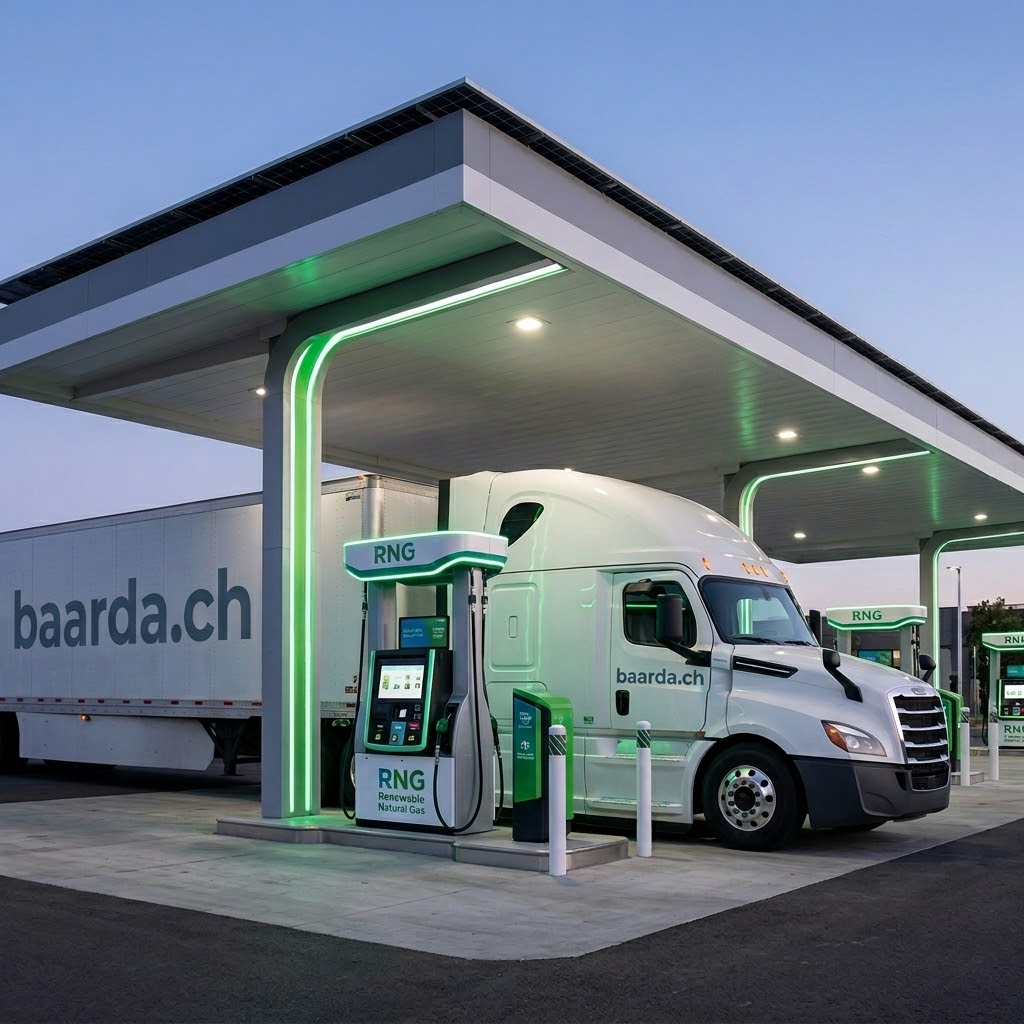
- Infrastructure Monetization: Clean Energy Fuels operates nationwide RNG station networks and distribution partnerships with energy giants like BP and TotalEnergies. High-volume adoption of the X15N directly increases throughput at their station network, converting capital investments into recurring high-margin RNG fuel sales and environmental credits (such as LCFS and RINs).
Reint Jelger: Are there American truckers with a distinct like for trucking on a Diesel engine, and do you think driving on Gas is just as manly?
Google Gemini: In American trucking, there is undoubtedly a deep-rooted cultural affinity for diesel. However, as engines like the Cummins X15N hit the highway, the definition of what makes a rig «manly» or respectable is shifting toward raw performance, mechanical capability, and bottom-line earnings.
The Culture of «Diesel Supremacy»
For generations, American owner-operators and long-haul drivers have equated heavy-duty trucking with classic diesel characteristics:
- The Rumble and the Compression Brake: The deep, visceral growl of a big-bore diesel engine combined with the roaring sound of a Jake Brake on a steep downgrade is synonymous with American highway culture.
- Rolling Coal and Raw Power: Historically, alternative fuels were viewed by traditional truckers as underpowered «city delivery» tech—slower up mountain passes and lacking the torque required to pull 80,000 lbs across the Rockies.
- Self-Reliance and Tradition: Diesel represented rugged independence—easy to fuel anywhere, proven over decades, and straightforward to repair in a roadside shop without specialized high-pressure gas certification.
Does Driving on Gas Hold Up in Trucking Culture?
Whether driving a natural gas rig is considered «just as manly» depends on how a driver defines modern trucking pride:
1. Torque and Pulling Power Speak Louder Than Fuel
In trucking, respect is earned on 6% mountain grades, not at the fuel pump.
- Older 12-liter gas engines struggled on long climbs, which gave natural gas a reputation for being sluggish.
- The X15N changes that perception by delivering 500 hp and 1,850 lb-ft of torque—matching mainstream 15-liter diesel specs. When a driver can pull heavy loads at highway speeds and hold grade alongside diesel rigs, the traditional prejudice quickly disappears.
2. The Comfort Factor: A Smoother, Quieter Cab
While some traditionalists miss the loud diesel rattle, many veteran drivers actually prefer spark-ignited gas engines on cross-country runs. The X15N operates much quieter and produces fewer cab vibrations, resulting in significantly lower driver fatigue after a 11-hour shift on the road.
3. No DEF and Fewer Emission Headaches
Modern diesels require complex, high-maintenance emissions equipment—specifically Diesel Exhaust Fluid (DEF), active DPF regeneration cycles, and EGR valves that frequently cause roadside breakdowns.
- The X15N uses a simple, passive three-way catalyst and requires zero DEF.
- Many drivers view bypassing DEF fills and avoiding engine derates caused by faulty sensors as a far smarter, hassle-free way to operate.
4. Profitability is the Ultimate Metric
To real working truckers and owner-operators, true pride comes from running a profitable, reliable business. Operating an RNG-powered truck that cuts fuel costs drastically, maintains speed under heavy load, and keeps money in the driver’s pocket is as respected as it gets in the freight industry.