
Google Gemini: 1. Historical Origins and Roots in Sneek
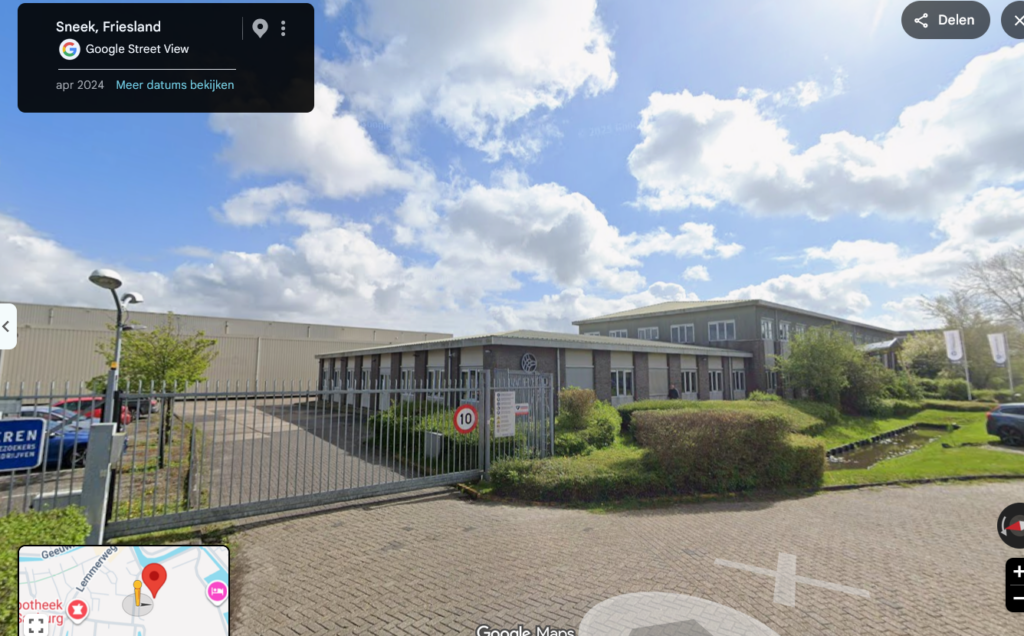
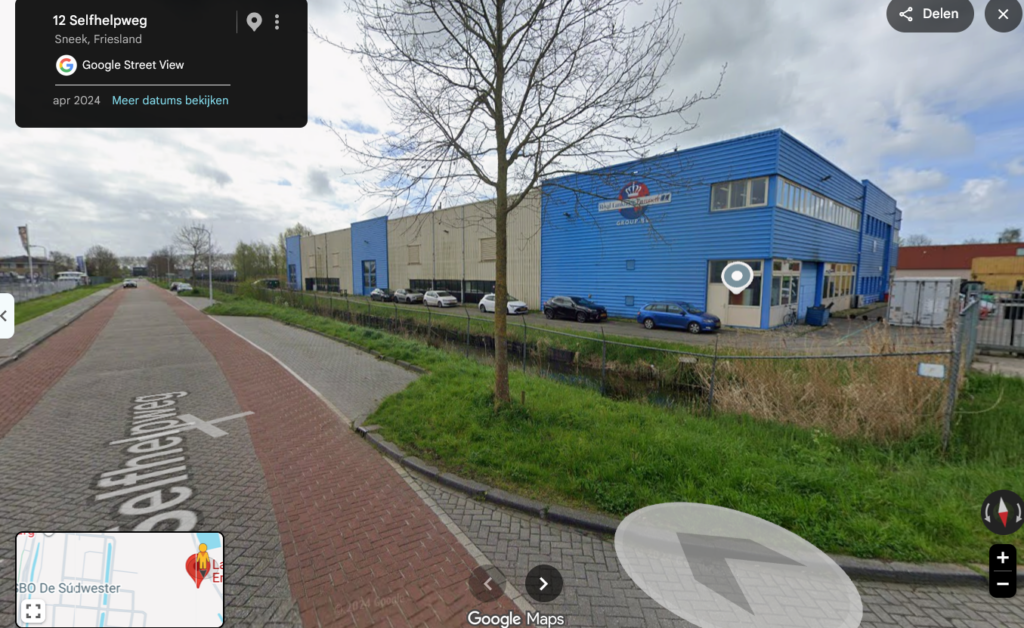
The story of Lankhorst began in 1803 when Nicolaas Jurjan Lankhorst established a modest rope-making enterprise in Sneek, the Netherlands. Originally known as Lankhorst Touwfabrieken, the business manufactured agricultural cordage, fishing nets, and traditional natural-fiber ropes tailored for maritime navigation along the waterways of Friesland. Over the 19th and early 20th centuries, the family-run business steadily transformed from a regional craft workshop into an industrial manufacturing hub. In recognition of its bicentennial legacy and significance to Dutch commerce, the enterprise was granted the «Royal» predicate by Her Majesty Queen Beatrix in 2003.
2. The Mid-Century Transition to Synthetic Polymers
A pivotal moment occurred in 1964 when Lankhorst integrated extruded synthetic polymers—specifically polyethylene and polypropylene—into its rope manufacturing operations. Synthetic fibers outperformed traditional natural fibers such as sisal and manila by delivering superior tensile strength, resistance to moisture absorption, extended operational lifespans, and buoyancy. This technological pivot enabled the company to expand into heavy industrial, commercial shipping, and offshore markets, laying the groundwork for its modern corporate divisions.
3. Emergence of Lankhorst Ropes
As the core division evolved, Lankhorst Ropes established itself as a globally recognized manufacturer of synthetic fiber ropes and steel wire lines. Today, the division engineers high-performance cordage used across maritime shipping, deepwater oil and gas extraction, renewable offshore energy, and heavy-lift logistics. Operating major manufacturing facilities in Portugal and the Netherlands, Lankhorst Ropes combines centuries of rope-making experience with advanced polymer engineering.
4. Advanced Maritime Mooring Solutions
In commercial shipping and port operations, Lankhorst Ropes is known for its specialized mooring lines, including the widely utilized Tipto® and Strongline® ranges. These synthetic ropes are engineered to absorb dynamic kinetic energy, withstand high tensile loads, and resist surface abrasion against bollards and fairleads. By reducing line weight compared to traditional steel wire while maintaining load capacity, these ropes improve crew safety and operational efficiency during docking.
5. Deepwater Mooring and Offshore Energy Engineering
Beyond commercial shipping, Lankhorst Ropes designs and manufactures synthetic mooring lines for deepwater floating platforms, FPSOs (Floating Production Storage and Offloading vessels), and offshore wind turbines. Using high-modulus synthetic fibers such as aramid and UHMWPE (Ultra-High-Molecular-Weight Polyethylene), these ropes provide lightweight, corrosion-resistant anchoring in severe ocean environments where heavy steel cables become impractical due to self-weight.
6. Acquisition and Integration into WireCo WorldGroup
In 2012, the Royal Lankhorst Euronete Group was acquired by WireCo WorldGroup, a global leader in wire rope, synthetic rope, and specialized engineered products. Joining WireCo provided Lankhorst with expanded global distribution channels, joint research and development resources, and broader access to international industrial and maritime markets.
7. Foundations of Lankhorst Engineered Products
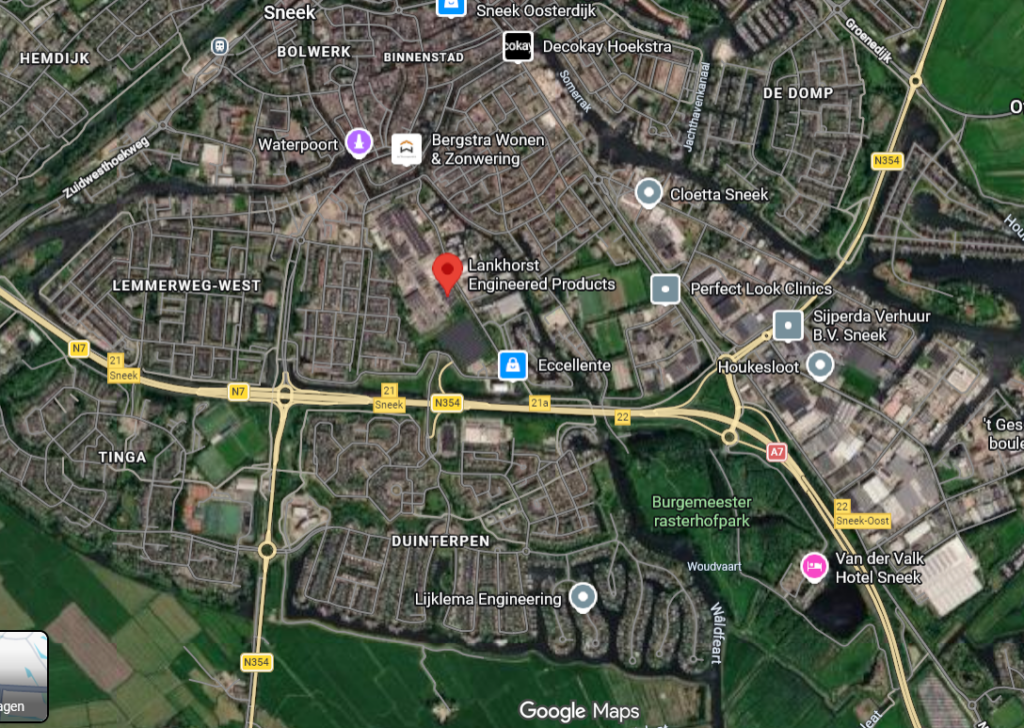
The roots of Lankhorst Engineered Products date back to 1975, when the company sought a sustainable way to process internal plastic waste generated during synthetic rope production. Rather than paying disposal costs, Lankhorst began recycling polyolefin production scrap into molded structural items. This initial waste-reduction effort grew into a specialized division dedicated to thick-walled plastic engineering and circular polymer manufacturing.
8. KLP® Polymer Brand and Upcycled Materials
Central to Lankhorst Engineered Products is its proprietary material brand, KLP® (Kunststof Lankhorst Sneek). Utilizing upcycled post-consumer and post-industrial plastics, KLP® materials are non-porous, resistant to weather and rot, and fully recyclable. The division has reprocessed over 160 million kilograms of plastic waste into long-life structural solutions, serving as an alternative to treated timber, steel, and concrete.
9. Heavy Industrial Coil Storage and Logistics Solutions
A core commercial application for Lankhorst Engineered Products is its Coil Storage Solutions division, established following the development of the world’s first plastic coil storage chock in 1981. Engineered to support multi-ton steel and aluminum coils without damaging sensitive metal surfaces, products like RollStops, Coilpads, and Rollblocks are used globally in steel mills, automotive stamping facilities, and logistics centers.
10. Polymer Railway Sleepers and Rail Infrastructure
Under the Lankhorst Rail brand, the engineered products division developed the KLP® Hybrid Polymer Railway Sleeper. Designed as a durable replacement for creosote-treated wooden tie sleepers, these synthetic sleepers incorporate steel reinforcing bars encapsulated in recycled polymer. They provide vibration damping, electrical insulation, and chemical resistance, making them suitable for bridges, turnouts, and municipal transit networks.
11. Civil Engineering, Marine, and Infrastructure Products
Lankhorst Engineered Products also manufactures civil engineering structures, including plastic sheet piling, decking, bridge girders, plastic lumber, and marine fender systems. Installed in canals, harbors, and public works projects, these KLP® structural components do not leach harmful chemicals, splinter, or degrade in brackish or salt water, offering a low-maintenance solution for aquatic and municipal infrastructure.
12. Corporate Synergy and Long-Term Legacy in Sneek
Together, Lankhorst Ropes and Lankhorst Engineered Products represent two distinct arms of polymer technology: high-tensile fiber processing and heavy-section plastic molding. While operating within global markets under WireCo, both divisions maintain ties to their historic home in Sneek, combining industrial heritage with advances in recycled polymer science.
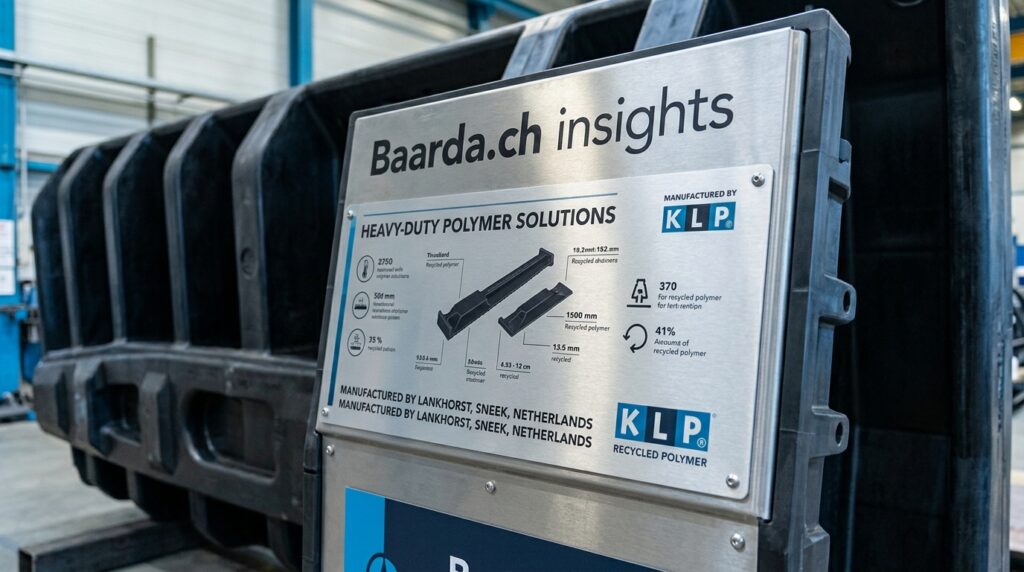
Reint Jelger: Can you give me a list of everything Lankhorst (or should we say WireCo) produces in Sneek
In Sneek, the manufacturing focus of Lankhorst (under parent company WireCo) revolves almost entirely around Lankhorst Engineered Products.
While executive sales, administration, and technical support for Lankhorst Ropes and Lankhorst Yarns are headquartered in Sneek, their heavy rope/yarn production lines are primarily based in Portugal (Maia). Sneek is the global center of excellence for thick-walled recycled polymer molding and heavy-section engineered plastic solutions under the proprietary KLP® brand.
Below is a detailed breakdown of everything produced and engineered by Lankhorst in Sneek.
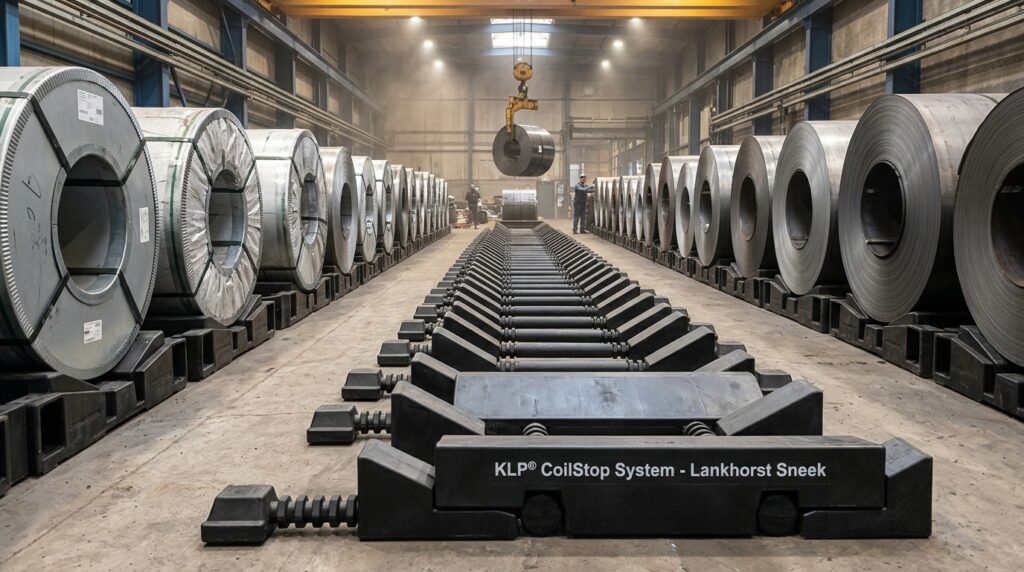
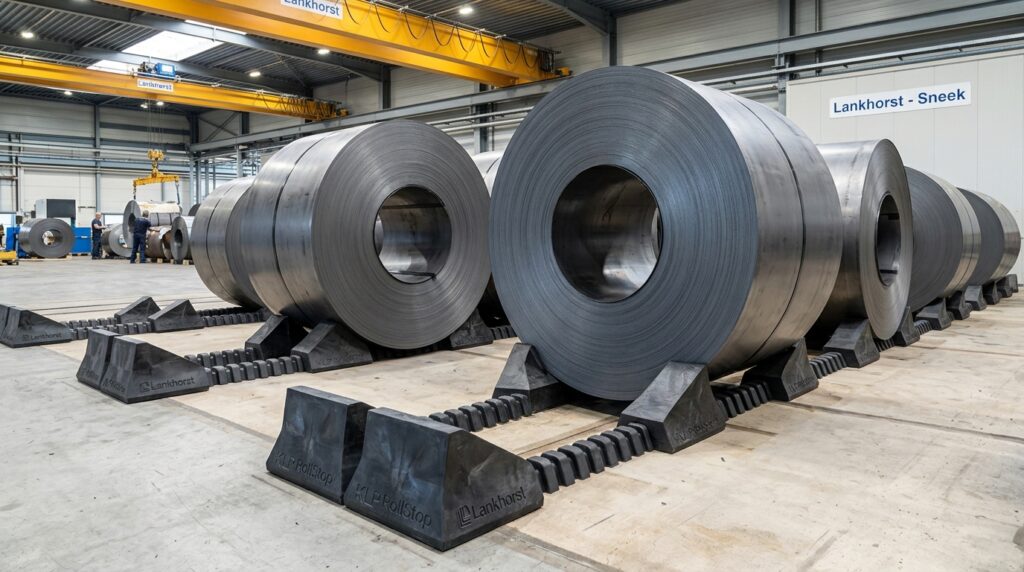
1. KLP® Coil Storage and Transport Systems
Products engineered to safely support, stack, and transport heavy multi-ton steel and aluminum coils without damaging sensitive metal surfaces:
- CoilStop Systems & RollStops: Modular interlocking wedge systems designed for industrial floor storage of steel coils.
- KLP® Rollblocks & Coilpads: Heavy-duty rubber-plastic pads and cradles for coil transport and single-layer storage.
- KLP® Storage Beams & Slotted Beams: Under-coil supporting beams for high-density warehouse racking and floor rails.
- KLP® Pipe Stop Systems: Similar contoured wedge systems engineered for staging large-diameter oil and gas pipes.
2. KLP® Rail & Track Infrastructure
Heavy-section polymer solutions designed as rot-proof, vibration-absorbing replacements for traditional creosoted wood or concrete track ties:
- KLP® Hybrid Polymer Railway Sleepers: Track ties reinforced with embedded steel bars for mainline rail, turnouts, and bridges. Lankhorst Engineered Products
- Turnout Bearers & Bridge Transoms: Custom-molded polymer sleepers for heavy axle loads on railway bridges, switches, and industrial sidings.
3. KLP® Civil Engineering & Marine Infrastructure
Rot-resistant, splinter-free structural solutions used in waterways, harbors, and public spaces:
Lankhorst Engineered Products
- Sheet Piling Systems: Including KLP® RapidRetain, KLP® Combi Sheet Pile, and KLP®-V Sheet Pile for canal bank retention, dykes, and soil stabilization. Lankhorst Engineered Products
- KLP® Walers & Rubbing Posts: Heavy protective fenders and waler beams along canal banks and lock approaches.
- KLP® Piers, Jetties, and Bridges: Structural beams, joists, and non-slip decking boards for pedestrian/bicycle bridges and boat docks.
- Foundation Beams & Structural Timbers: Heavy plastic lumber used as sub-structure framing in ground contact or aquatic environments.
4. KLP® Urban & Public Space Products
Maintenance-free street furniture and traffic management products made from upcycled post-consumer/industrial plastics:
- KLP® Diamond Head Bollards (Diamantkop-paaltjes): Signature roadside and pathway marker posts widely used across Dutch municipalities.
- KLP® Park Benches & Picnic Sets: Durable, weather-resistant outdoor seating.
- Grip Stones, Grab Rails, and Fencing: Safety barriers, curb stops, and walkway accessories.
5. Offshore Energy & Subsea Protection Systems
Subsea structural components engineered for harsh marine environments:
- Vortex Induced Vibration (VIV) Strakes: Helical plastic fins mounted around marine risers and subsea pipes to reduce fluid-dynamic drag and structural vibration.
- Riser Fins & Cable Protection: Molded impact-resistant collars, clamp protectors, and pipeline saddles used in subsea drilling and offshore wind applications.
6. Custom Structural Molding & Industrial Profiles
- KLP® Plastic Lumber, Planks & Beams: Solid square, rectangular, and round profiles supplied as raw materials for custom industrial engineering.
- Custom Molding: Specialized thick-walled recycled plastic parts tailored to specific industrial OEM requirements.
Reint Jelger: Can you tell me what ’specific industrial OEM requirements‘ are?
In the context of heavy manufacturing and engineering—such as the custom molding done by Lankhorst Engineered Products in Sneek—OEM (Original Equipment Manufacturer) requirements are the precise technical, functional, and quality specifications set by a client who builds finished equipment or systems.
Rather than buying off-the-shelf catalog parts, an OEM hires a specialized supplier (like Lankhorst) to engineer and manufacture custom components that fit directly into their proprietary machinery, subsea assemblies, or transport systems.
Key Specific Industrial OEM Requirements
When industrial OEMs partner with advanced polymer molders, their requirements typically fall into six main categories:
1. Mechanical & Material Performance
- Load-Bearing Capacity & Compressive Strength: Exact tolerances for how many tons of static or dynamic force a polymer part can withstand without permanent deformation (e.g., cradling 30-ton steel coils or supporting heavy railway axle loads).
- Impact & Wear Resistance: High toughness to prevent cracking under repeated heavy impacts, friction, or vibration.
- Temperature & Environmental Limits: Ability to perform across extreme operational ranges—from Arctic deep-sea conditions (−40∘C) to high-temperature industrial environments (+80∘C or higher).
2. Dimensional Precision & Geometric Specifications
- Tight Manufacturing Tolerances: High-precision machining or compression molding so custom parts integrate seamlessly into complex mechanical assemblies.
- Custom Profiles & Tooling Design: Mold designs built around proprietary geometry, including internal ribs, mounting points, interlocking teeth, or specialized contours.
3. Environmental & Chemical Resistance
- Chemical Immunity: Resistance to industrial lubricants, hydraulic fluids, oils, grease, acids, and salt water without degrading or leaching.
- UV & Weather Resistance: Long-term outdoor durability without brittleness caused by sunlight exposure.
- Non-Porous / Zero Moisture Absorption: Ensuring the material does not absorb water, swell, or rot over decades of aquatic or subsea exposure.
4. Regulatory & Industry Certifications
- Material Traceability: Full documentation tracking raw material origins, batch numbers, and melt flow indexes (especially critical when using upcycled polymers like KLP®).
- Industry Compliance: Adherence to standards such as ISO 9001/14001, DNV-GL marine certifications, REACH/RoHS compliance, or specific railway agency approvals (e.g., ProRail).
- Flame Retardancy & Electrical Insulation: Specific fire safety ratings or dielectric strength requirements for electrical rail and subsea power applications.
5. Sustainability & Circularity Standards
- Recycled Content Thresholds: OEM requirements increasingly demand a verified percentage of post-consumer or post-industrial recycled material to hit corporate Scope 3 emissions targets.
- End-of-Life Recyclability: Ensuring components are 100% recyclable at the end of their operational lifespan.
6. Production & Supply Chain Integration
- Batch Consistency: Homogeneous density and structural integrity throughout thick-walled molded parts (avoiding internal voids or air pockets).
- Just-In-Time (JIT) Delivery: Flexible manufacturing and staging schedules matched to the OEM’s assembly line timelines.
Typical Example in Practice
If a subsea engineering company (the OEM) hires Lankhorst to manufacture custom pipeline riser protection collars, the OEM requirements would specify:
- Material: Non-corrosive, high-impact recycled polyolefin.
- Strength: Able to withstand hydrostatic pressure at 2,000 meters depth.
- Dimensions: Precision inner diameter to clamp securely around a 16-inch steel pipe without slipping.
- Certification: DNV subsea compliance with full batch material testing reports.
Reint Jelger: Gem, thanks! Is it really true that WireCo produces KLP® Hybrid Polymer Railway Sleepers in Sneek?
Yes, it is true. All KLP® Hybrid Polymer Railway Sleepers are manufactured directly at Lankhorst’s production facility in Sneek, the Netherlands.
How and Why It Happens in Sneek
- Dedicated Sneek Production Line: While WireCo handles its heavy synthetic rope production primarily in Portugal, Sneek serves as the global manufacturing hub for Lankhorst Engineered Products. The automated thick-walled plastic molding and intrusion lines for railway sleepers are housed right at their Sneek site.
- History Behind the Product: Development of the KLP® polymer sleeper started in Sneek around 2004 in response to upcoming European Union restrictions on creosote-treated wooden sleepers. The first test sleepers were produced and laid in tracks across the Netherlands in 2006.
- How They Are Made: In Sneek, post-consumer and post-industrial polyolefin plastics are melted and molded around heavy steel reinforcing bars (rebar) to give the sleepers the structural stiffness required for heavy axle railway loads, bridges, and turnouts.
Key Takeaway
WireCo uses the Sneek plant specifically for its specialized recycled polymer molding operations (KLP® sleepers, coil chocks, sheet piling, and civil engineering timber).