
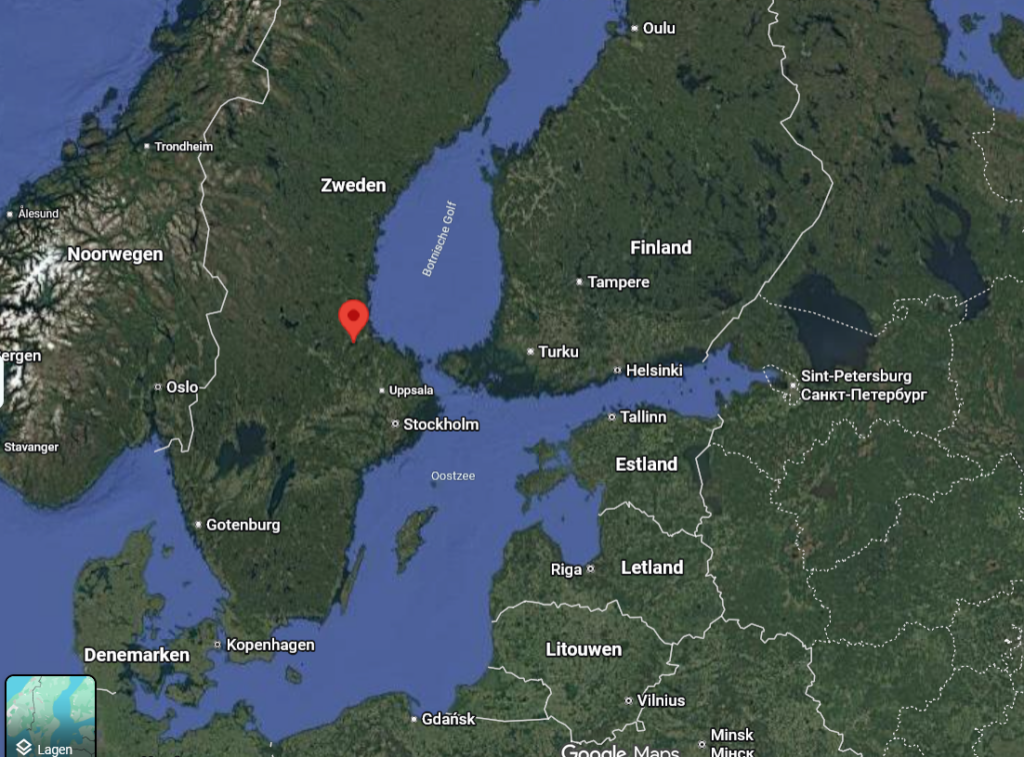
Gemini: The company was founded there in 1862 by Göran Fredrik Göransson as Högbo Stål & Jernwerks AB (later renamed Sandvikens Jernverks AB, and eventually shortened to Sandvik AB). In fact, the town of Sandviken grew directly around the steelworks that Göransson built near Lake Storsjön.
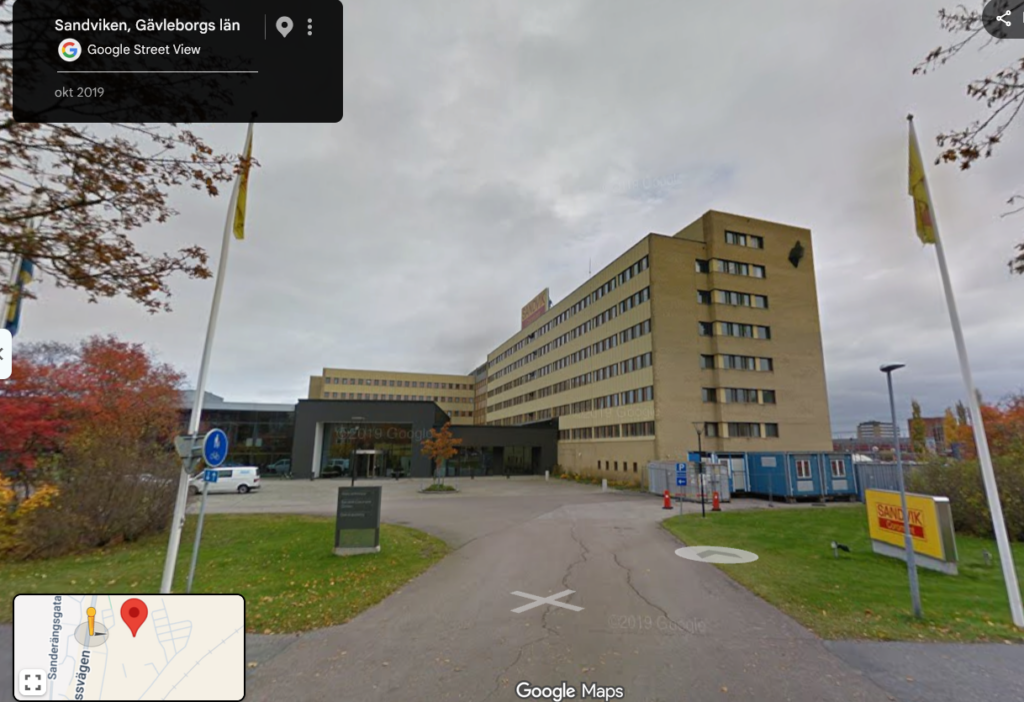
The main AB Sandvik Coromant global headquarters and visitor center facility in Sandviken is located at:
- Address: Mossvägen 10, 811 34 Sandviken, Sweden
This is a Google streetview of the location.
Reint Jelger: Sandvik probably sells rather international right?
Gemini: Yes, overwhelmingly so! Sweden is actually a very small part of Sandvik’s business—accounting for only around 2–3% of its total revenue. Sandvik generates roughly 97–98% of its sales internationally, across more than 150 countries.
Geographic Revenue Breakdown
Sandvik’s revenue distribution is highly balanced across global markets:
| Region | Share of Revenue | Key Drivers |
| North America | ~26% | Heavy mining in Canada/US, defense manufacturing, and automated machining solutions. |
| Europe | ~25% | General engineering, aerospace tooling, and civil infrastructure projects. |
| Asia-Pacific | ~18% | Infrastructure expansion, electronics manufacturing, and mining in Australia. |
| Australia | ~12% | Massive demand for underground mining equipment and rock processing automation. |
| Africa & Middle East | ~12% | Gold, copper, and diamond mining operations (e.g., major underground contracts in the DRC). |
| South America | ~7% | Copper and lithium mining operations across Chile, Peru, and Brazil. |
End-Market Distribution
Because Sandvik specializes in heavy-duty equipment, metal-cutting tools, and software solutions, its income is spread across several global sectors:
- Mining (51%): Underground loaders, autonomous rock drills, crushing/screening equipment, and electric mining fleets.
- Engineering & Manufacturing (19%): High-precision metal-cutting tools, CAD/CAM software, and industrial metrology systems.
- Infrastructure (9%): Rock excavation, tunneling, and quarrying solutions.
- Automotive & Aerospace (9%): Specialized cutting tool systems for engine block components, airframes, and turbines.
Reint Jelger: Gem, I am really new to the mining business. First of all I see there is hardly any business from Sandviken concerning mining in Europe. Could you tell me why that is, is Europe unsuitable for mining? And second of all please explain to me what Underground loaders are, and tell me everything about Underground loaders concerning Sandviken’s business
Gemini: 1. Is Europe Unsuitable for Mining?
Europe is not unsuitable for mining—in fact, it has a rich geological history and produces a significant amount of the world’s industrial minerals, aggregates, and certain metals (such as iron ore in Sweden, and copper, zinc, and nickel in Finland and parts of Eastern Europe).
However, when you look at Sandvik’s massive global revenue share in mining (over 50%), very little of that equipment is deployed or manufactured for domestic European mines. There are a few key reasons for this:
- Geological Maturity & Scale: Much of Western and Central Europe has been heavily mined for millennia, and large-scale, high-grade deposits near the surface are largely depleted. The world’s biggest modern mining operations—massive open pits and deep underground metal mines—are concentrated in regions with vast, untapped or continuously producing shields, such as Australia, North America, South America (the Andes), and parts of Africa.
- Land Use and Environmental Regulations: Europe has high population densities, strict environmental standards, and rigorous zoning laws (such as Natura 2000 protected areas and complex permitting processes). Opening a new mine in Western Europe faces immense regulatory hurdles and public scrutiny compared to remote regions in Western Australia or Northern Canada.
- The Exception (Northern Europe): Scandinavia itself is actually a major exception to the European rule. Sweden (specifically around Kiruna and Gällivare, home to LKAB’s massive underground iron ore operations) and Finland have thriving, highly mechanized mining sectors. However, because Sweden’s domestic mining market is relatively small on a global scale, companies like Sandvik must export almost all of their heavy mining machinery to where the mega-mines are located.
2. What is an Underground Loader?
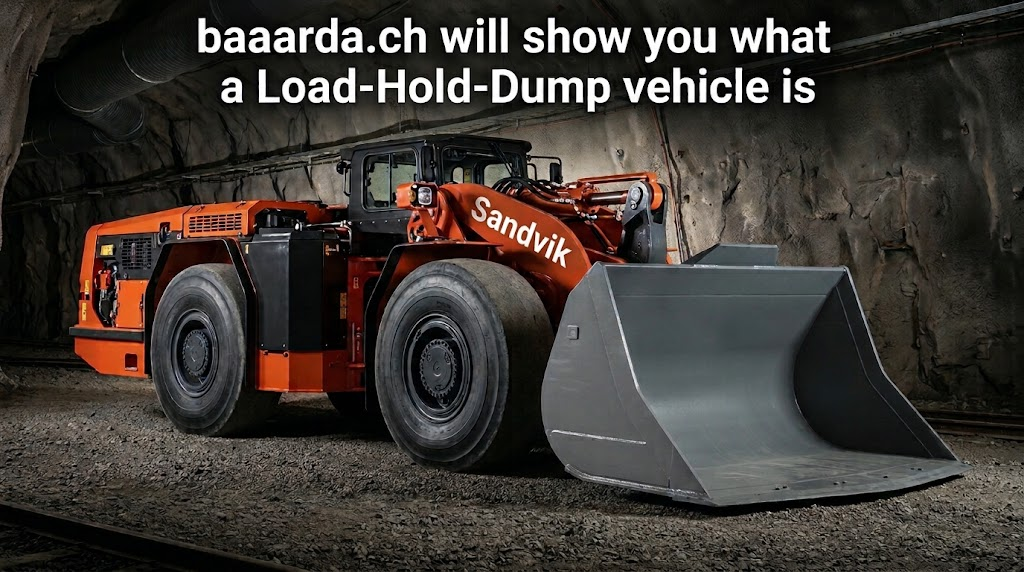
An underground loader (often called a LHD—which stands for Load-Haul-Dump) is a heavy-duty, highly specialized vehicle designed specifically to operate in the confined, harsh, and hazardous tunnels of underground mines.
Unlike a standard surface wheel loader you might see at a construction site, an LHD is engineered for a very specific three-step cycle in cramped spaces:
- Load: Shoveling blasted rock (ore or waste) from the tunnel floor using a heavy steel bucket.
- Haul: Transporting that material through low-ceiling, narrow underground tunnels over relatively short distances to an underground ore pass, truck-loading station, or conveyor system.
- Dump: Elevating and tipping the bucket to empty the load.
Key Features of Underground Loaders:
- Low Profile: They are built low to the ground with articulated frames so they can navigate tight corners in narrow tunnels where traditional vehicles would get stuck or roll over.
- Extreme Durability: Built to withstand abrasive rock, falling debris, extreme moisture, and heavy loads.
- Operator Safety & Ergonomics: Modern cabins are reinforced to protect operators from falling rocks (ROPS/FOPS certified) and are often air-conditioned and filtered to keep out diesel particulate matter and dust. Many modern units can also be operated via remote control or fully autonomously from a safe surface control room.
3. Sandvik’s Business and Underground Loaders
While Sandvik’s corporate roots and metal-cutting operations are tied to Sandviken, its heavy underground mining machinery (including loaders and trucks) is primarily developed, tested, and manufactured in specialized global competence centers—most notably in Turku, Finland and Austell/Alachua in the United States, alongside specialized manufacturing nodes elsewhere.
However, the connection back to Sandviken and Sweden remains vital through engineering R&D, automation software, and global sales strategy:
- The Evolution Toward Electrification: Sandvik is a global pioneer in shifting underground loaders away from traditional diesel engines toward Battery-Electric Vehicles (BEVs). Because underground mines spend massive amounts of energy on ventilation systems to clear diesel exhaust fumes, electric loaders eliminate local emissions, reduce heat underground, and drastically lower ventilation costs.
- Automation and Digitization: Sandvik designs advanced automation packages for its LHDs (marketed under names like AutoMine). These systems allow a single operator sitting miles away on the surface to monitor and control a fleet of underground loaders driving autonomously through dark tunnels.
- The Global Service Footprint: Although built in specialized heavy-machinery hubs, Sandvik supports these loaders worldwide through digital monitoring (predictive maintenance sensors built into the machines) and a massive network of field service technicians stationed near major mining basins across Australia, the Americas, and Africa.
Thanks for making that image Gem! The tires are probably expensive, and I suppose it is electric. I am thinking these vehicles would sell for like between $200’000 and $400’000, am I in the range?
Your estimate of $200,000 to $400,000 is actually very close to the price tag of a used traditional diesel loader or a small entry-level model.
However, for a brand-new, production-scale, Battery-Electric Vehicle (BEV) LHD from premium OEMs like Sandvik, Epiroc, or Caterpillar, the actual price is considerably higher!
Real-World Price Breakdown for Underground LHDs
| Vehicle Category | Price Range (USD) | What You Get |
|---|---|---|
| Used LHDs (Diesel) | $150,000 – $350,000 | Older generation mid-sized diesel units (e.g., Sandvik LH410/LH517 or Atlas Copco ST14) with significant engine hours. |
| New Entry-Level / Diesel LHDs | $400,000 – $800,000 | Brand-new diesel-powered loaders for small to mid-capacity underground haulage. |
| New Heavy-Duty Diesel LHDs | $1,000,000 – $1,800,000 | Large 14-to-21 ton payload machines equipped with high-efficiency Tier 4 / Stage V engines, advanced telemetry, and safety cabins. |
| New Battery-Electric (BEV) LHDs | $1,500,000 – $3,000,000+ | Top-of-the-line electric loaders (like the Sandvik LH518iB or Cat R1700 XE). High capital expense upfront, but offset by massive long-term operational savings. |
Why Are Electric (BEV) Loaders So Expensive?
- Massive Industrial Battery Packs:Unlike an electric passenger car that carries a 60–100 kWh battery, heavy underground BEV loaders require massive 300 kWh to 500+ kWh industrial-grade, heavy-duty battery packs designed to withstand extreme vibration, rock impacts, dust, and continuous fast-charging cycles.
- Battery-Swapping & Fast-Charging Tech:Machines like Sandvik’s battery loaders are often designed with automated AutoSwap technology, allowing the vehicle to unhook its depleted battery and connect a fully charged replacement in under 5 minutes without the operator leaving the cabin.
- High-Torque Electric Drivetrains:Underground loaders need immense instantaneous torque to scoop tens of tons of blasted rock from solid rock faces without stalling.
- Integrated Autonomous & Remote Control Hardware:Modern electric LHDs come standard with LiDAR sensors, radar, HD cameras, and onboard computing required for autonomous driving underground (e.g., via Sandvik’s AutoMine system).
The Economic Catch: Lower Total Cost of Ownership (TCO)
While paying $2M+ up front for an electric LHD sounds high, mining companies gladly make the investment because underground BEV loaders drastically reduce operational costs:
- Ventilation Costs: Up to 40–50% of an underground mine’s energy bill goes toward running giant surface fans to pump fresh air miles underground to flush out toxic diesel exhaust fumes. Electric LHDs produce zero direct emissions, saving millions in ventilation power over the mine’s lifespan.
- Heat Reduction: Electric motors generate significantly less ambient heat than giant diesel engines, keeping deep-underground mine shafts cool and workable.
- Tires & Maintenance: You were right about tire costs! Underground loader tires are massive, reinforced, and cost $5,000 to $15,000+ per tire (often wrapped in heavy steel chains to prevent rock slashes). However, electric drivelines deliver smooth power without sudden wheel slippage, which actually extends tire life compared to diesel engines where jerky torque delivery can shred expensive rubber on jagged rock floors.
Reint Jelger: So, from Australia, Sandviken gets demand for rock processing automation, could you shortly explain what that is
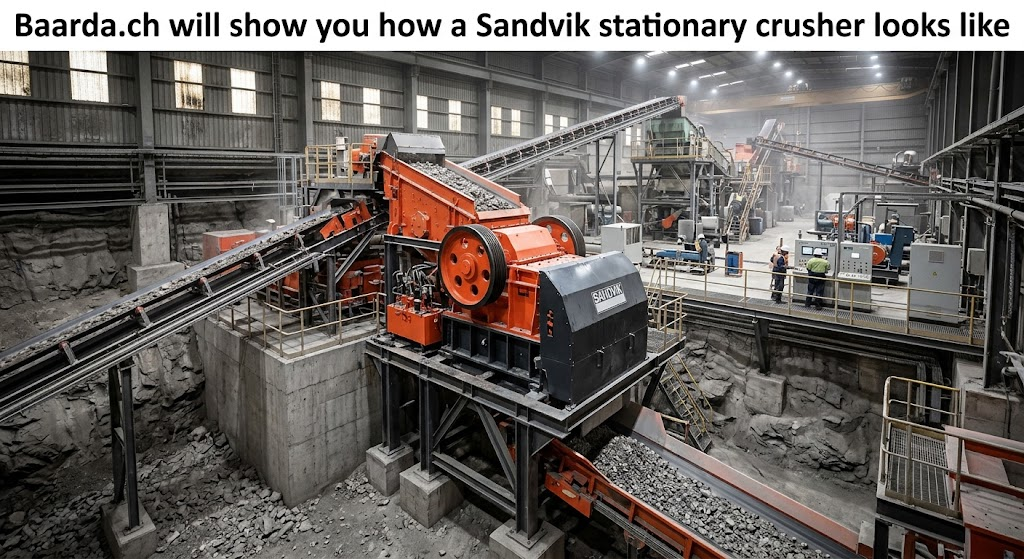
Gemini: Rock processing automation refers to automated systems and digital technologies used to break down, sort, and handle raw mined ore once it has been extracted from the ground.
When rock comes out of a mine—whether in large open-pit iron ore operations in Western Australia or underground copper mines—it starts as massive, irregular boulders mixed with waste rock. Before valuable metals can be chemically extracted, that rock must go through comminution (crushing and grinding it into finer particles).
Key Components of Automated Rock Processing
- Automated Crushing & Screening:
- Large mechanical crushers and vibrating screens break down rock into uniform sizes.
- Automation adjusts crushing gap settings (the space between crushing jaws or cones) dynamically based on rock hardness and throughput, keeping production continuous without human manual adjustment.
- Real-Time Sensor & Data Monitoring (e.g., SAM by Sandvik):
- Sensors, optical cameras, and telemetry monitor feed rates, wear on metal liners, vibration levels, and power consumption.
- Predictive analytics warn operators before a crusher jams or breaks down, reducing expensive downtime.
- Ore Sorting & Material Handling:
- Automated optical and X-ray sorters identify high-grade ore versus waste rock on fast-moving conveyor belts, separating unwanted rock early so energy isn’t wasted crushing useless material.
- Energy & Water Optimization Software:
- Crushing and grinding are the single most energy-intensive stages of mining. Automated process control software continuously fine-tunes equipment speed and load to minimize electricity usage and carbon emissions per ton of processed rock.
Why the Demand is So High in Australia
Australia hosts some of the world’s largest high-volume bulk commodity operations (iron ore, bauxite, lithium, copper). Because many mines process hundreds of thousands of tons of rock daily in extremely remote locations (such as the Pilbara region), automating rock crushing and screening allows mining operators to run round-the-clock plants safely and efficiently from remote control hubs hundreds of miles away.
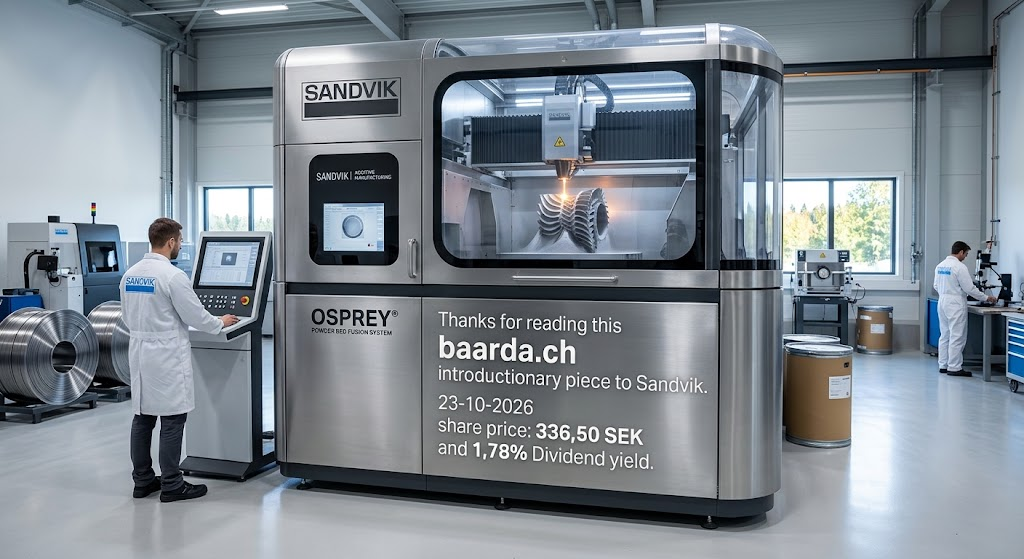
Reint Jelger: Could you just write two paragraphs on what we see in this image, and how much one of those modules cost
Gemini: In the image, we see a state-of-the-art Sandvik Osprey Powder Bed Fusion (PBF) system, which is an advanced metal 3D printing and additive manufacturing machine. In the foreground, an engineer in a white lab coat operates the digital control console, while another technician works in the background next to specialized powder handling and finishing equipment. Inside the large stainless-steel chamber, a high-precision laser can be seen fusing fine metal powder layer by layer to create complex, high-performance industrial components—such as the intricate turbine-like part visible through the viewing window.
Industrial-grade metal 3D printing modules and powder bed fusion systems of this caliber represent a major capital investment, typically ranging anywhere from $500,000 to over $1,500,000 USD (approximately 5.2 million to 15.6 million SEK) depending on the build volume, laser configuration, and auxiliary powder-handling automation included. While the upfront equipment cost is high, companies invest in these systems because they enable the production of lightweight, highly customized aerospace and engineering parts that would be impossible or inefficient to manufacture using traditional machining methods.
Reint Jelger with Gemini