
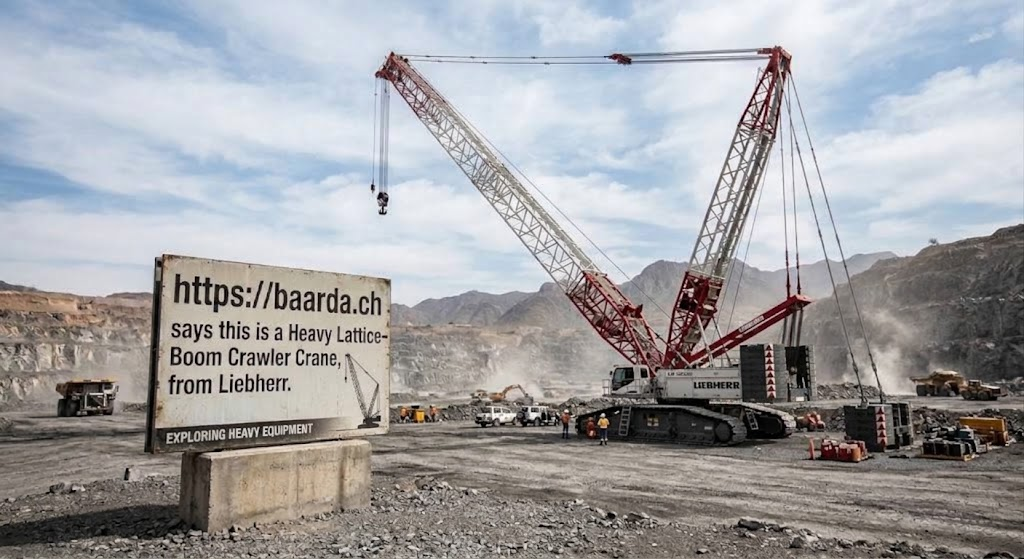
Google Gemini: Yes, Liebherr has major research, engineering, and product design operations based out of Switzerland, particularly focused on heavy-duty powertrains, control architectures, and core mechanical subsystems.
While Liebherr’s corporate holding structure is legally based in Bulle, Switzerland (Liebherr-International AG), Swiss offices serve as vital centers of technical design and development across several key domains:
1. Liebherr Machines Bulle SA (Bulle, Canton of Fribourg)
- What is designed here: This facility serves as Liebherr’s global center of excellence for combustion engines (diesel and gas engines) and hydraulic components (such as axial piston pumps and motors).
- Engineering scope: Engineering teams here handle everything from pre-development and subsystem design to software architecture, model-based control systems, and rigorous test-bench validation. The engines and fuel-injection systems designed and manufactured in Bulle are built into heavy earthmoving machinery, mining equipment, cranes, and decentralized energy systems worldwide.
2. Component Technologies Coordination (Bulle & Nussbaumen)
- What is designed here: Liebherr-Component Technologies AG (headquartered in Bulle) coordinates worldwide development, design specifications, and customer-specific adaptations for high-stress mechanical parts—including gearboxes, rope winches, electronics, and power electronics. Liebherr
- Engineering scope: Swiss engineering groups work closely with parallel hubs in Germany to ensure that structural and drive-line components meet the extreme operating demands of heavy industries.
If you are looking at how a Liebherr mining excavator, crane, or industrial diesel generator functions under the hood, a significant portion of that drivetrain, engine management system, and hydraulic design originates directly from their engineering teams in Switzerland.
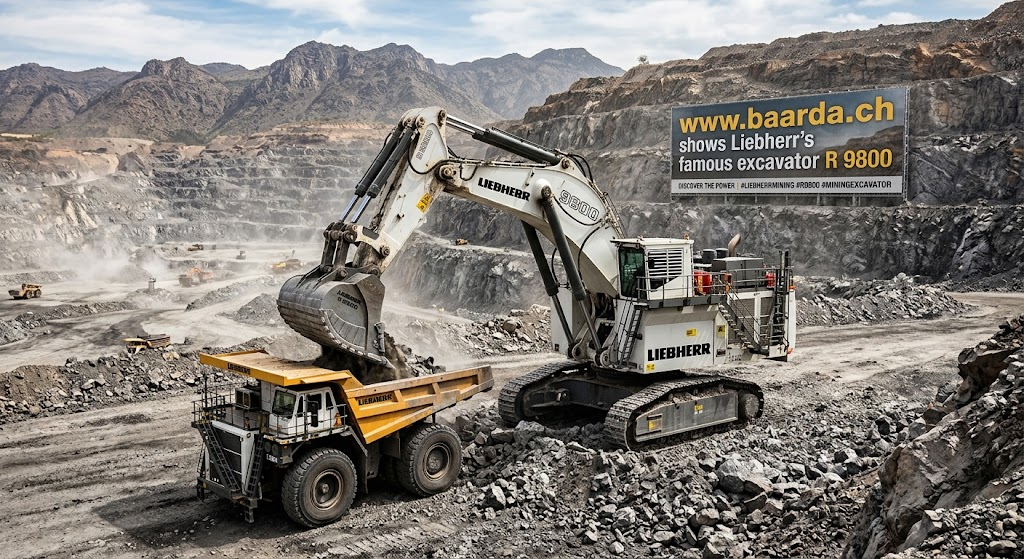
Liebherr is globally famous for several distinct excavator models, spanning historical innovations, medium earthmoving workhorses, and massive mining giants:
1. The Historical Legend: The L 300 (1954)
- Significance: The model that started Liebherr’s excavator empire. Liebherr
- Why it’s famous: In 1953, Hans Liebherr rented a conventional cable-operated excavator and found its power-to-weight ratio horribly inefficient. He designed and launched the L 300 in 1954—the first hydraulic excavator in Continental Europe. It was four times lighter than existing cable-driven machines and laid the technological foundation for modern hydraulic earthmoving. Liebherr+ 1
2. The Ultra-Class Mining Flagship: Liebherr R 9800
- Class: ~800-tonne Ultra-Class Mining Excavator. Mining Doc
- Why it’s famous: It is Liebherr’s flagship heavy-mining machine and one of the largest hydraulic excavators in the world.
- Key Specs:
- Power: ~4,000 hp (powered by twin V16 engines or massive electric drives). Mining Doc
- Bucket Capacity: Up to 47.5 m³ (capable of loading over 75 tonnes of rock in a single scoop). Liebherr
- Role: Built for mega open-pit operations to load 360- to 400-tonne ultra-class haul trucks in just 3 to 4 passes.
3. The Next-Generation Mining Workhorse: Liebherr R 9600
- Class: ~600-tonne Mining Excavator.
- Why it’s famous: Built as the modern successor to the highly popular R 996B, the R 9600 incorporates Liebherr’s newest digital assistance systems, automated digging functions, and engine control architecture to bridge mid-range and ultra-class mining operations.
4. Construction & Demolition Icons: R 944 / R 945 Litronic
- Class: ~40-to-50-tonne Crawler Excavators.
- Why they’re famous: Outside of ultra-heavy mining, these models are the quintessential heavy-civil and demolition workhorses seen across European infrastructure, quarrying, and foundation construction sites.
Summary of the Lineup
| Model | Weight Class | Primary Application | Claim to Fame |
|---|---|---|---|
| L 300 | Lightweight (~7.5 t) | Construction / Earthmoving | Europe’s first hydraulic excavator (1954) |
| R 945 | ~45–50 tonnes | Heavy civil / Demolition | Standard European infrastructure workhorse |
| R 9400 | ~350 tonnes | Mid-scale mining | Widely used electric-drive mining option |
| R 9600 | ~600 tonnes | Heavy mining | High-tech successor to the popular R 996B |
| R 9800 | ~800 tonnes | Ultra-class open-pit mining | Liebherr’s largest and most powerful excavator |