
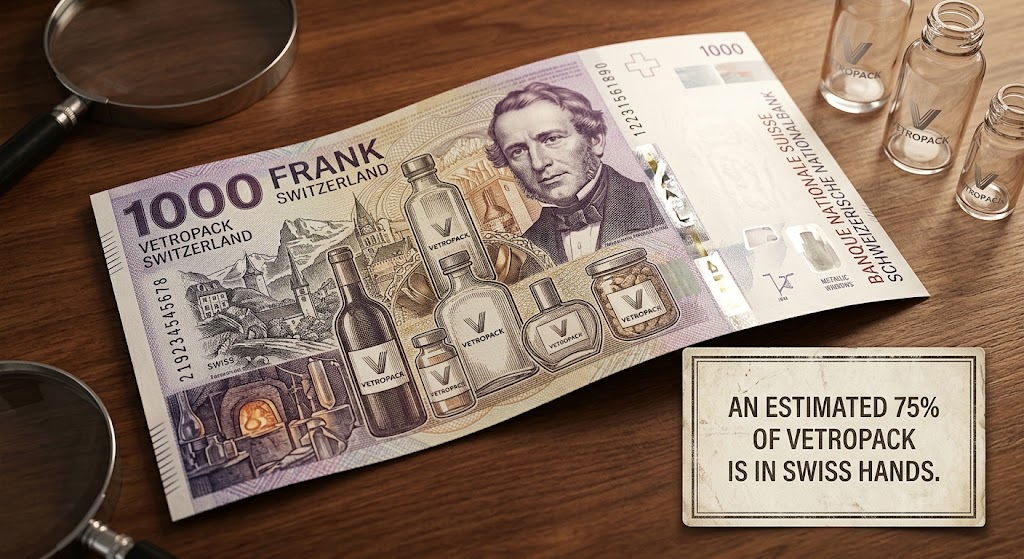
Google Gemini: Yes, the core ownership and voting control are heavily Swiss-dominated.
- Family & Foundation Control: Vetropack is historically tied to the Swiss Cornaz family. Through Cornaz AG-Holding and family shareholder pooling agreements, the Cornaz family holds the controlling majority of voting rights (around 70%+ of total voting control, despite holding fewer total economic shares).
- Institutional & Free Float: The remaining shares (free float) are held by Swiss retail investors, Swiss asset managers (such as UBS Asset Management), and some international institutional funds.
- Overall, more than 70–75% of the overall control and economic stake rests in Swiss hands.
Macroeconomic Reality: Does Vetropack making money mean Switzerland makes money?
No, not directly for the nation as a whole.
1. Operations Are International
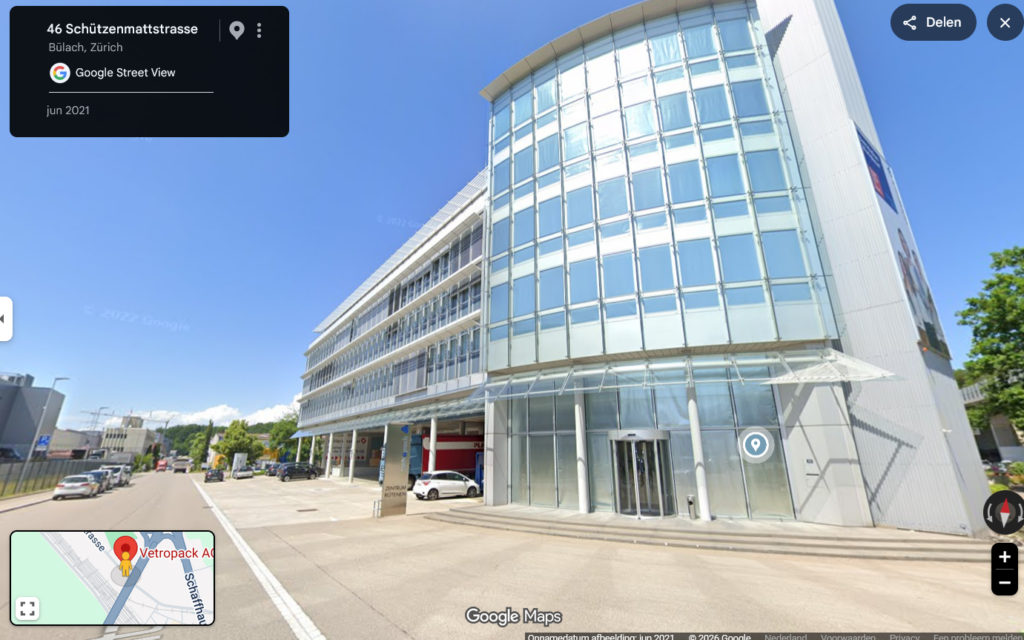
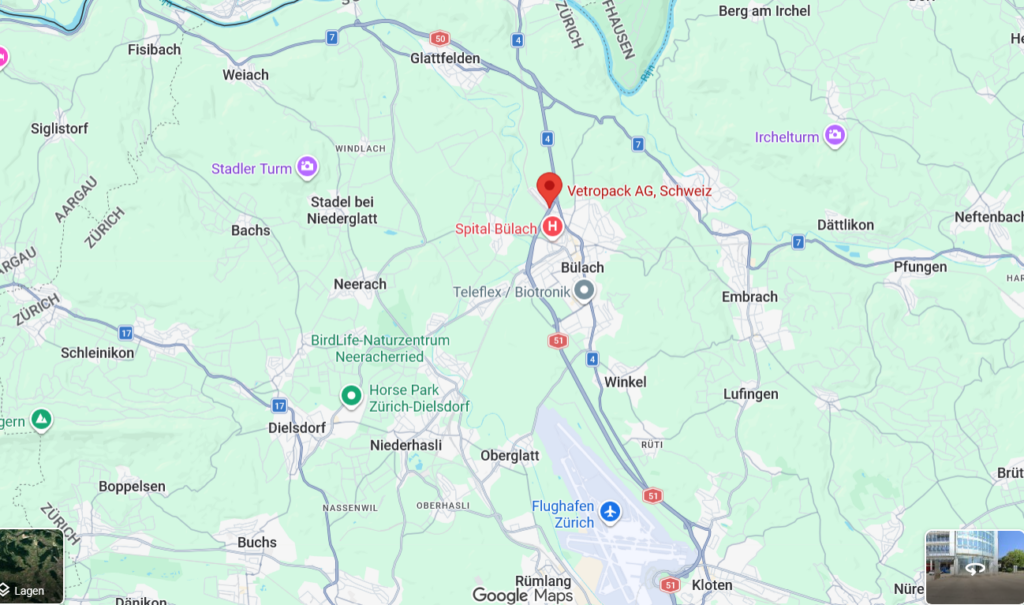
While headquartered in Bülach, Switzerland, Vetropack is an international industrial manufacturer. The vast majority of its manufacturing plants and workforce are located outside Switzerland:
- Production Facilities: Czech Republic, Slovakia, Croatia, Ukraine, Austria, Italy, and Switzerland. Morningstar
- Revenue Origin: The bulk of Vetropack’s revenue and operating earnings come from sales across Central and Eastern Europe. Profits generated by the group depend heavily on European industrial activity, energy costs, and international glass demand.
2. How Profits Are Distributed
When Vetropack turns a profit, that money flows back through specific channels:
- Dividends to Shareholders: Profits distributed as dividends primarily enrich the Cornaz family and private/institutional shareholders, rather than the general public. Simply Wall St
- Taxation: Corporate taxes are paid locally in the countries where production occurs, as well as holding taxes in Switzerland. While this generates tax revenue for Swiss cantons and the federal government, it accounts for a tiny fraction of total Swiss GDP.
- Domestic Economy: Vetropack is a medium-sized company relative to Swiss blue-chip giants (like Nestlé, Novartis, Roche, or UBS). Its corporate performance has a minimal impact on the overall macro-level Swiss economy.
Reint Jelger: Can you explain what Vetropack Switzerland actually does, like glass packaging right? Are there other products or services they deliver? And why don’t people use plastic packaging instead of glass
Google Gemini: Vetropack specializes in the design and manufacture of glass packaging—specifically mass-producing glass bottles and jars for the food and beverage industries (such as for beer, wine, spirits, mineral water, and jams). They maintain a catalog of around 2,500 distinct standard and custom packaging designs.
Beyond basic manufacturing, they provide several industrial services and auxiliary products:
- Custom Design & Engineering: Collaborating with brands to create custom bottle shapes, debossed logos, and proprietary container designs. Vetropack Group
- Glass Decorating & Finishing: Offering services like screen printing, enameling, and frosting directly onto the glass. Kompass
- Technical & Bottling Consultancy: Advising corporate clients on closing technology, labeling, filling lines, and packaging optimization. GlobalData
- Trading & Distribution: Through subsidiaries like Müller + Krempel, they act as a wider trade and packaging service provider handling complementary packaging elements for the pharma, cosmetic, and food sectors in Switzerland. Vetropack Group
Why doesn’t everyone just use plastic packaging instead of glass?
While plastic (PET, HDPE) is cheaper, lighter, and less breakable, glass remains heavily favored for specific reasons:
- Zero Chemical Leaching & Inertness: Glass is chemically inert. It does not interact with contents, meaning no microplastics, plasticizers (like phthalates), or chemical compounds ever migrate into the food, drink, or medicine.
- Superior Taste and Purity: Glass is entirely impermeable to gases. Carbonated drinks stay fizzy longer, and oxygen doesn’t slowly seep in to degrade wine, beer, or sensitive liquids. Plastic is microscopically porous, which alters flavor and shortens shelf life over time.
- Infinite Recyclability: Glass can be recycled endlessly 100% without losing quality, purity, or structural integrity. Plastic degrades structurally each time it is melted down, meaning it can generally only be downcycled a few times before it becomes unusable.
- Consumer Perception and Luxury: Premium products (fine wines, craft beers, high-end cosmetics, gourmet foods) rely on the heavy, cool-to-the-touch, premium tactile feel of glass to signal quality. Consumers largely view glass as healthier and more environmentally sustainable.
Reint Jelger: But like Vetropack is a really small company right? They probably don’t even generate more than one million Swiss Frank in profit a year right?
Vetropack is far larger than one might assume, generating hundreds of millions of Swiss Francs in annual sales.
- Revenue (Net Sales): Vetropack generates between CHF 750 million and CHF 900 million in net sales per year (e.g., CHF 778.9 million in 2025 and CHF 842.1 million in 2024). Vetropack Group
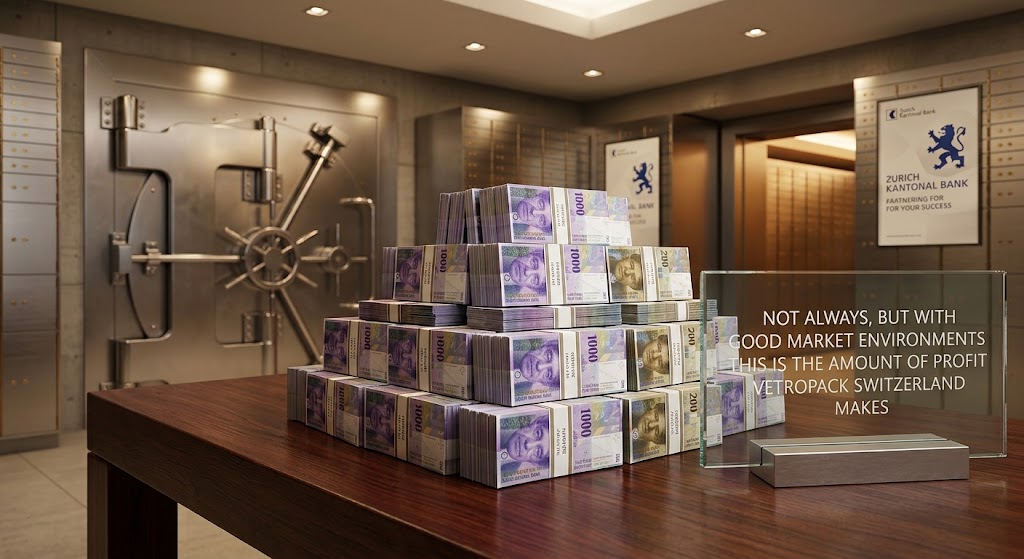
- Net Profit: Its annual net profit ranges from roughly CHF 4 million to CHF 80+ million depending on energy market conditions and restructuring costs. Vetropack Group
- Even during difficult years hit by elevated European energy prices and plant restructuring costs (such as the closure of their St-Prex site), net profit stood at CHF 3.8 million (2025) and CHF 13.7 million (2024). Vetropack Group
- In stronger market environments, annual net profit routinely exceeds CHF 40 to 60 million.
- Workforce & Operations: The group employs roughly 3,500 people across Europe and operates massive industrial glass furnaces running 24/7 in countries including Switzerland, Austria, the Czech Republic, Slovakia, Croatia, Ukraine, and Italy. Vetropack – Vetropack Group
Reint Jelger Baarda