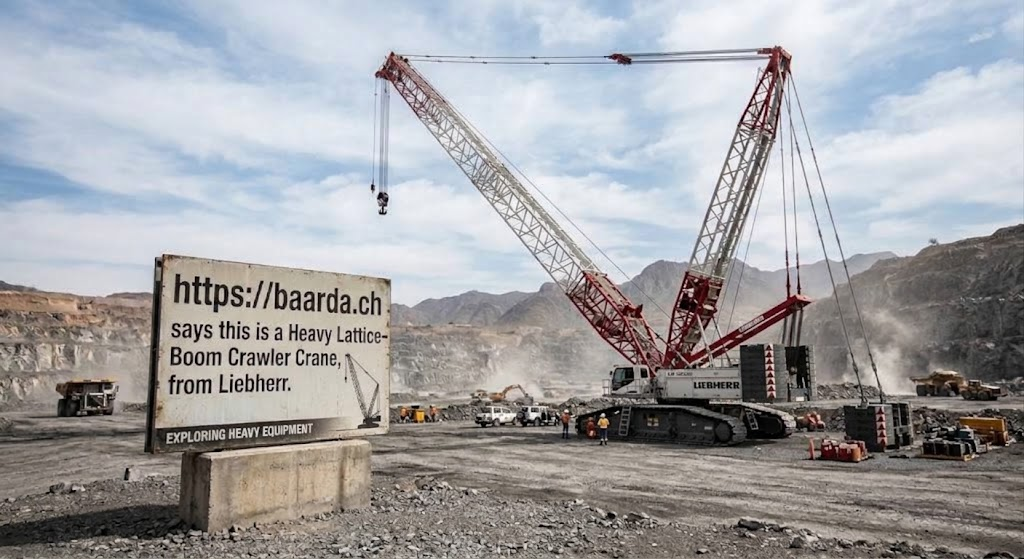
Reint Jelger: Is there any design from Swiss offices for Liebherr products?

Google Gemini: Yes, Liebherr has major research, engineering, and product design operations based out of Switzerland, particularly focused on heavy-duty powertrains, control architectures, and core mechanical subsystems.

While Liebherr’s corporate holding structure is legally based in Bulle, Switzerland (Liebherr-International AG), Swiss offices serve as vital centers of technical design and development across several key domains:

1. Liebherr Machines Bulle SA (Bulle, Canton of Fribourg)

  • What is designed here: This facility serves as Liebherr’s global center of excellence for combustion engines (diesel and gas engines) and hydraulic components (such as axial piston pumps and motors).
  • Engineering scope: Engineering teams here handle everything from pre-development and subsystem design to software architecture, model-based control systems, and rigorous test-bench validation. The engines and fuel-injection systems designed and manufactured in Bulle are built into heavy earthmoving machinery, mining equipment, cranes, and decentralized energy systems worldwide.

2. Component Technologies Coordination (Bulle & Nussbaumen)

  • What is designed here: Liebherr-Component Technologies AG (headquartered in Bulle) coordinates worldwide development, design specifications, and customer-specific adaptations for high-stress mechanical parts—including gearboxes, rope winches, electronics, and power electronics. Liebherr
  • Engineering scope: Swiss engineering groups work closely with parallel hubs in Germany to ensure that structural and drive-line components meet the extreme operating demands of heavy industries.

If you are looking at how a Liebherr mining excavator, crane, or industrial diesel generator functions under the hood, a significant portion of that drivetrain, engine management system, and hydraulic design originates directly from their engineering teams in Switzerland.
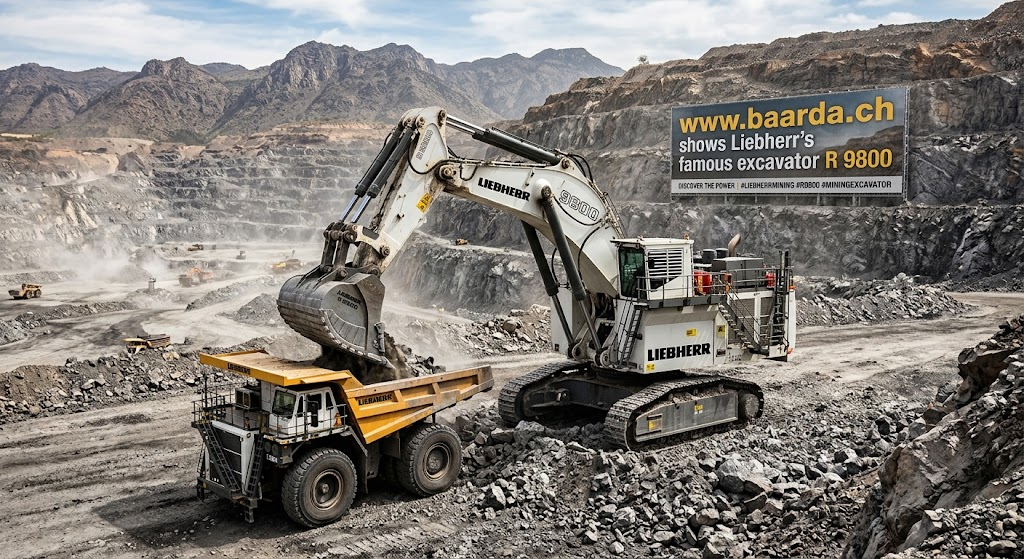
Liebherr is globally famous for several distinct excavator models, spanning historical innovations, medium earthmoving workhorses, and massive mining giants:

1. The Historical Legend: The L 300 (1954)

  • Significance: The model that started Liebherr’s excavator empire. Liebherr
  • Why it’s famous: In 1953, Hans Liebherr rented a conventional cable-operated excavator and found its power-to-weight ratio horribly inefficient. He designed and launched the L 300 in 1954—the first hydraulic excavator in Continental Europe. It was four times lighter than existing cable-driven machines and laid the technological foundation for modern hydraulic earthmoving. Liebherr+ 1

2. The Ultra-Class Mining Flagship: Liebherr R 9800

  • Class: ~800-tonne Ultra-Class Mining Excavator. Mining Doc
  • Why it’s famous: It is Liebherr’s flagship heavy-mining machine and one of the largest hydraulic excavators in the world.
  • Key Specs:
    • Power: ~4,000 hp (powered by twin V16 engines or massive electric drives). Mining Doc
    • Bucket Capacity: Up to 47.5 m³ (capable of loading over 75 tonnes of rock in a single scoop). Liebherr
    • Role: Built for mega open-pit operations to load 360- to 400-tonne ultra-class haul trucks in just 3 to 4 passes.

3. The Next-Generation Mining Workhorse: Liebherr R 9600

  • Class: ~600-tonne Mining Excavator.
  • Why it’s famous: Built as the modern successor to the highly popular R 996B, the R 9600 incorporates Liebherr’s newest digital assistance systems, automated digging functions, and engine control architecture to bridge mid-range and ultra-class mining operations.

4. Construction & Demolition Icons: R 944 / R 945 Litronic

  • Class: ~40-to-50-tonne Crawler Excavators.
  • Why they’re famous: Outside of ultra-heavy mining, these models are the quintessential heavy-civil and demolition workhorses seen across European infrastructure, quarrying, and foundation construction sites.

Summary of the Lineup

ModelWeight ClassPrimary ApplicationClaim to Fame
L 300Lightweight (~7.5 t)Construction / EarthmovingEurope’s first hydraulic excavator (1954)
R 945~45–50 tonnesHeavy civil / DemolitionStandard European infrastructure workhorse
R 9400~350 tonnesMid-scale miningWidely used electric-drive mining option
R 9600~600 tonnesHeavy miningHigh-tech successor to the popular R 996B
R 9800~800 tonnesUltra-class open-pit miningLiebherr’s largest and most powerful excavator

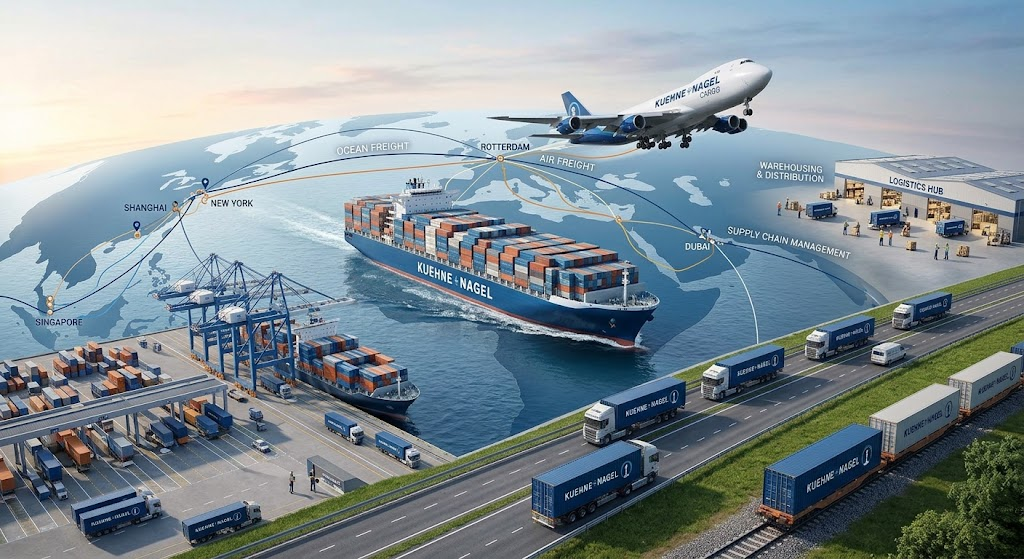
This image depicts how Gemini would explain Kuehne+Nagel’s business

Reint Jelger: So this is how you visualize the business that Kuehne+Nagel does, does it really have such large ships, and does it mainly use the Rotterdam port?

Google Gemini: While the generated visualization accurately captures the concepts of global logistics, two details in the image are slightly misleading when applied to Kuehne+Nagel’s actual operations:

1. Does Kuehne+Nagel own these massive ships?

No, Kuehne+Nagel does not own container ships or cargo planes.

Kuehne+Nagel is a freight forwarder and 3PL (third-party logistics) provider, not an ocean carrier.

  • How it actually works: They act as the architect and coordinator of the supply chain. Instead of operating their own fleet of ships, they book container space on vessels owned by ocean carriers like Maersk, MSC, CMA CGM, or Hapag-Lloyd.
  • The visual catch: Seeing «Kuehne + Nagel» written on the side of a massive cargo ship or airplane looks impressive, but in reality, you would only see their logo on shipping containers, trucks, warehouses, or local delivery vehicles—not on the sides of megamax ocean liners.

2. Does it mainly use the Port of Rotterdam?

Rotterdam is one of their major hubs, but not their single primary focus.

  • Global Presence: As the world’s largest ocean freight forwarder by volume, Kuehne+Nagel handles shipments across thousands of trade lanes globally.
  • Europe’s Main Gateway: Rotterdam is Europe’s largest port, so a massive portion of their cargo entering or leaving Europe passes through Rotterdam.
  • Other Essential Ports: Their operations depend just as heavily on other major ports worldwide, such as Shanghai, Singapore, Ningbo-Zhoushan, Hamburg, Antwerp, Los Angeles, and Dubai.

Reint Jelger: Like, so I suppose Kuehne+Nagel sort of does logistics. Well if they serve thousands of ports globally, I think that sort of says something about it size. Like with Baarda.ch incorporated in Switzerland and also making energy cans, do you see any usecases to do business with Kuehne+Nagel from Switzerland and the Netherlands?

Google Gemini: That sheer scale—operating in over 100 countries with roughly 1,300 offices—is precisely why Kuehne+Nagel handles a huge chunk of global trade. They essentially act as the invisible mechanical nervous system moving goods across continents.

Looking at how a platform like baarda.ch bridges Switzerland and the Netherlands, there are a few interesting structural use cases where a global logistics titan like Kuehne+Nagel intersects with cross-border operations:

1. The Swiss-Dutch Corporate Corridor

Because Kuehne+Nagel is headquartered in Schindellegi, Switzerland, while maintaining a massive operational footprint in the Netherlands (including major distribution networks around Rotterdam and Schiphol), they sit right on the geographic and economic bridge between the two countries. For a Swiss-incorporated digital publication, holding, or independent project, having a logistics partner with deep roots in both jurisdictions makes cross-border administrative and physical movements seamless.

2. Physical Product Distribution & «Energy» Assets

If a project expands into physical goods—whether that involves specialized publication merchandise, physical energy-transition hardware, or specialized agricultural/industrial inputs like bulk fertilizers (Calcium Ammonium Nitrate/CAN) or green tech components:

  • Contract Logistics & Warehousing: Kuehne+Nagel manages millions of square meters of warehouse space. If goods need secure, compliant storage close to major European entry points before being distributed outward, a 3PL provider handles the inventory management without requiring a company to own physical depots.
  • Multimodal Freight Management: Moving heavy industrial or energy-related equipment from manufacturing centers in central Europe (like Switzerland or Germany) up toward North Sea ports (like Rotterdam) for global export requires coordinating rail, road, and ocean freight under a single digital tracking umbrella.

3. Supply Chain Visibility and Data Integration

For an independent publisher and macroeconomic analyst focusing on industrial engineering and energy transitions, understanding how global 3PL networks operate provides a clear window into real-time supply chain health. Companies use Kuehne+Nagel’s digital platforms to track freight rates, container availability, and carbon-reduction metrics across global trade lanes—data points that are vital when analyzing industrial throughput and macroeconomics.

Even if a digital-first platform keeps its primary footprint light and web-based, knowing how the physical heavy-lifters move the material world between Schwyz and Fryslân is the ultimate baseline for understanding global commerce.

Reint Jelger: Can you give me 4 paragraphs with investing info, I see CHF 237,20 is their shareprice, can you give dividend yield, address of its HQ, total market cap, And a few more if you find them applicable

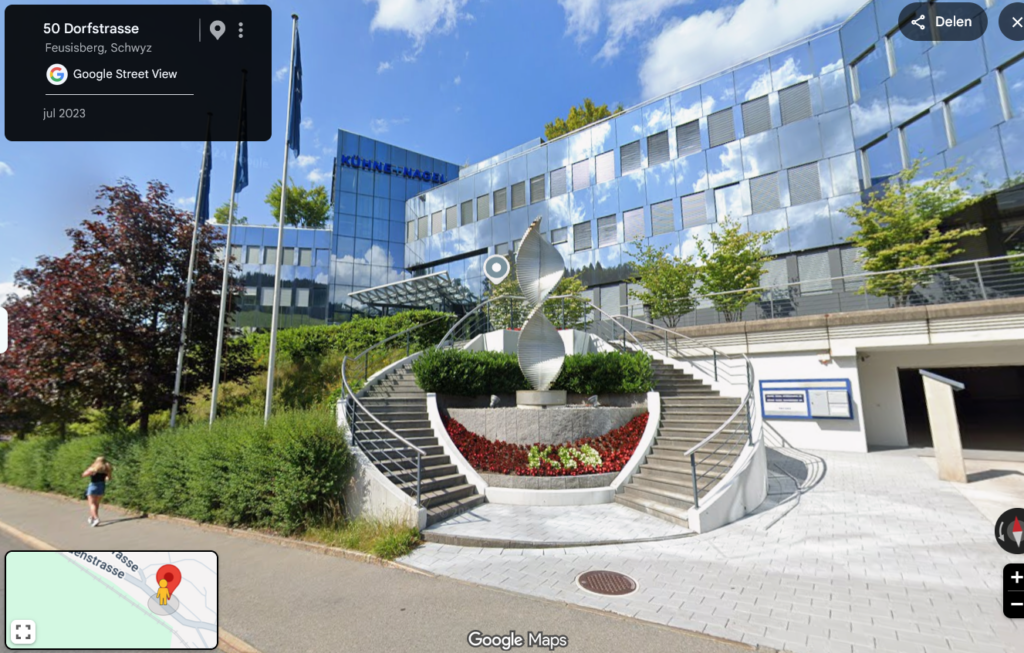
Google Gemini: Kuehne + Nagel International AG (listed under the ticker KNIN on the SIX Swiss Exchange) is trading right around your reference price, near its 52-week highs. At a share price of ~CHF 237.20, the company commands a total market capitalization of approximately CHF 28.17 billion. Its global corporate headquarters is situated in Switzerland at Dorfstrasse 50, 8834 Schindellegi (Municipality of Feusisberg), Canton of Schwyz.

Regarding dividend metrics, Kuehne + Nagel yields approximately 2.5% to 2.6% based on its latest annual payout of CHF 6.00 per share. The company maintains a strong tradition of returning capital to shareholders, although its dividend payments can fluctuate year-over-year depending on net income and global shipping volume cycles (such as the extraordinary payouts seen during the post-pandemic supply chain boom).

From an earnings and valuation perspective, the stock trades at a Price-to-Earnings (P/E) ratio of around 28.7x with reported trailing Earnings Per Share (EPS) of CHF 8.21. The company operates with relatively low leverage compared to traditional transport operators because it acts as an asset-light freight forwarder rather than an owner of heavy shipping fleet assets.

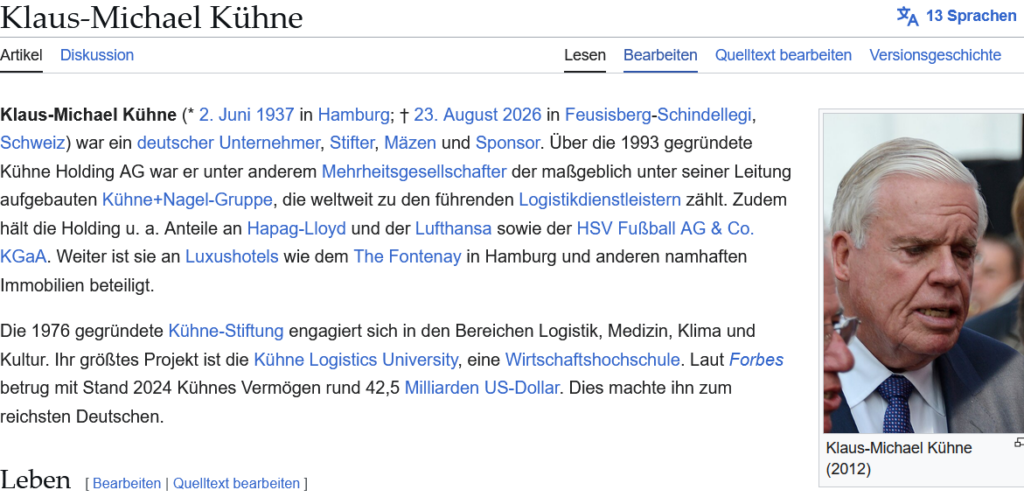
In terms of ownership structure, German billionaire Klaus-Michael Kühne remains the controlling anchor shareholder through Kühne Holding AG, which holds a majority stake of roughly 60.2% of the outstanding shares. The remaining ~39.8% constitutes the public float, largely held by institutional investors, mutual funds, and retail shareholders across European and global markets.

From Wikipedia:

Reint Jelger: Can you write 8 paragraphs explaining Baarda.ch

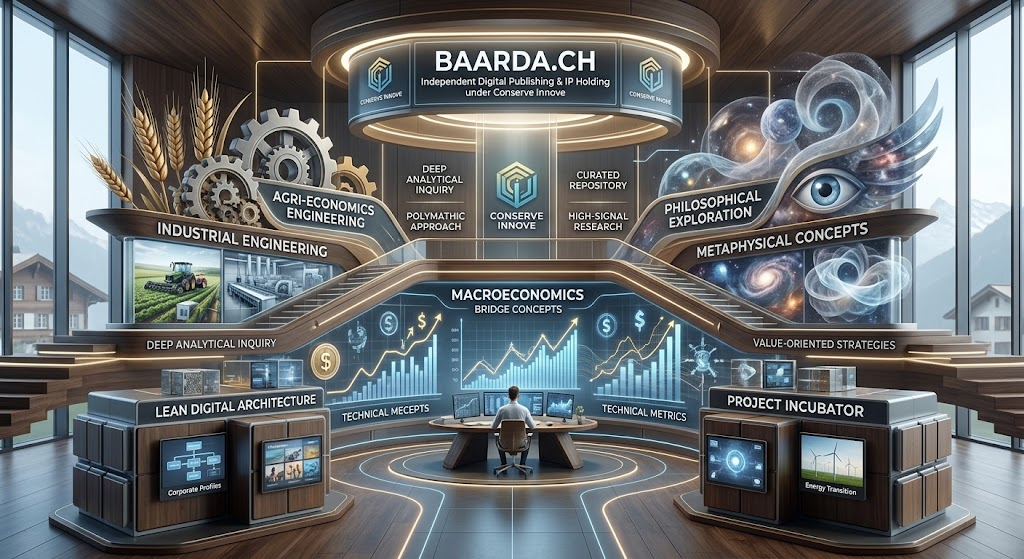
Google Gemini: baarda.ch stands as an independent digital publishing and intellectual property holding platform, operating under the banner of Conserve Innove. Designed as a specialized vehicle for deep analytical inquiry, the platform bridges diverse and complex fields such as agri-economics, industrial engineering, energy transition frameworks, and macroeconomics. Rather than functioning as a traditional corporate news site, it serves as a curated repository of rigorous intellectual studies, offering granular company breakdowns and structural market assessments.

At its methodological core, the platform emphasizes independent research and a self-reliant publishing philosophy. The editorial and analytical output reflects a distinct polymathic approach, connecting regional industrial developments with broader international monetary and economic architectures. By synthesizing technical engineering metrics with macro-level financial trends, baarda.ch creates specialized content tailored for inquisitive professionals and long-term oriented market participants.

The publication frequently highlights comprehensive corporate profiles, ranging from deep-dive analyses of European industrial powerhouses to regional economic landscapes. These reports dissect corporate balance sheets, operational divisions, and market positioning with meticulous detail. Through this lens, the platform functions as an educational and analytical toolkit for understanding how foundational industries operate within the global economy.

In addition to industrial and macroeconomic analysis, baarda.ch incorporates philosophical exploration and conceptual frameworks, including examinations of metaphysical concepts and the fundamental laws of existence. This integration of technical economic rigor with abstract philosophical inquiry highlights a unique editorial identity. It treats intellectual curiosity as a cohesive spectrum, connecting tangible industrial manufacturing with intangible principles of reality.

The digital architecture of the platform is built for lean, non-linear scalability. Operating as a modern web publication, it leverages digital leverage and content management systems to distribute specialized knowledge globally. This digital-first design enables independent creators and researchers to bypass traditional media bottlenecks, establishing a direct channel for high-signal research and commentary.

The platform also serves as a creative canvas for multimedia integration and branding experiments. From exploring technical parameters for digital streaming initiatives to showcasing custom visual designs and localized industrial showcases, baarda.ch acts as a living project incubator. It merges theoretical economic concepts with practical digital execution, demonstrating how modern independent publishing can adapt to changing media landscapes.

Underpinning the platform’s investment and financial perspectives is a clear alignment with sustainable, long-term capital allocation principles. Discussions featured across its ecosystem frequently prioritize value-oriented strategies, such as dividend-yielding equities and robust industrial business models. This viewpoint underscores an appreciation for businesses that generate tangible economic value through cycles rather than relying on speculative momentum.

Ultimately, baarda.ch represents an independent intellectual enterprise grounded in rigorous self-reliance and intellectual depth. By combining specialized industrial research, macroeconomic commentary, and philosophical inquiry into a unified digital format, it carves out a distinctive niche in the modern publishing space. It stands as both a personal publishing portfolio and an expanding repository of cross-disciplinary knowledge.

Google Gemini: Founded in 1807, Bucher Industries began as a modest family-run blacksmith shop in Niederweningen, Switzerland, led by Heinrich Bucher-Weiss. Over more than two centuries, the small forge evolved alongside regional industrial developments, gradually expanding into a major manufacturer of specialized machinery and agricultural implements. The transition from hand-forged tools to steam- and water-powered industrial equipment laid the foundation for what would eventually become a globally recognized engineering powerhouse.

The early 20th century marked a pivotal shift toward advanced mechanization and motorized farm equipment. Under successive generations of leadership, Bucher pioneered innovative technologies such as hydraulic fruit presses, centrifugal slurry pumps, and two-wheel power mowers like the famous «Record» model. By mid-century, the business transformed into a joint-stock company, setting up the structural flexibility required to scale operations across international borders.

In the late 20th century, Bucher established a corporate holding structure and went public on the SIX Swiss Exchange in 1986. This milestone triggered a disciplined phase of global acquisitions and strategic diversification. To optimize operational focus, the group organized its businesses into distinct divisions targeting key fundamental sectors: agricultural machinery, municipal equipment, hydraulic components, glass-container manufacturing machinery, and food processing systems.

The Kuhn Group serves as Bucher’s agricultural machinery division and forms a major cornerstone of its business portfolio. Specializing in tillage, seeding, fertilization, haymaking, and livestock feeding equipment, Kuhn supplies farmers and agricultural contractors worldwide. Through continuous engineering refinements and strategic acquisitions, this segment maintains a massive global market presence in crop production and harvesting infrastructure.

Bucher Municipal focuses on specialized public infrastructure and sanitation equipment. Its product line includes street sweepers, winter maintenance spreaders, snowplows, sewer cleaning units, and refuse collection vehicles. In response to strict urban emission standards, Bucher Municipal has increasingly shifted toward fully electric powertrains and low-noise designs, making its fleets prominent in municipal services across Europe, North America, and Australia.

Bucher Hydraulics develops high-precision hydraulic control units, valves, pumps, and electro-hydraulic systems. These custom-engineered drive and control components power mobile working machinery, industrial equipment, elevator systems, and renewable energy technology. By integrating smart electronics with traditional fluid power engineering, this division delivers high efficiency, safety, and precise power distribution for heavy-duty industrial applications.

Bucher Emhart Glass represents the technology group’s dedicated glass-container manufacturing division. Recognized as an industry leader in automated glass-forming machines, inspection technologies, and glass-plant engineering, it supplies equipment used to produce billions of glass bottles and jars annually. The division focuses heavily on energy-efficient melting and forming processes, enabling glass manufacturers to reduce material usage and lower carbon emissions.

Completing the corporate structure are Bucher Process and Jetter AG within the Bucher Specials segment. Bucher Vaslin and Bucher Unipektin manufacture processing systems for wine, fruit juice, food dehydration, and sludge dewatering, while Jetter supplies drive and automation control systems. Anchored in Swiss engineering traditions, long-term family shareholding, and decentralized operational management, Bucher continues to operate as a essential global machinery group serving key infrastructure and agricultural industries.

Introducing Belgium

together with GEMINI: Top 65 Belgian Listed Companies

#Company NameTickerSector / IndustryMarket CapDiv. Yield
1Anheuser-Busch InBevABIBeverage / Brewing€144.28B~1.01%
2UCB SAUCBBiopharmaceuticals€51.63B~0.50%
3argenx SEARGXBiotechnology€49.33BN/A (Growth)
4KBC GroupKBCFinancials / Banking€45.60B~2.96%
5Ageas SA/NVAGSInsurance€15.71B~3.57%
6Elia GroupELIUtilities / Grid Operator€13.59B~1.18%
7Lotus BakeriesLOTBConsumer / Food Products€10.71B~0.49%
8Financière de TubizeTUBBiopharma Investment Holding (UCB)€9.84B~0.44%
9SofinaSOFInvestment Holding / Private Equity€9.53B~0.99%
10D’Ieteren GroupDIEAutomotive Services / Belron€9.27B~0.81%
11Groupe Bruxelles Lambert (GBL)GBLBInvestment Holding / Asset Mgmt€9.11B~5.00%
12Ackermans & van HaarenACKBInvestment Holding / Engineering€8.49B~1.24%
13SyensqoSYENSSpecialty Chemicals (Solvay spin-off)€7.90B~1.40%
14KBC AncoraKBCAFinancial Holding (KBC Group)€7.20B~3.15%
15AedificaAEDHealthcare Real Estate (REIT)€5.28B~4.44%
16CMB.TECHCMBTMaritime / Maritime Tech€4.80B~7.36%
17Warehouses De Pauw (WDP)WDPLogistics Real Estate (REIT)€4.65B~4.45%
18Cenergy HoldingsCENEREnergy Cables & Steel Pipes€4.57B~0.84%
19Colruyt GroupCOLRRetail / Supermarkets€4.24B~3.20%
20UmicoreUMIMaterials Tech & Recycling€4.23B~1.70%
21DEME GroupDEMEMarine Engineering & Dredging€4.18B~1.85%
22ViohalcoVIOMetal Processing Holding€3.97B~1.50%
23Titan Cement GroupTITCBuilding Materials & Cement€3.62B~1.90%
24BrederodeBREBPrivate Equity Holding€2.96B~1.20%
25Azelis GroupAZESpecialty Chemical Distribution€2.85B~1.10%
26Shurgard Self StorageSHURSelf Storage Real Estate€2.49B~3.80%
27Solvay SASOLBEssential Chemicals€2.46B~10.38%
28MelexisMELEAutomotive Semiconductors€2.29B~3.70%
29NV BekaertBEKBSteel Wire Transformation & Coating€1.95B~3.10%
30VGP NVVGPLogistics Real Estate Development€1.89B~3.60%
31SolvacSOLVChemical Holding (Solvay Anchor)€1.83B~6.20%
32GimvGIMBPrivate Equity & Venture Capital€1.81B~5.40%
33Proximus PLCPROXTelecommunications€1.80B~7.63%
34FagronFAGRPharmaceutical Compounding€1.73B~1.40%
35MonteaMONTLogistics Real Estate (REIT)€1.49B~5.10%
36Orange BelgiumOBELTelecommunications€1.48B~1.80%
37Fluxys BelgiumFLUXGas Infrastructure / Pipeline€1.46B~6.50%
38SpadelSPAMineral Water & Drinks€1.45B~1.30%
39CofinimmoCOFBHealthcare Real Estate (REIT)€1.38B~7.80%
40Kinepolis GroupKINCinema Operations & Entertainment€1.32B~2.10%
41SipefSIPAgro-industrial / Sustainable Palm€1.15B~3.90%
42Xior Student HousingXIORStudent Housing Real Estate (REIT)€1.14B~6.80%
43EnergyVisionENRGYRenewable Energy & EV Infrastructure€1.07B~1.50%
44Tessenderlo GroupTESBSpecialty Agriculture & Industrial€1.02B~1.80%
45Retail EstatesRETOut-of-town Retail Properties (REIT)€945.16M~7.40%
46ExmarEXMShipping & Gas Infrastructure€890.58M~5.20%
47Jensen-GroupJENIndustrial Laundry Automation€673.45M~2.20%
48RecticelRECTInsulation Solutions & Polyurethane€644.26M~2.60%
49Wereldhave BelgiumWEHBShopping Centre Real Estate (REIT)€580.85M~8.10%
50FloridienneFLOBSpecialty Chemicals & Gourmet Food€562.67M~1.60%
51BarcoBARDisplay & Visualization Tech€534.72M~2.80%
52Care Property InvestCPINVHealthcare Real Estate (REIT)€526.72M~6.90%
53TINCTINCInfrastructure Investment Holding€509.09M~7.20%
54Ion Beam ApplicationsIBABCancer Radiotherapy Equipment€474.72M~1.20%
55NextensaNEXTAReal Estate Investor & Developer€471.45M~5.60%
56Vastned BelgiumVASTBCommercial Real Estate (REIT)€460.75M~7.10%
57MaterialiseMTLS3D Printing & Additive Manufacturing€445.91MN/A (Tech)
58Compagnie du Bois SauvageCOMBInvestment Holding€431.23M~3.10%
59AscencioASCECommercial Real Estate (REIT)€371.61M~7.50%
60Van de VeldeVANPremium Apparel / Lingerie€364.44M~6.40%
61Home Invest BelgiumHOMIResidential Real Estate (REIT)€355.63M~5.20%
62DeceuninckDECBPVC Building Systems & Window Profiles€327.64M~2.90%
63Moury ConstructMOURGeneral Construction & Civil Works€269.16M~3.80%
64CFECFEBConstruction, Real Estate & Multitechnics€266.61M~3.20%
65CampineCAMBLead Recycling & Specialty Chemicals€264.00M~4.10%

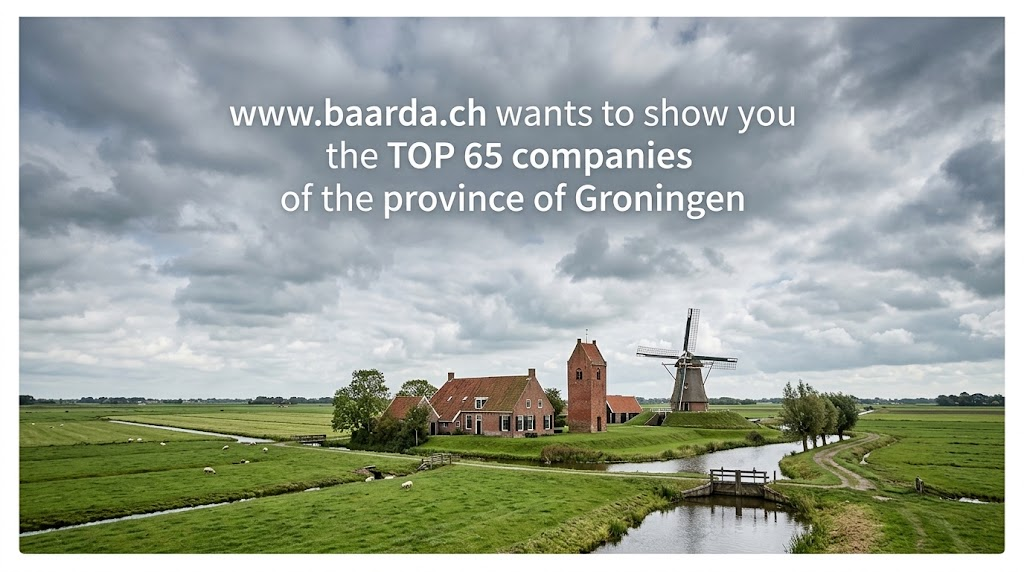
Top 65 province Groningen

GOOGLE GEMINI – Tier 1: The Regional Anchor Titans (1–15)

Heavy infrastructure, multi-billion-euro balance sheets, and major regional employment.

  1. NV Nederlandse Gasunie (Groningen) — National natural gas, energy transport, and green hydrogen backbone operator.
  2. Royal Wagenborg (Delfzijl) — Global maritime logistics, shipping, offshore support, and heavy lifting fleet operator.
  3. Royal Avebe (Veendam) — Global cooperative producing high-tech starch and protein innovations from potato crops.
  4. Royal Cosun / Suiker Unie (Hoogkerk / Groningen) — Major agri-industrial processing plant for sugar beet derivatives.
  5. Nobian (Delfzijl) — Essential industrial chemicals, high-purity salt extraction, and chlor-alkali manufacturing.
  6. RWE Generation NL (Eemshaven) — Massive power generation station and pioneer in utility-scale green hydrogen projects.
  7. EBN – Energie Beheer Nederland (Groningen) — State-owned energy investment and transition management powerhouse.
  8. Century Autogroep (Groningen) — Dominant regional automotive, mobility, and commercial vehicle sales/fleet group.
  9. Groningen Seaports (Delfzijl / Eemshaven) — Port authority managing two major deepwater ports and industrial chemical parks.
  10. Royal Niestern Sander (Farmsum / Delfzijl) — Major shipyard building specialized offshore support vessels, tugs, and icebreakers.
  11. North Water (Delfzijl) — Industrial water utility supplying heavy chemical plants and energy hubs.
  12. ESD-SIC (Delfzijl) — One of the world’s largest manufacturers of premium silicon carbide for industrial applications.
  13. Vattenfall Eemshaven (Eemshaven) — Major power generation node anchoring regional wind and thermal power feeds.
  14. Engie / Eemshaven Power (Eemshaven) — Utility-scale energy node servicing the Northern European electricity grid.
  15. OCI / BioMCN (Delfzijl) — Industrial bio-methanol and circular chemistry production facility.

Tier 2: Industrial Manufacturing, Chemicals & Food Processing (16–35)

Mid-to-large capital plants, specialized export processing, and regional logistics hubs.

  1. Nedmag B.V. (Veendam) — High-purity dead-burned synthetic magnesium oxide and brine miner.
  2. Foresight / EEW Energy from Waste (Delfzijl) — Thermal waste-to-energy recovery plant fueling industrial steam grids.
  3. Ausnutria Regional Logistics / Dairy Nodes (Groningen area) — High-spec dairy and infant formula production/logistics.
  4. Pipelife Nederland (Enkhuizen/Groningen supply chains) — Heavy polymer piping infrastructure for utilities and civil engineering.
  5. Resato Hydrogen Technology (Groningen/Assen border) — High-pressure waterjet technology and hydrogen refueling station manufacturing.
  6. Oosterhof Holman (Grotegast) — Major civil engineering, infrastructural construction, and environmental technology firm.
  7. Strukton Civiel Noord (Groningen) — Regional rail, road, and heavy civil infrastructure building division.
  8. Conoship International (Groningen) — Renowned naval architecture firm designing zero-emission and modular short-sea cargo vessels.
  9. Barkmeijer Shipyards (Groningen/Stroobos border) — Builders of heavy dredgers, specialized cargo hulls, and naval craft.
  10. Delfzijl Cellulosic Biofuels (Delfzijl) — Next-generation renewable fuel refining operations.
  11. Chemport Europe / Biobased Network (Delfzijl/Eemshaven) — Industrial cluster manager driving circular chemical innovation.
  12. BD (Becton Dickinson) Logistics Node (Groningen) — Global medical device distribution and supply chain hub.
  13. Exosyt / Photonis Spin-offs (Groningen tech hub) — Night-vision optics, specialized imaging, and sensory engineering.
  14. Poortman Graan (Groningen) — Major regional grain, feed, and agricultural commodity trading house.
  15. Koopman Logistics Group (Groningen region) — Automotive and freight logistics provider operating large transport fleets.
  16. Boekholt Techniek / Machinefabriek (Veendam) — Heavy metal fabrication, machining, and industrial vessel construction.
  17. Brouwer Machinefabriek (Delfzijl) — Precision mechanical engineering, repair, and maritime equipment servicing.
  18. Combinatie Herepoort (Groningen) — Major civil consortium executing massive road and tunnel infrastructure upgrades.
  19. Groningen Airport Eelde Ground Services (Eelde/Groningen) — Aviation maintenance, freight logistics, and ground services.
  20. Kooikinga Techniek (Groningen) — Specialized electrical control systems and industrial automation panel builders.

Tier 3: Specialized Technical Services, B2B Trade & Construction (36–50)

  1. Noordhuis Sleufloze Technieken (Groningen) — Trenchless underground cabling and utility pipeline engineering.
  2. Lanting Reizen / Mobility Group (Groningen) — Regional transport, bus fleet, and passenger logistics operator.
  3. Drenth Installatietechniek (Veendam) — Commercial MEP (mechanical, electrical, plumbing) building contractor.
  4. Ploeg Steigerbouw (Delfzijl) — Industrial scaffolding contractor servicing heavy chemical and shipyard sites.
  5. Geerts Groep (Groningen) — Commercial roofing, cladding, and industrial building envelope construction.
  6. Buren Trading / Agri Machinery (Groningen) — Regional distributor of heavy agricultural tractors and implements.
  7. Koster Marine Services (Delfzijl) — Offshore diving, hull maintenance, and underwater repair contractor.
  8. Visser & Smit Hanab Noord (Groningen) — Underground high-voltage power line and pipeline installation specialists.
  9. Groningsche Industriële Maatschappij (Groningen) — Industrial real estate development and asset holding group.
  10. Hooghoudt Distilleerderij (Groningen) — Historic spirits and botanical beverage manufacturer operating nationally.
  11. Mouton Steel / Metaalbouw (Groningen) — Structural steel fabrication for industrial halls and maritime facilities.
  12. Tromp Bakkers / Industrial Bakery Hubs (Groningen) — Commercial high-volume food processing and bakery supply.
  13. Krikke Deuren / Geveltechniek (Groningen) — Heavy door systems and commercial facade manufacturing.
  14. Oosting Metaalrecycling (Veendam) — Industrial scrap metal, alloy sorting, and circular metallurgy logistics.
  15. Sissing Installaties (Groningen) — Industrial HVAC, climate control, and refrigeration engineering.

Tier 4: Regional Scale-Ups, Tech & Niche Services (51–65)

  1. Voys (Groningen) — Cloud telephony, telecom infrastructure, and VoIP technology provider.
  2. Belsimpel / Gomibo Group (Groningen) — E-commerce giant headquartered in Groningen city specializing in mobile telecom.
  3. Chordify (Groningen) — Global music-tech digital platform and algorithm developer.
  4. New Nexus (Tynaarlo/Groningen) — Software development, IT consulting, and enterprise cloud solutions.
  5. Tripper / Digital Leisure (Groningen) — E-commerce logistics and digital ticketing provider.
  6. Target Holding (Groningen) — AI development, data science, and enterprise automation agency.
  7. Mercator Launch / VentureLab Tech Spin-offs (Groningen) — Commercial incubator for university biotech and sensor technology.
  8. FC Groningen (Groningen) — Professional football enterprise, stadium management, and media brand.
  9. Boerma Luchtbehandeling (Groningen) — Custom air handling and industrial cleanroom filtration systems.
  10. Nienhuis Aannemingsbedrijf (Groningen) — Civil engineering and urban paving contractor.
  11. Oosterveld Elektrotechniek (Veendam) — Commercial high-voltage panels and industrial automation.
  12. Smid & Hollander (Hoogkerk) — Bituminous roofing, waterproofing materials, and civil insulation products.
  13. Westerwolde Transport (Veendam) — Bulk liquid, chemical, and agricultural road haulage operator.
  14. Groningen Bio Energy (Eemshaven) — Localized biomass energy processing node.
  15. Dienst Geodesie & Landmeten (Groningen) — Specialized land surveying, drone mapping, and geospatial infrastructure consulting.

To establish a transparent ranking without needing private balance sheets, this list weighs three core metrics equally (33.3% each):

  1. Regional Employment Footprint (FTEs)
  2. Estimated Annual Turnover / Revenue Scale
  3. Capital Infrastructure & Asset Intensity (e.g., ports, processing plants, energy backbones, logistics fleets)

Thank you for reading. Baarda.ch

Spritty spritty lesson about power transmission

Reint Jelger on why higher voltages are used with power transmission

Gemini: Counterintuitively, the higher the voltage, the lower the loss over long distances.

This comes down to a fundamental law of electrical physics (P=I2R).

When electricity flows through a metal conductor (like copper or aluminum), the electrical current encounters natural resistance (R). That resistance converts part of the electrical energy into waste heat.

The formula for power loss (Ploss​) in a conductor is:

Ploss​=I2⋅R

Where:

  • I = Current (Amperes / Amps)
  • R = Resistance of the cable (Ohms)

Notice that current (I) is squared. If you double the current running through a cable, you don’t double the heat loss—you multiply it by 4 times. If you increase current by 10 times, heat loss increases by 100 times.

Why 525 kV Changes the Game

Total electrical power (P) being moved down the cable is:

P=V⋅I

Where:

  • V = Voltage (Volts)
  • I = Current (Amps)

To move a massive amount of power across a continent (say, 1,000 Megawatts from a North Sea wind farm to an industrial district):

  1. Option A (Low Voltage, High Current): If you keep voltage low, you have to push a massive current (I) through the wire. Because of I2R, the cable gets extremely hot, melts its insulation, and loses a huge percentage of the electricity as heat before it reaches its destination.
  2. Option B (High Voltage, Low Current – 525 kV): By stepping the voltage up to an extreme 525,000 Volts, you can move the exact same total power using a tiny current (I). Because I is now very small, I2R heat loss drops dramatically.

HVDC (Direct Current) vs. AC Over Long Distances

At 525 kV, long-distance lines almost always use High Voltage Direct Current (HVDC) rather than standard Alternating Current (AC).

  • The AC Limitation: Alternating current continuously changes direction (50 times per second in Europe). Over long insulated cables (especially underwater), AC creates a heavy electromagnetic effect called capacitive charging loss, where the cable behaves like a giant capacitor and consumes its own power.
  • The HVDC Advantage: Direct current flows continuously in one direction. There is no capacitive loss, meaning power can be pushed over 1,000+ kilometers of continuous subsea or underground cable with line losses as low as 3% to 4% per 1,000 km.

The Industrial & Business Takeaway

This physical reality is why companies like Prysmian and Nexans command high profit margins:

  1. Insulation technology for 525 kV HVDC must withstand extreme electric field stress without breaking down.
  2. Manufacturing a continuous conductor that can handle these stresses over hundreds of kilometers without a single structural flaw is a massive technical barrier to entry.

Biggest companies on British Isles

RankCompanySectorMarket Cap (£bn)Dividend Yield
1HSBC HoldingsBanking£234.0 – £245.03.95% – 4.11%
2ShellEnergy / Oil & Gas£163.0 – £228.22.83% – 3.96%
3AstraZenecaPharmaceuticals£199.4 – £201.01.80% – 1.88%
4Rio TintoMining£107.2 – £120.04.02% – 5.58%
5Rolls-Royce HoldingsAerospace & Defence£102.2 – £115.00.68% – 0.89%
6British American TobaccoTobacco£94.0 – £97.25.43% – 5.67%
7UnileverConsumer Goods£93.0 – £106.13.15% – 3.90%
8BPEnergy / Oil & Gas£76.0 – £99.13.99% – 5.11%
9GSKPharmaceuticals£72.0 – £77.53.55% – 3.56%
10GlencoreMining & Commodities£63.12.37%
11BarclaysBanking£55.9 – £68.01.73% – 2.75%
12National GridUtilities£59.0 – £61.53.97% – 4.08%
13Lloyds Banking GroupBanking£58.7 – £62.03.61% – 3.91%
14BAE SystemsAerospace & Defence£52.0 – £60.31.88% – 1.97%
15NatWest GroupBanking£51.0 – £52.05.22% – 5.43%
16London Stock Exchange GroupFinancial Services£44.91.69%
17Anglo AmericanMining£44.10.78%
18Standard CharteredBanking£43.6 – £45.02.22% – 2.59%
19Compass GroupConsumer Services£43.52.01%
20FresnilloPrecious Metals£40.34.81%
21DiageoBeverages£39.52.11%
22Coca-Cola Europacific PartnersBeverages£36.72.07%
23Reckitt Benckiser GroupConsumer Goods£34.73.95%
24HaleonPharmaceuticals£33.41.92%
25TescoRetail£33.32.76%
26AntofagastaMining£31.31.84%
27SSEUtilities£30.32.76%
28VodafoneTelecommunications£27.43.27%
29ExperianBusiness Services£25.51.79%
303i GroupPrivate Equity / Investment£24.23.56%
31PrudentialLife Insurance£21.92.34%
32Imperial BrandsTobacco£21.75.70%
33AvivaInsurance£21.55.62%
34BT GroupTelecommunications£21.13.94%
35InterContinental Hotels GroupTravel & Leisure£18.41.14%
36Endeavour MiningPrecious Metals£18.23.44%
37NextRetail£18.11.84%
38International Consolidated Airlines (IAG)Travel & Leisure£17.92.00%
39Coca-Cola HBCBeverages£16.62.21%
40Legal & General GroupFinancial Services / Insurance£16.37.28%
41Scottish Mortgage Investment TrustInvestment Trust£15.80.30%
42Associated British FoodsFood Producers / Retail£13.83.20%
43HalmaElectronic Equipment£12.60.75%
44SegroReal Estate (REIT)£12.23.49%
45Admiral GroupInsurance£11.83.71%
46InformaMedia£11.42.70%
47United Utilities GroupUtilities£11.23.56%
48Sage GroupSoftware£10.51.94%
49Airtel AfricaTelecommunications£10.01.92%
50Severn TrentUtilities£9.83.88%
51DiplomaIndustrial Support£9.60.89%
52Smith & NephewMedical Equipment£9.52.62%
53Standard Life (Phoenix Group)Financial Services£9.26.13%
54Intertek GroupIndustrial Services£9.12.78%
55BunzlGeneral Industrials£9.12.61%
56Marks & Spencer GroupRetail£8.71.00%
57Rentokil InitialBusiness Services£8.62.81%
58PearsonMedia£8.31.87%
59J SainsburyRetail£7.83.88%
60M&GFinancial Services£7.66.51%
61Smiths GroupGeneral Industrials£7.41.82%
62CentricaUtilities£6.93.78%
63IMIIndustrial Engineering£6.81.23%
64Polar Capital Technology TrustInvestment Trust£6.80.00%
65Weir GroupIndustrial Engineering£6.71.63%

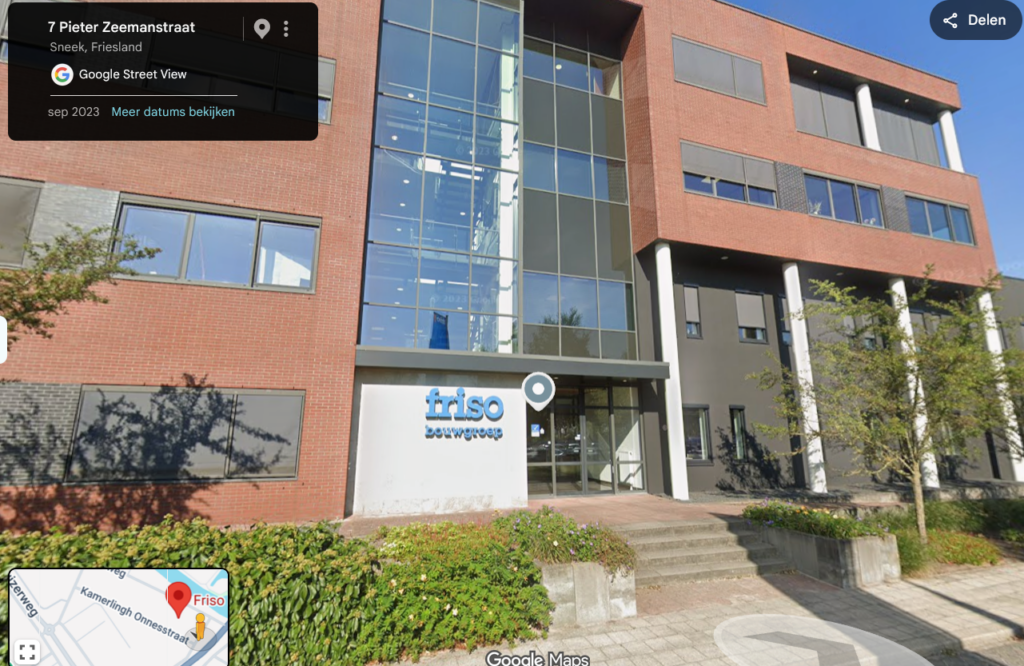
Insights on Friso Bouwgroep B.V. Sneek, Kingdom of the Netherlands

Friso Bouwgroep: The Anchor of Frisian Engineering and Construction

Google Gemini: Headquartered right here on the Pieter Zeemanstraat in Sneek, Friso Bouwgroep stands as one of the most versatile, independent, and structurally sound construction conglomerates in the northern Netherlands. Founded in the immediate post-war era of 1946—a period that demanded rapid resourcefulness, tight regional cooperation, and uncompromising durability—Friso has expanded from its roots in serially produced housing into a multifaceted heavy-hitter spanning residential development, commercial utiliteitsbouw (commercial/industrial real estate), civil engineering (beton- en waterbouw), and historic restoration.

Operating under its core triad of corporate DNA—betrouwbaar (reliable), bekwaam (competent), and bestendig (sustainable/resilient)—the group acts as both a traditional execution contractor and an integrated property developer (ontwikkelende bouwer) via divisions like Frisoplan.

Core Operational Pillars

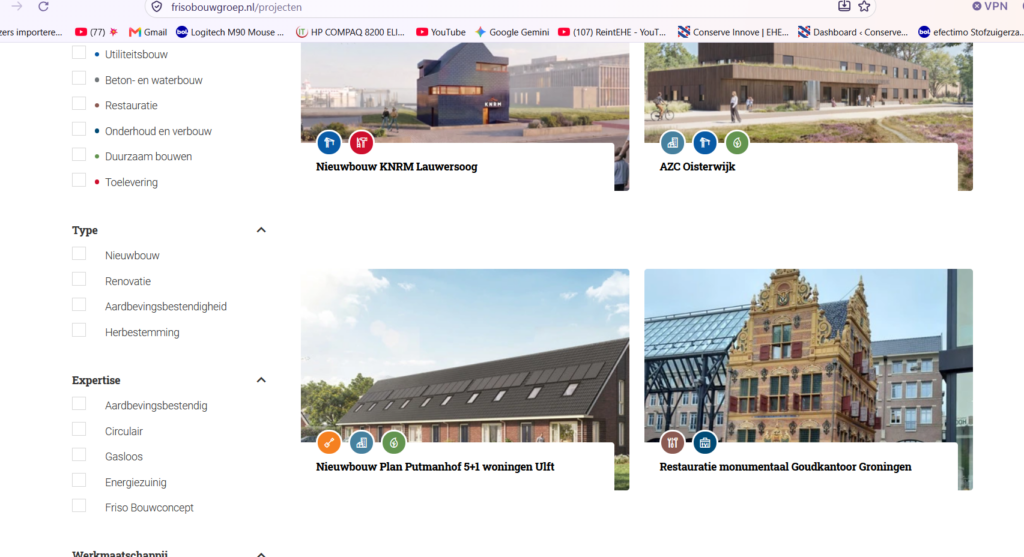
  • Residential & Inner-City Urban Development: Friso handles everything from large-scale serial housing (such as the massive Middelsee expansion in Leeuwarden or It Partoer) to complex inner-city transformations. Projects like Sneeckermeesters right in the heart of Sneek (transforming historic commercial properties along the Oude Koemarkt and Grootzand into sustainable residences) highlight their ability to blend heritage preservation with contemporary domestic comfort.
  • Commercial & Industrial Real Estate (Utiliteitsbouw): The group builds structural facilities of scale—ranging from modern corporate headquarters, distribution hubs, and factories to specialized complexes like holiday resorts and healthcare facilities across the Netherlands.
  • Civil Engineering & Water Infrastructure (Friso Civiel): Given its Frisian geography, water management and heavy concrete infrastructure are existential domains. Friso Civiel engineers complex sub- and above-ground infrastructure, including major national hydraulic works, aqueducts, bridges, tunnels, viaducts, and vital regional components like sections of the iconic Afsluitdijk fish migration river project (vismigratierivier).
  • Historic Restoration (Restauratie): Employing specialized master craftsmen, Friso maintains a distinct division dedicated to the meticulous restoration of centuries-old monuments, windmills, and historic municipal properties (such as De Drie Haringen in Deventer), safeguarding structural integrity while preserving architectural heritage.
  • Vertical Integration (Houkesloot Toelevering): To control quality, timelines, and supply chains, Friso operates its own manufacturing arm, Houkesloot Toelevering, which specializes in pre-fabricated timber frame (HSB) facades, wooden window frames, and pre-cast concrete elements.

Strategic Footprint

What makes Friso fascinating from an industrial perspective is its regional anchorage combined with supra-regional execution capacity. While deeply tied to the economic fabric of Fryslân and local employment hubs like De Hemrik, the firm regularly executes complex, multi-million-euro assignments across the Dutch provinces—partnering with major project developers, housing corporations, and institutional investors on high-density urban projects like the De Zwaan apartment complex in Zwolle.

Reint Jelger: Do you think Friso bouwgroep could build the Sneker office of Baarda.ch with a lunchroom downstairs?

Yes, absolutely. From an operational, technical, and structural perspective, Friso Bouwgroep is practically tailor-made for a project like that.

Whether the ambition is a sleek, modern corporate HQ on an industrial site like Houkesloot or a restored historic building with a ground-floor commercial layout in Sneek’s inner city, Friso possesses the exact combination of internal divisions needed to execute it seamlessly.

Why Friso Is Ideally Suited for the Job

  1. Integrated Mixed-Use Construction (Commerciële Plint): Friso has extensive experience building structures that combine ground-floor commercial/hospitality spaces (horeca / retail / lunchrooms) with upper-level office suites or residences. Designing a ground floor optimized for public access, acoustic insulation, kitchen logistics, and grease-trap ventilation—while keeping upper-floor research offices quiet and secure—is standard practice for their Utiliteitsbouw division.
  2. Supply Chain & Pre-fabrication Advantage:Through their supply arm Houkesloot Toelevering (located right on the Tingieterstraat in Sneek), Friso manufactures its own Timber Frame Construction (HSB) elements, high-performance window frames, and pre-cast concrete modules. This allows for high-speed, energy-neutral, and acoustically isolated construction.
  3. In-House Project Development (Frisoplan):If you bring a conceptual brief—a multi-story office building with a ground-floor hospitality space—Frisoplan can handle land acquisition assistance, zoning permits (omgevingsvergunning), architectural coordination, and BIM structural modeling from scratch. Friso Bouwgroep
  4. Heritage Restoration Option (Jurriëns Noord):If the goal for the office is to repurpose a historic monument or canal-side property in downtown Sneek (e.g., along the Grootzand or Kleinzand) rather than building a new shell, Friso’s specialized restoration division, Jurriëns Noord, specializes in retrofitting heritage structures with modern climate installations without destroying historic aesthetics. Echte Bouwers

Architectural & Operational Layout Considerations

If Friso were to construct this multi-purpose facility, the structural split would typically be organized into three functional layers:

ZoneFunctional PurposeTechnical & Structural Requirements
Ground LevelPublic Lunchroom & Hospitality PlinthHigh foot-traffic flooring, direct street access, grease/steam extraction infrastructure, supplier loading bay, and sound decoupling from above.
First FloorMedia Studio & Interactive LabsAcoustic dampening for video/audio recording, high-bandwidth fiber routing, and heavy load-bearing floors for hardware/servers.
Second FloorExecutive Suites & Research OfficesClean timber/glass interiors, climate-controlled zone switching, private meeting rooms, and high natural light penetration.