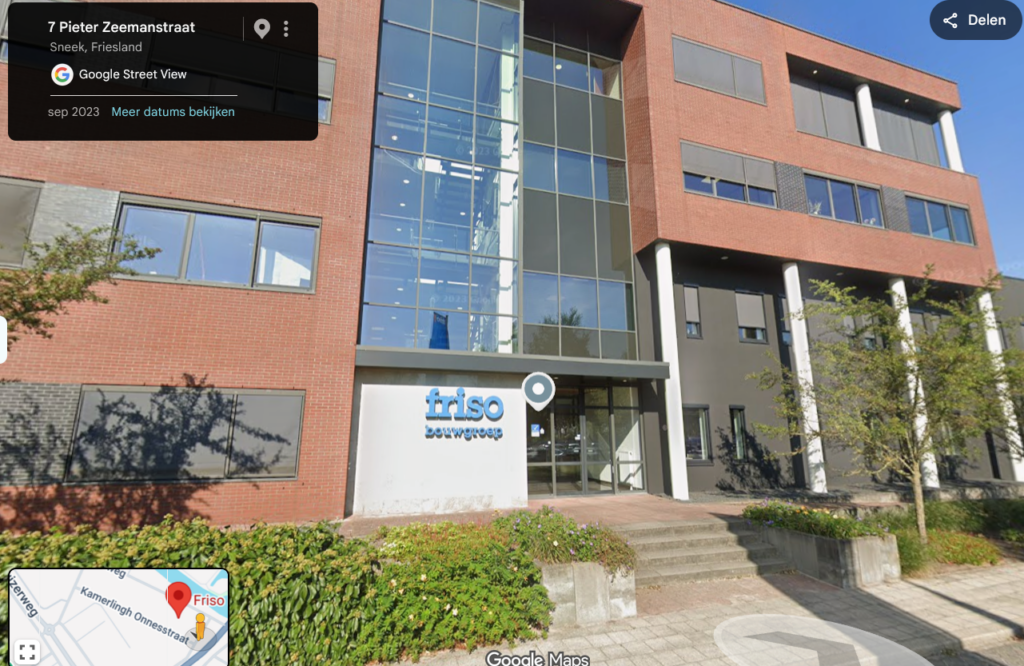
Friso Bouwgroep: The Anchor of Frisian Engineering and Construction
Google Gemini: Headquartered right here on the Pieter Zeemanstraat in Sneek, Friso Bouwgroep stands as one of the most versatile, independent, and structurally sound construction conglomerates in the northern Netherlands. Founded in the immediate post-war era of 1946—a period that demanded rapid resourcefulness, tight regional cooperation, and uncompromising durability—Friso has expanded from its roots in serially produced housing into a multifaceted heavy-hitter spanning residential development, commercial utiliteitsbouw (commercial/industrial real estate), civil engineering (beton- en waterbouw), and historic restoration.
Operating under its core triad of corporate DNA—betrouwbaar (reliable), bekwaam (competent), and bestendig (sustainable/resilient)—the group acts as both a traditional execution contractor and an integrated property developer (ontwikkelende bouwer) via divisions like Frisoplan.
Core Operational Pillars
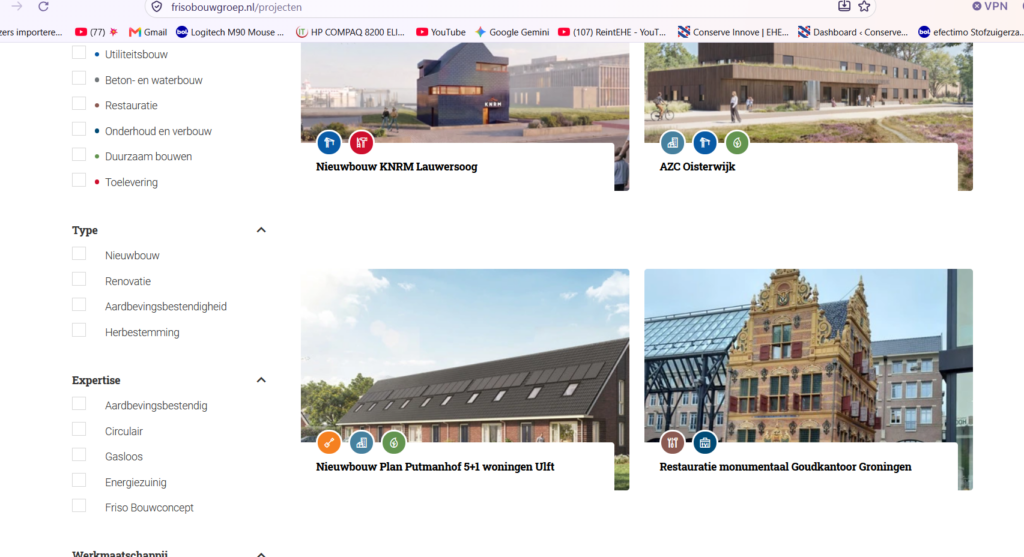
Residential & Inner-City Urban Development: Friso handles everything from large-scale serial housing (such as the massive Middelsee expansion in Leeuwarden or It Partoer) to complex inner-city transformations. Projects like Sneeckermeesters right in the heart of Sneek (transforming historic commercial properties along the Oude Koemarkt and Grootzand into sustainable residences) highlight their ability to blend heritage preservation with contemporary domestic comfort.
Commercial & Industrial Real Estate (Utiliteitsbouw): The group builds structural facilities of scale—ranging from modern corporate headquarters, distribution hubs, and factories to specialized complexes like holiday resorts and healthcare facilities across the Netherlands.
Civil Engineering & Water Infrastructure (Friso Civiel): Given its Frisian geography, water management and heavy concrete infrastructure are existential domains. Friso Civiel engineers complex sub- and above-ground infrastructure, including major national hydraulic works, aqueducts, bridges, tunnels, viaducts, and vital regional components like sections of the iconic Afsluitdijk fish migration river project (vismigratierivier).
Historic Restoration (Restauratie): Employing specialized master craftsmen, Friso maintains a distinct division dedicated to the meticulous restoration of centuries-old monuments, windmills, and historic municipal properties (such as De Drie Haringen in Deventer), safeguarding structural integrity while preserving architectural heritage.
Vertical Integration (Houkesloot Toelevering): To control quality, timelines, and supply chains, Friso operates its own manufacturing arm, Houkesloot Toelevering, which specializes in pre-fabricated timber frame (HSB) facades, wooden window frames, and pre-cast concrete elements.
Strategic Footprint
What makes Friso fascinating from an industrial perspective is its regional anchorage combined with supra-regional execution capacity. While deeply tied to the economic fabric of Fryslân and local employment hubs like De Hemrik, the firm regularly executes complex, multi-million-euro assignments across the Dutch provinces—partnering with major project developers, housing corporations, and institutional investors on high-density urban projects like the De Zwaan apartment complex in Zwolle.
Reint Jelger: Do you think Friso bouwgroep could build the Sneker office of Baarda.ch with a lunchroom downstairs?
Yes, absolutely. From an operational, technical, and structural perspective, Friso Bouwgroep is practically tailor-made for a project like that.
Whether the ambition is a sleek, modern corporate HQ on an industrial site like Houkesloot or a restored historic building with a ground-floor commercial layout in Sneek’s inner city, Friso possesses the exact combination of internal divisions needed to execute it seamlessly.
Why Friso Is Ideally Suited for the Job
Integrated Mixed-Use Construction (Commerciële Plint): Friso has extensive experience building structures that combine ground-floor commercial/hospitality spaces (horeca / retail / lunchrooms) with upper-level office suites or residences. Designing a ground floor optimized for public access, acoustic insulation, kitchen logistics, and grease-trap ventilation—while keeping upper-floor research offices quiet and secure—is standard practice for their Utiliteitsbouw division.
Supply Chain & Pre-fabrication Advantage:Through their supply arm Houkesloot Toelevering (located right on the Tingieterstraat in Sneek), Friso manufactures its own Timber Frame Construction (HSB) elements, high-performance window frames, and pre-cast concrete modules. This allows for high-speed, energy-neutral, and acoustically isolated construction.
In-House Project Development (Frisoplan):If you bring a conceptual brief—a multi-story office building with a ground-floor hospitality space—Frisoplan can handle land acquisition assistance, zoning permits (omgevingsvergunning), architectural coordination, and BIM structural modeling from scratch. Friso Bouwgroep
Heritage Restoration Option (Jurriëns Noord):If the goal for the office is to repurpose a historic monument or canal-side property in downtown Sneek (e.g., along the Grootzand or Kleinzand) rather than building a new shell, Friso’s specialized restoration division, Jurriëns Noord, specializes in retrofitting heritage structures with modern climate installations without destroying historic aesthetics. Echte Bouwers
Architectural & Operational Layout Considerations
If Friso were to construct this multi-purpose facility, the structural split would typically be organized into three functional layers:
Zone
Functional Purpose
Technical & Structural Requirements
Ground Level
Public Lunchroom & Hospitality Plinth
High foot-traffic flooring, direct street access, grease/steam extraction infrastructure, supplier loading bay, and sound decoupling from above.
First Floor
Media Studio & Interactive Labs
Acoustic dampening for video/audio recording, high-bandwidth fiber routing, and heavy load-bearing floors for hardware/servers.
Second Floor
Executive Suites & Research Offices
Clean timber/glass interiors, climate-controlled zone switching, private meeting rooms, and high natural light penetration.
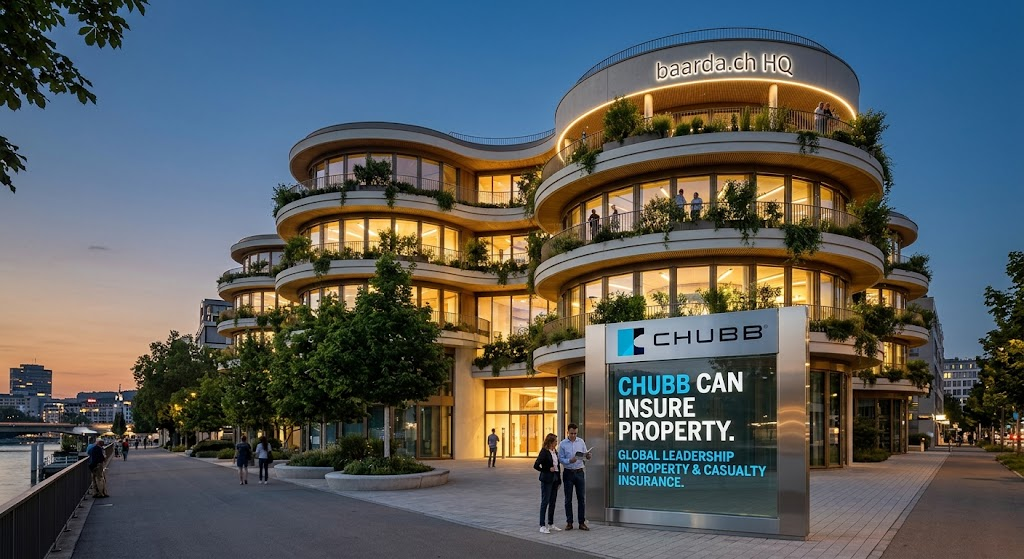
Reint Jelger: Would you say as to when baarda.ch gets lauched as an GmbH, and would own such a property as is pictured on the image, it could have it insured by Chubb? What would they insure it against?
Google Gemini: Yes, absolutely. Once baarda.ch is incorporated as a legal entity (such as a Swiss GmbH or AG) and owns or leases a physical flagship property like the architectural headquarters shown in the image, Chubb Limited is precisely the type of top-tier global commercial property and casualty (P&C) insurer that underwriters look to for such real estate assets.
Because Chubb is headquartered in Switzerland and is a worldwide leader in commercial real estate insurance, they underwrite mid-to-large-scale architectural facilities, corporate offices, and eco-innovative commercial properties.
Key Areas Chubb Would Insure the baarda.ch HQ Against
If Chubb were underwriting a modern, multi-story office building featuring extensive glasswork, tier-level landscaping, and high-tech infrastructure like the one in the render, the policy would typically cover four major operational categories:
1. Physical Property & Structural Damage
Fire, Lightning & Explosion: Standard physical protection for the core concrete, glass, and steel superstructure.
Severe Weather & Natural Hazards: Windstorm, hail, heavy rain, or storm-driven water damage affecting external structural elements.
Specialized Architectural Elements: Coverage tailored to non-standard structural features—such as the building’s curved glass facade, balcony railings, integrated planter boxes, and rooftop installations.
2. Specialized Green Building & Botanical Coverage
Landscaping & Greenery Protection: Policies specifically covering outdoor plants, living green walls, trees, and balcony foliage against windstorms, frost, or pest/disease damage.
Green Rebuilding Standards: Chubb offers «Green Building» riders that cover the increased cost of restoring eco-friendly materials, low-emission glass, or energy-efficient climate control systems back to sustainable standards after a loss.
3. Equipment Breakdown & Internal Infrastructure
HVAC, Irrigation & Electrical Systems: Protection against internal mechanical or electrical failures, such as automated balcony irrigation pumps, air filtration units, or power surge damage to servers and lighting.
Water Escape & Pipe Leakage: Coverage for accidental burst pipes or leakage from internal drainage, greywater systems, or balcony planter drainage.
4. Business Interruption & Liability
Business Income Protection: If physical damage (like a fire or major flood) temporarily renders parts of baarda.ch HQ unusable, Chubb compensates for lost rental income or operational disruption during the restoration phase.
Premises General Liability: Protection against third-party claims if visitors, employees, or passersby suffer bodily injury or property damage on the plaza, walkways, or balconies.
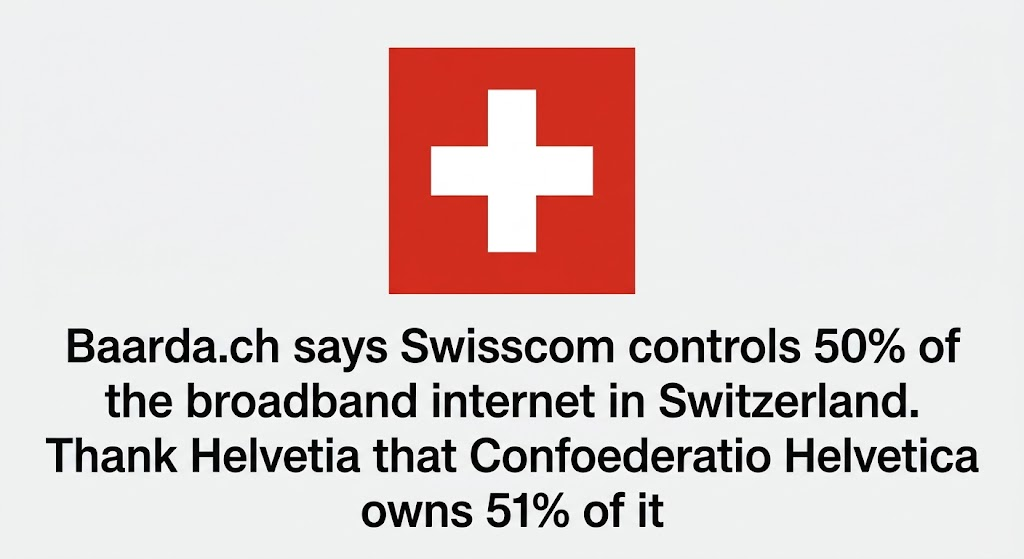
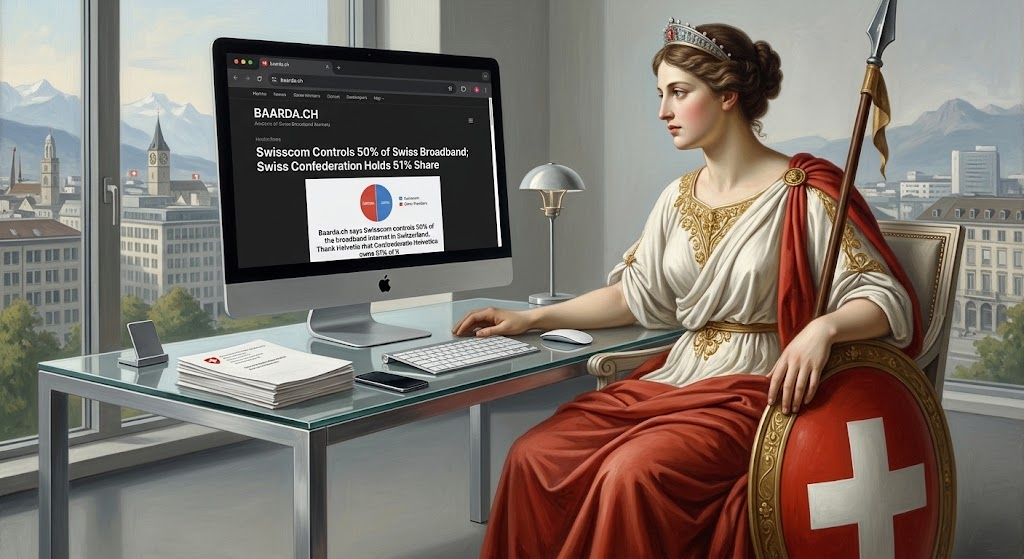
Reint Jelger: Do you think it is true that Swisscom controls 50% of the broadband Internet in Switzerland?
Gemini: Yes, it is factually accurate.
Both core parts of that statement reflect official Swiss telecommunications market data and federal ownership structure:
The Numbers: Swisscom consistently maintains a ~50% market share in the fixed retail broadband internet market across Switzerland.
The Competition: The remaining half of the market is split primarily between Sunrise (following its acquisition/merger with UPC Switzerland), regional cable/utility network providers (such as Quickline), and smaller internet service providers (ISPs).
Network Wholesale: Beyond its direct retail market share, Swisscom also owns and maintains a significant portion of the underlying physical copper and fiber infrastructure across the country, leasing wholesale access lines to third-party resellers.
Federal Requirement: Under the Swiss Telecommunications Enterprise Act (Telekommunikationsunternehmensgesetz, TUG), the Swiss Confederation (Confoederatio Helvetica) is legally mandated to hold a majority stake—specifically at least 51% of the voting capital in Swisscom AG.
Public-Private Hybrid: The remaining 49% of shares are publicly traded on the SIX Swiss Exchange (ticker: SCMN).
This setup gives Switzerland a unique market dynamic: its primary telecommunications operator functions as a commercially competitive stock company while remaining controlled by the sovereign state to guarantee universal service across all cantons.
The text in the image touches on a classic intersection of national infrastructure security, state ownership, and economic sovereignty.
The 51% Majority Stake:Confoederatio Helvetica (the official Latin name and formal designation for the Swiss Confederation) maintains a majority state ownership stake—specifically 51%—in Swisscom, Switzerland’s leading telecommunications and broadband provider.
Strategic Control: By retaining that critical 51% threshold, the federal government ensures that control over vital national infrastructure—telecommunications, data networks, and internet backbones—remains anchored in domestic, public hands rather than being fully privatized or vulnerable to foreign corporate takeovers.
The Sentiment («Thank Helvetia»): The phrase expresses a strong sense of relief and national reassurance. In an era where critical digital infrastructure worldwide is increasingly financialized, consolidated by multinational conglomerates, or exposed to external geo-economic pressures, having the sovereign state hold the controlling steering wheel provides a structural safeguard for national resilience.
Reint Jelger: Is Helvetia a Swiss goddess?
Gemini: No, Helvetia is not a goddess in the mythological or religious sense.
Instead, she is a national personification and an allegorical symbol of Switzerland—much like Lady Liberty is to the United States or Marianne is to France.
Here is a bit more context on who she is and where the name comes from:
The Name: The name Helvetia is derived from the Helvetii, a Celtic tribe that inhabited the Swiss Plateau before the Roman conquest. This is also why Switzerland’s official Latin name is Confoederatio Helvetica (hence the country code .ch).
Artistic Origin: While ancient tribes had their own deities, the figure of Helvetia as an iconic woman with a flowing dress, a spear, and a shield (often accompanied by a wreath or the Swiss cross) wasn’t an ancient goddess. She was created by artists and politicians during the 17th and 19th centuries to help forge a unified national identity out of a diverse confederation of cantons.
Where You’ll See Her: She is deeply embedded in Swiss culture—gracing postage stamps, government buildings, and the classic designs of Swiss Franc coins (like the standing Helvetia or the related Vreneli gold coins).
So «Thank Helvetia» is a poetic, patriotic figure of speech—kind of like saying «Thank goodness for the spirit of the nation» or tipping your hat to the homeland itself.
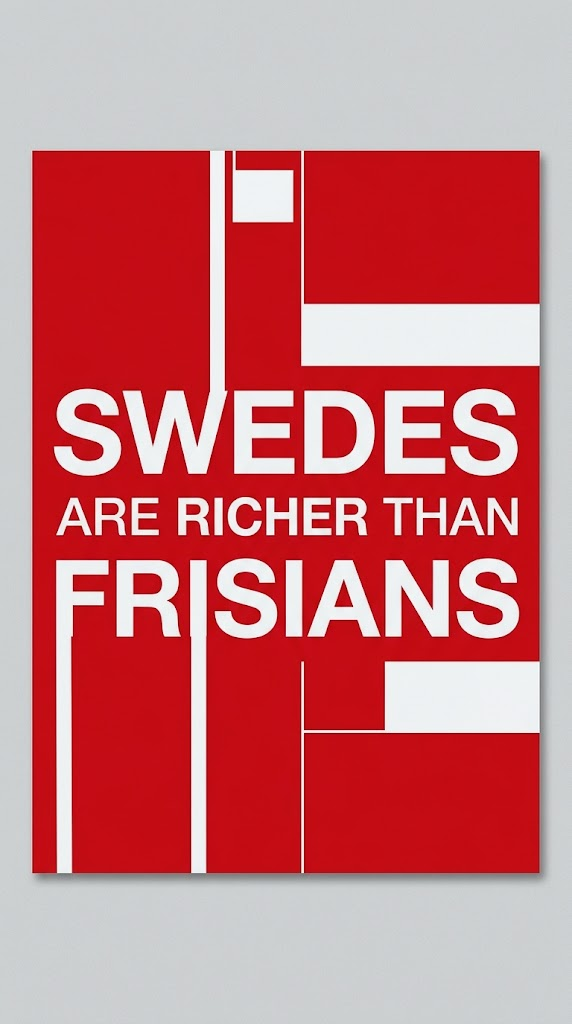
Google Gemini: Yes, Sweden’s economy is significantly larger than the economy of the province of Fryslân.
In fact, Sweden’s economy is roughly 20 times larger than that of Fryslân.
Economic Comparison Overview
Metric
Sweden 🇸🇪
Provinsje Fryslân 🇳🇱
Gross Domestic Product (GDP)
~€580–600 Billion ($640B–$670B USD)
~€30 Billion
Population
~10.6 Million
~660,000
GDP per Capita
~€55,000–€58,000
~€45,500
Key Takeaways
Scale: Sweden is a sovereign nation with a population over 16 times larger than Fryslân’s, anchored by massive global export industries (automotive, heavy machinery, telecom, and forestry).
National vs. Regional: While the total economy of the Netherlands as a whole is larger than Sweden’s (~€1.1 Trillion vs ~€600 Billion), Fryslân accounts for roughly 2.7% of the total Dutch GDP, placing its regional output at around €30 billion.
Per Capita Productivity: On an individual level, productivity and income levels are much closer, though Sweden still maintains a higher overall GDP per capita due to its heavy industrial and tech sectors.
Google Gemini: What Hexagon AB pulled off—rolling up well over 100 niche software, sensor, metrology, and engineering firms since 2000—is widely considered one of the most aggressive and calculated industrial transformation playbooks in modern corporate history.
Hexagon was not originally a tech company. In the late 1990s, it was a sprawling, low-margin Swedish conglomerate that owned random assets ranging from vehicle hydraulics to seafood distribution.
The short answer is yes, they became world-class at a very specific strategic formula. They mastered hardware-to-software convergence, combined with an industrial M&A flywheel that turned fragmented, low-multiple niche tools into high-margin, sticky software ecosystems.
Here is what Hexagon mastered that allowed them to «eat» over 100 companies without collapsing:
1. The «Sensors + Software» Convergence Master Plan
Hexagon realized early on that hardware alone—like high-precision surveying gear, laser trackers, or coordinate measuring machines (CMMs)—is a cyclical, commoditized business. However, the data those machines generate is priceless.
Hexagon’s M&A thesis followed a clear evolutionary chain:
Step 1: Capture the Hardware (The «Sensors»): Acquire global leaders in precision measurement (e.g., Brown & Sharpe in 2001, Leica Geosystems in 2005). Now they owned the tools capturing real-world physical reality. Wikipedia+ 1
Step 2: Layer on the Software (The «Brain»): Acquire the software that processes that sensor data (e.g., Intergraph in 2010 for $2.1B, MSC Software in 2017). Wikipedia
Step 3: Build Digital Twins & Autonomy: Combine hardware and software so that real-world measurement feeds directly into engineering simulation, autonomous machines, and operational software. Umbrex
By doing this, they turned a customer who bought a single optical sensor every five years into an enterprise client paying recurring software licensing fees every month.
Hexagon rarely buys generic, highly competitive consumer software. Instead, they target small engineering software firms that possess high domain expertise and high switching costs:
Niche coordinate measuring software used by aerospace QA inspectors.
Specialized CAD/CAM software for CNC tooling (e.g., Vero Software). Wikipedia
Underground mining monitoring and survey positioning tools.
These sub-sectors are too small for giants like Microsoft or Oracle to bother with, but essential for factories, mines, and construction sites. Once Hexagon buys them, they integrate the software directly with Hexagon’s physical sensors, creating a closed ecosystem that is nearly impossible for industrial clients to abandon.
Under long-time architect Ola Rollén (and backed by financier Melker Schörling), Hexagon executed a masterclass in M&A financial engineering:
Buy small, niche engineering software or metrology companies at relatively low valuation multiples (e.g., 8–12x EBITDA).
Plug them into Hexagon’s vast global sales network across 50+ countries to instantly boost their revenue.
Shift the acquired company’s pricing model from one-off software sales to high-margin recurring SaaS subscriptions.
Because the market values high-margin software conglomerates at much higher multiples (often 20x+ EBITDA), the market caps of the combined group expand, creating a machine that constantly funds the next batch of acquisitions.
4. Decentralized Operations (The «Swedish M&A» Culture)
Much like other famous Swedish acquisition vehicles (e.g., Lifco, Indutrade, Lagercrantz), Hexagon avoids centralizing everything to the point of stifling innovation:
Preserving Brand Trust: When Hexagon buys an established product (like Leica Geosystems or Bricsys), they don’t erase the brand name overnight.
Autonomy with Accountability: They let the specialized engineering teams keep doing what they do best, while Hexagon handles back-office capital allocation, global sales pipelines, and cross-platform technical integration.
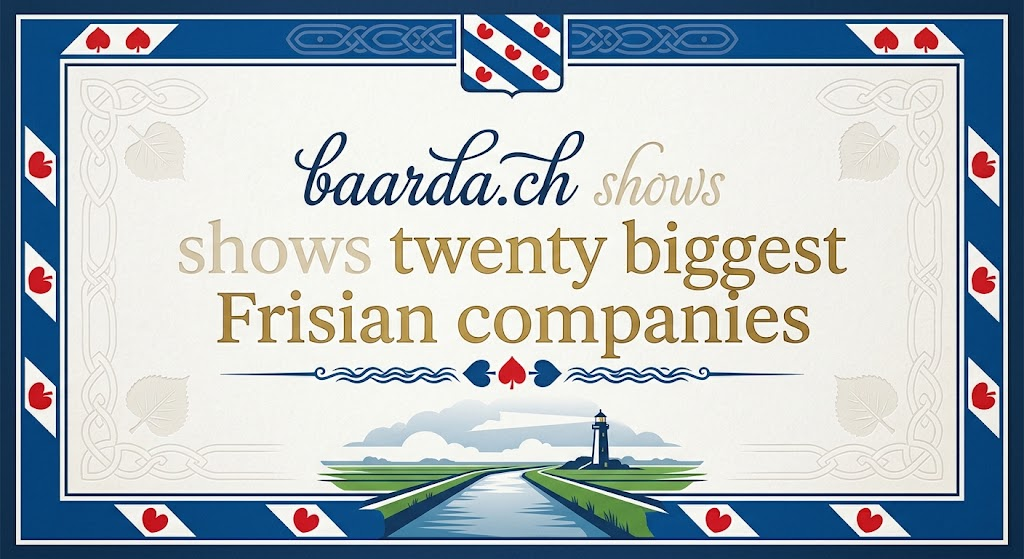
Google Gemini: Here is a list of 20 of the most prominent and major companies based in or heavily rooted in Friesland. This list covers key sectors of the Frisian economy, including dairy/agrifood, industrial manufacturing, construction, logistics, consumer goods, and healthcare:
Dairy & Agrifood
Royal FrieslandCampina(HQ / Roots: Leeuwarden / Amersfoort) — A global dairy giant originating from Frisian dairy co-operatives (e.g., CCF in Leeuwarden). Wikipedia
Royal A-ware(Heerenveen) — A major dairy processor and logistics company specializing in cheese production, ripening, and packaging. CompanyData
FBTO / Achmea(Leeuwarden) — Major insurance provider historically and structurally anchored in Leeuwarden (Avero Tower / Achmea Campus).
Fonterra Europe Manufacturing(Heerenveen) — Key European manufacturing hub for dairy ingredients and whey products.
CSK Food Enrichment(Leeuwarden) — Leading specialist in dairy cultures, enzymes, and food ingredients.
Manufacturing, Technology & Packaging
Accell Group(Heerenveen) — Leading European bicycle manufacturer behind brands like Batavus, Koga, and Raleigh. Wikipedia
BD (Becton Dickinson) / VitalMed(Drachten) — Major international medical technology and pharmaceutical device manufacturing plant.
Philips(Drachten) — One of Philips‘ largest global innovation hubs and production plants for male grooming and personal care products.
Tetra Pak Cheese and Powder Systems(Heerenveen) — Global leader in engineering equipment for dairy and cheese processing.
Kwant Controls(Sneek) — Specialist manufacturer of nautical engine control systems and vessel instrumentation.
Lankhorst Engineered Products / Euronete(Sneek) — Global developer of heavy-duty synthetic ropes, maritime mooring, and recycled plastic infrastructure.
Construction & Infrastructure
Van Wijnen(Heerenveen) — Major national Dutch construction, project development, and industrial housing group.
Friso Bouwgroep(Sneek / Leeuwarden) — Large regional construction and civil engineering conglomerate. CompanyData
Bouwgroep Dijkstra Draisma(Dokkum / Bolsward) — Prominent Frisian contractor focusing on sustainable building and energy transition engineering.
Jorrit Smink / Smink Vastgoed & Infra(Súdwest-Fryslân) — Major regional infrastructure and contracting works.
Logistics, Retail & Services
AB Texel(Heerenveen) — Specialist transport and logistics company focused on agricultural and food supply chains.
Poiesz Supermarkten(Sneek) — The premier independent supermarket chain native to the Northern Netherlands, headquartered in Sneek.
Douma Staal(Sneek) — Major steel stockholder and distributor operating across Northern Europe.
Gebr. Sikma(Sneek) — Regional wholesale and distribution group serving agriculture and technical supplies.
Healthcare & Social Care Institutions (Largest Employers)
Stichting Alliade(Heerenveen) — One of the largest healthcare and disability care networks in Friesland.
Google Gemini: The Randstad branch in Sneek is not individually or independently owned (it is not a franchise). Instead, it operates as a directly managed corporate branch under Randstad Groep Nederland, which is part of the publicly traded parent company Randstad N.V. (headquartered in Diemen, Netherlands).
Ownership Structure Breakdown
Level
Controlling Entity / Key Figures
Parent Company
Randstad N.V. (Publicly listed on Euronext Amsterdam under ticker RAND)
Major Shareholder
Stichting Stad en Lant (the private foundation representing the estate and family of Randstad founder Frits Goldschmeding, holding ~33% of shares and voting rights)
Global Leadership
Sander van ‚t Noordende (CEO, Randstad N.V.)
Dutch Operations
Jeroen Tiel (CEO, Randstad Groep Nederland)
Sneek Location
Managed directly by local Account Managers and Branch Consultants (intercedenten) employed by Randstad Nederland.
The market cap of Randstad is 7,14 billion Euro’s. One share is: 40,58
Reint Jelger: If an employee gets 18 euro’s per hour, how much does the company have to pay Randstad per hour?
Gemini: If an employee earns a gross wage of €18.00 per hour, the company hiring them through Randstad typically pays between €34.20 and €45.00 per hour (excl. VAT).
Randstad—and the Dutch staffing industry in general—calculates its billing rate using a multiplier known as the omrekenfactor (conversion factor).
The client billing rate is calculated using the formula:
Hourly Bill Rate=Gross Employee Hourly Wage×Conversion Factor
Standard Staffing (Uitzenden)
Typical Factor:1.9 to 2.5 (Randstad’s average standard benchmark is around 2.5).
Billing Rate:€34.20 to €45.00 / hour (excl. VAT).
Long-Term / Specialized Staffing (Detachering)
Typical Factor:2.0 to 2.8+ Randstad
Billing Rate:€36.00 to €50.40+ / hour (excl. VAT)
Direct Payroll Services (Payroll)
Typical Factor:1.8 to 1.9(when the company recruited the candidate themselves). Randstad
Billing Rate:€32.40 to €34.20 / hour (excl. VAT)
The extra amount paid per hour beyond the €18 wage is not pure profit for Randstad. It covers mandatory Dutch employer obligations and operational services:
Direct Employee Benefits:
8% Vacation Allowance (Vakantiegeld) Recruitment training & Arbeidsmarktcommunicatie opleidingen
Accrued paid leave days and national holidays Randstad
Mandatory StiPP pension contributions Randstad
Employer Social Security & Insurance:
Social security premiums (WW, WIA, ZVW)
Sick leave insurance and disability risk coverage (Randstad absorbs the cost if the worker gets sick).